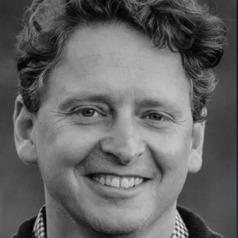
Associate Professor of Psychology, University of Tennessee In my scholarship, I have been captivated by one singular question: What are the psychological foundations of human relationships? That is, what sort of things are indispensable to the formation and function of human sociality? In the last 15 years of empirical experimentation and theoretical integration, my research program has yielded promising insights. My colleagues and I have found that much of human psychology is devoted to tracking shared awareness—the perception that ‘we are aware’ of something together. Our research focuses on (1) how, (2) why, (3) when, and (4) to what end, shared awareness is tracked by the human mind. To the question of how shared awareness is tracked by the human mind, we find that people imagine what we call a ‘collective mind’ – a singular, unitary, collective agent – or, more simply, a ‘we’. To the question of why shared awareness is tracked by the human mind, we find that when people imagine a ‘collective mind’ they are more confident in their knowledge, enjoy stronger memory recall, as well as experience more extreme emotions and passions. To the question of when shared awareness is tracked by the human mind, we find that situations in which people experience information in synchrony are especially likely to yield the perception of a ‘collective mind’. Finally, to the question of to what end shared awareness is tracked by the human mind, we find that perceptions of ‘collective mind’ underpin social identity formation, affiliative bonding, relational trust, and ultimately, behavioral cooperation, even when it is individually risky.
Research fellow, Environmental Sustainability Research Centre, Brock University Dr. Gillian Dale is a Research Associate with the Environmental Sustainability Research Centre and a member of the Water Resilience Lab. She holds a PhD in Behavioural Neuroscience, and has over 15 years of experience with complex research design, instrument development and validation, advanced quantitative and qualitative analysis, and individual differences research. As an environmental psychologist, Dr. Dale’s research primarily focuses on understanding how individual differences in cognition and emotion explain variations in environmental perceptions.
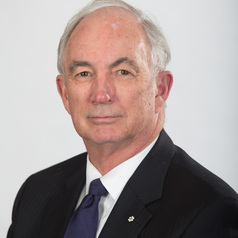
Professor Emeritus, Department of Geography and Environment, Western University Professor Emeritus Gordon McBean, Ph.D., has been at Western University since 2000, in the Department of Geography and Environment and with the Institute for Catastrophic Loss Reduction (ICLR). Previously, he was Assistant Deputy Minister, Environment Canada (1994–2000), responsible for weather, climate and air quality sciences and service; professor, atmospheric-oceanic sciences, University of British Columbia (1988–1994); and senior scientist, Environment Canada. Internationally, he was president, International Council for Science (2014–2018); co-chair, Future Earth Governing Council (2016–2018); and chair, Science Committees for Integrated Research on Disaster Risk (2006–2011) and World Climate Research Programme (1988–1994). Since his appointments to ICLR and Western, he has focused on science and policy issues such as climate change, disaster risk reduction and broader environmental issues. He is a Member of the Orders of Canada and Ontario; Fellow of the: Royal Society of Canada; American Association for the Advancement of Science; American Geophysical Union; International Science Council; American Meteorological Society; and other societies; and was awarded the 2023 American Meteorological Society Warren Washington Research and Leadership Medal; 2017 International Meteorological Organization Prize; 2015 University of British Columbia Alumni Award of Distinction; 2015 American Geophysical Union Ambassador Award; 2015 American Meteorological Society Cleveland Abbe Prize; 2007 Nobel Peace Prize, shared for his contributions to the Intergovernmental Panel on Climate Change; and 1988 Patterson Medal for distinguished contributions to meteorology in Canada.
Assistant Professor of Physics, Georgia Institute of Technology Dr. Li's research interests include the dynamics of exoplanets, the dynamics of compact objects as gravitational wave sources, and interactions between supermassive black holes and surrounding stars
Adjunct Lecturer, Centre for Business Analytics, Melbourne Business School I've worked as a practitioner, executive and consultant, leading analytics teams to solve commercial problems in marketing, supply chain, product management, customer service and pricing for retailers, telcos and financial services firms. My professional expertise is in the application of advanced analytics and AI techniques (including machine learning, predictive modelling, mathematical optimisation, econometrics, operations research, discrete choice experiments and simulations). These applications span forecasting, pricing, fraud, market segmentation, portfolio optimisation, customer satisfaction, propensity modelling, proposition testing and customer service. I am a founding member of the Industry Advisory Board at Melbourne Business School's Centre for Business Analytics, where I helped develop the curriculum for the flagship Masters degree. I am an adjunct lecturer and teach data and AI subjects into the MBA program, as well as executive short courses. With undergraduate degrees in engineering and science, I hold a PhD in analytics from the University of Melbourne.