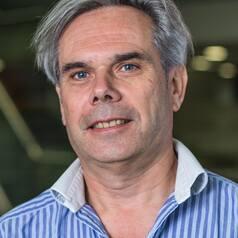
Professor of Biological Sciences, University of Bristol I graduated from the University of London with a degree in Ecology, and then did my PhD on the behavioural ecology of birds at Stirling. I came to Bristol in 1985 to work on aerodynamics of bat flight, and was then awarded a Royal Society University Research Fellowship to combine my interests in ecology, behaviour and bat biology. I have worked on bats on 5 continents, with recent studies based in China, Madagascar, Malaysia, Malawi and Colombia. In 2010 I was awarded the Gerrit S. Miller Award at the University of Toronto in recognition of "outstanding service and contribution to the field of chiropteran biology." My recent research has focussed on conservation biology, especially global change biology and molecular ecology. I've supervised 60 PhD students and 25 Masters students. Although my research has focussed on bats, it has diversified to cover birds, marsupials, crayfish, primates, insect vectors and crocodiles, and has spanned disciplines ranging from underwater bioacoustics to molecular ecology. I'm happiest working in the field, though lab studies are important for my research too.
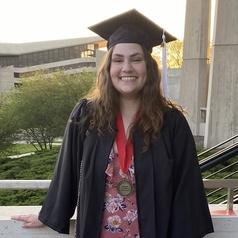
Master's Candidate in Molecular, Cellular and Developmental Biology, Iowa State University I am a graduate student in the Molecular, Cellular, and Developmental Biology (MCDB) program at Iowa State University. My research is focused on a molecular pathway that contributes to blood development in zebrafish. I love science communications and sharing what I've learned with others! I've taken classes on science and scientific communications, as well as many other writing courses during my time at ISU.
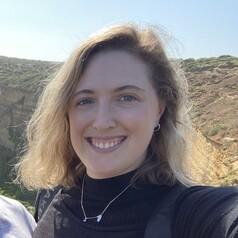
Research assistant, University of Adelaide I am a geoscientist who recently completed a PhD at The University of Adelaide. My research focused on unravelling past environments during the Neoproterozoic Era. This was a dynamic time in Earth's past, as the world experienced climatic shifts, tectonic reorganisation, and biological evolution. As part of my project, I conducted fieldwork in the northern Flinders Ranges, and used sedimentological and geochemical techniques to try and piece together how the world descended into a global icehouse, referred to as "Snowball Earth", roughly 700 million years ago. Since finishing my PhD, I have continued working within the university environment, as both an administrative officer for the Tectonics and Earth Systems (TES) Research Group and Metal Isotopes Group (MIG), and a research assistant for the Australian Critical Zone Observatory (OZCZO).
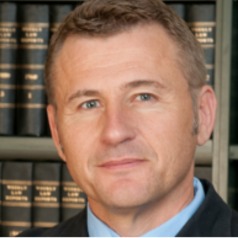
Chair of Private Law, Te Herenga Waka — Victoria University of Wellington Chair in Private Law, Victoria University of Wellington; Professor of Law, Melbourne University. Academic interests include private law and intellectual property, particularly copyright and trademarks. Recently appointed to the Yong Shook Lin Visiting Professorship in Intellectual Property at the National University of Singapore.
Associate Professor of Sport History, The University of Queensland Gary has a range of research interests in the historical and contemporary dimensions of sport. These include Indigneous sport history in Australia, Australian and Pacific aquatic sport, racial stereotyping, sport myth, social memory and sporting histories beyond the written word. He is an ARC Future Fellow (2017-21) whose project is titled "Sport, Stories and Survival: Reframing Indigenous Sport History". He is also a Chief Investigator on an ARC Discovery DP190100647 (2020-2023): "Pride, Resilience and Identity: Reimagining Aboriginal Sport History". He was a Chief Investigator on a ARC Linkage-funded digital history project on the Australian Paralympic Movement (2013-17). Gary gained his PhD in the field of sport history from the University of Queensland, following joint enrolment in the School of Human Movement Studies and the School of History, Philosophy, Religion and Classics.
Outreach Manager, Canberra Deep Space Communication Complex, CSIRO Working in the science education and space industry for more than 30 years, Glen Nagle has held roles in organisations such as the Australian Space Industry Chamber of Commerce, the National Space Society of Australia, and has been on the organising committees of several international space industry conferences. Since 2002, Glen has been the Education and Public Outreach Manager at the Canberra Deep Space Communication Complex (CDSCC); a part of NASA's Deep Space Network. He manages the Complex’s Visitor Centre and promotes space exploration to the 70,000 visitors it attracts each year to view its exhibitions and learn more about the giant antenna dishes which provide two-way contact with dozens of robotic spacecraft exploring the Solar System and beyond. Glen's passion for space science is passed on to the 12,000+ school students he talks to each year; helping them to discover their own interests in science, technology, engineering and mathematics. He is a regular commentator on space matters in the media and has written for several industry and commercial publications. For three years, he was also the writer and presenter of a weekly TV program on astronomy and space, called Skywatch. He contributes regularly on social media (under several profiles) and is active on space focussed web forums such as Unmanned Spaceflight.com. When he gets time (which he says is “not often”), he likes to relax creating space-themed digital artworks and developing small business websites.