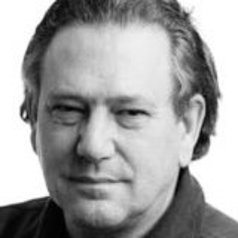
Gerard de Valence is a Senior Lecturer in the School of the Built Environment, in the Faculty of Design Architecture and Building at the University of Technology Sydney. He was Director of the Postgraduate Property Development course from 2006-13, and previously was Director of the Facilities Management course. Prior to becoming an academic in 1992 he had ten years experience as an analyst and economist in the private sector doing research on the property, building and construction industries for the Australian Stock Exchange, the Property Council of Australia and the NSW Royal Commission into Productivity in the Building Industry. He has a long-standing interest in industry performance and development, and worked on industry policy in the 1990s with both the Australian Construction Industry Development Agency and the NSW Department of Public Works and Services. For the Commonwealth Government he was a consultant for DIS, including the 1998 Building for Growth construction industry policy, and the 2002 Cole Royal Commission into the industry. His research has broadly focused on issues around the structure, conduct and technological trajectory of the building and construction industry, with over a hundred refereed papers and book chapters published. He was co-editor with Rick Best of the three volume Building in Value series of books published between 1999 and 2003: Pre-design Issues; Design and Construction; and Workplace Strategies and Facilities Management. As Coordinator between 2003 and 2011 of the International Council for Research and Innovation in Building and Construction (CIB) Working Commission on Building Economics (W55) he was a leader of the largest research group in the field. In 2012 Taylor and Francis published a new book he edited called Modern Construction Economics: Theory and Application. Gerard has a blog on Construction Industry Economics and Policy at http://gerard-de-valence.blogspot.com.au/
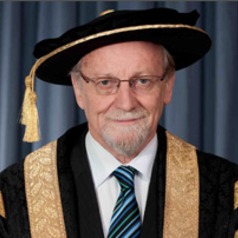
The Hon Gareth Evans AO QC took up his appointment as Chancellor of The Australian National University on 1 January 2010. Professor Evans is an Honorary Professorial Fellow at the University of Melbourne, and Co-Chair of the International Commission on Nuclear Non-Proliferation and Disarmament. He is President Emeritus of the Brussels-based International Crisis Group, the independent global non-governmental organisation working to prevent and resolve deadly conflict worldwide, of which he was President and Chief Executive Officer from January 2000 to June 2009. Gareth Evans has maintained strong academic and scholarly connections throughout his career, lecturing at many universities around the world. In May 2004, he was elected as an Honorary Fellow of Magdalen College, Oxford, and is a member of the International Advisory Board of UN Studies at Yale; the Advisory Council of the Institute for International Studies at Stanford; and the Editorial Advisory Board of the Cambridge Review of International Affairs. In July 2009, he was appointed by the University of Melbourne Honorary Professorial Fellow in the School of Social and Political Sciences. Among other current positions, Gareth Evans is a Fellow of the Foreign Policy Association; a member of the International Council of the Asia Society; a member of the International Advisory Board of the Pew Global Attitudes Survey; and a member of the International Advisory Board of the Asia-Pacific College of Diplomacy, Australian National University. In June 2008, he was made an Inaugural Fellow of the Australian Institute of International Affairs in recognition of his outstanding contribution to Australian international relations.
My research interests are in the fields of animal behaviour, ecology and conservation, with particular focus on the effects of human activities on wildlife, animal cognition and the behavioural ecology of large herbivores. I have studied African elephants for over a decade, addressing questions on foraging and movement ecology as well as investigating the detailed social and ecological knowledge of elephant family groups and their matriarchs. The research that I have conducted on elephant cognition has involved extensive use of acoustic playbacks, whereby animal vocalisations are broadcast to study the responses of elephants to social and ecological threats. More recently, I have applied these playback techniques to understand the effects of anthropogenic noise - a growing source of environmental disturbance - on animal behavior and wildlife ecology. I am also interested in the role that large herbivores play in ecosystem function and structure in natural and human altered habitats.
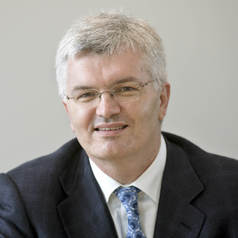
Gavin Harper is Energy Development Manager for the Birmingham Energy Institute and Visiting Researcher for the Centre for Solar Energy Research at Glyndŵr University where he previously co-ordinated the solar stream of the Welsh Energy Sector Training programme. His research concerns sustainable business models in the automotive industry. Gavin read for his ESRC funded PhD at the Centre for Business Relationships, Accountability, Sustainability & Society, Cardiff University. He also holds an MBA from Keele University and Masters degrees from Cardiff University in Business Research Methods, Loughborough University in Renewable Energy Systems, and the University of East London in Sustainable Architecture. He sits on the Advisory Council of the National Energy Foundation. He has been published internationally by Mc Graw-Hill, New York, with books translated into Chinese and Korean and Italian.
Gordon MacKerron was Director of SPRU from 2008 until the end of 2013 and is now Professor of Sci8ence and Technology Policy . He was previously Director of the Sussex Energy Group at SPRU from April 2005 to November 2008. Prior to this, he spent four years as Associate Director, NERA Economic Consulting, London and had an earlier career for over 20 years at SPRU. He is an economist specialising in energy and environmental economics, with degrees in economics from the Universities of Cambridge and Sussex. His academic career has specialized in the economics and policy issues of electricity and especially nuclear power, in which he has published and broadcast widely. He has frequently been Specialist Adviser or invited witness before House of Commons Select Committee inquiries on energy subjects. From June to December 2001 he was on secondment to the PIU, Cabinet Office, as Deputy leader of the UK Government's Energy Review team. He has subsequently assisted the UK Department of Trade and Industry (DTI) in its consultation process leading up to a major Energy White Paper released in February 2003 and subsequently advised DTI on security of supply and low carbon technology strategies. Professor MacKerron has also been the expert witness on economic issues for the Irish Government in its two international court cases on the subject of Sellafield before the Permanent Court of Arbitration in the Hague in 2002 and 2003. Professor MacKerron chaired the Energy Panel, DTI/OST Technology Foresight Programme (1995-98). Between 2003 and 2007 he was Chair of the Committee on Radioactive Waste Management, an independent body charged with recommending the best approach to long-term radioactive waste management to the UK Government. He was a member of the Royal Commission on Environmental Pollution from 2009 until its demise in 2011. He will be a Visting Exchange Scholar at the Woodrow Wilson School, Princeton University from March till July 2014, working on proliferation issus surounding the growth in civilain nuclear power around the world.