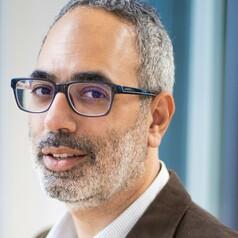
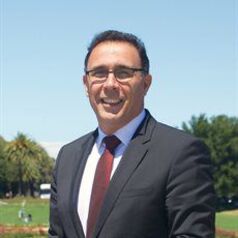
Maître de conférences en Sciences de gestion, Le Mans Université Docteur en Sciences de Gestion Maître de Conférences en Management Laboratoire ARGUMans, Le Mans Université Thématiques de recherche : - postures de régulation de l'expression religieuse au travail - carrières durables et nouvelles formes de travail - partage de la gouvernance et performance(s) Docteur en Sciences de Gestion Maître de Conférences en Management Laboratoire ARGUMans, Le Mans Université Thématiques de recherche : - postures de régulation de l'expression religieuse au travail - carrières durables et nouvelles formes de travail - partage de la gouvernance et performance(s)
Professor of English, University of Newcastle We have a Centre for Literary and Linguistic Computing at Newcastle, which I now direct. It was started by John Burrows, now Emeritus Prof, in 1989. We started with strictly literary topics, and that is still the heart of things, but language is such wonderfully rich data, in regular use, as well as in plays, poems and novels, that new stylistic problems constantly present themselves. What can the language we write tell us about our cognitive functioning, or about the life stages we might share with a wider population? How does language change over time, within an art form like drama, and outside the theatre? What's the interaction between personal styles and house styles for journalists?
Distinguished Professor of Economics and Finance, University of Toronto Heski Bar-Isaac is the University of Toronto Distinguished Professor of Economics and Finance and a fellow of the CEPR and CRESSE. He has published widely in leading general-interest and a variety of leading field journals in economics and finance. He is particularly well known for his work on models of reputation (applied to finance, organizational economics, and industrial organization) and consumer search, and for his economics haikus. He currently serves as managing editor for the Economic Journal, as an associate editor for the RAND Journal of Economics, and on the board of editors for the American Economic Review, and as the area coordinator for the Economic Analysis and Policy area at the Rotman School of Management at the University of Toronto.
Professor, Institute of Cancer and Genomic Sciences, University of Birmingham Professor Hisham Mehanna is the chair of head and neck surgery, and is the Director of the Institute of Head and Neck Studies and Education (InHANSE) at the Institute of Cancer and Genomic Sciences. Hisham is a head and neck and thyroid surgeon with clinical interests in recurrence in thyroid and parathyroid surgery. He has a keen interest in clinical and translational research, heading a research team of 20 researchers, and holding over £15million in research grants. His research has changed clinical practice across the world. His experience of multi-disciplinary research in the field of cancer biology and treatment has made him a strong proponent of multi- and inter- disciplinary research, as the way to provide new insights and approaches to address intractable global challenges. As Deputy PVC, Hisham has responsibility for promoting interdisciplinary research across the University. Also as Director of the Institute for Global Innovation (IGI) and the Institute of Advanced Studies (IAS), Hisham strives to ensure that the Institutes inspire, support and deliver world-leading, multi- and inter-disciplinary research that seeks to address some of the world’s most pressing challenges, that affect humanity at a global level. The IGI’s research themes revolve around the factors that challenge, and sometimes threaten, the sustainability and resilience of individuals, communities, countries and the world as a whole. Themes include resilient cities, water challenges in a changing world, clean cooling, pollution solutions, antimicrobial resistance, ageing and frailty, gender inequality, artificial intelligence and 21st century transnational crime.
Professor of English, University of Pittsburgh Hannah Johnson is Associate Professor of English and affiliated faculty with the Collaboratory Against Hate, and Programs in Medieval and Renaissance Studies and Jewish Studies. She works primarily on the history of antisemitism, forms of exclusionary rhetoric, intellectual history, Jewish-Christian relations, religious literature, and the history of gender. She is an avid supporter of Pitt’s Study Abroad programs, having taught students in London, York, and Sydney over the years. Johnson regularly teaches courses on conspiracy theories, historical witchcraft accusations, and the fairy tradition, among other topics. Johnson is currently with working with Simone Marshall, of the University of Otago, to complete an academic trade book titled The First Era of Fake News: Witch-Hunting, Antisemitism and Islamophobia. She was awarded a Fulbright Fellowship to support this work, to begin in January 2022 in New Zealand. Early research on this project took place under the aegis of a distinguished short-term fellowship from the Arizona Center for Medieval and Renaissance Studies. The First Era of Fake News is an accessible introduction to the historical use of damaging rhetoric to isolate and persecute specific outgroups during the medieval and early modern periods of European history. Working within a venerable tradition of public scholarship, the work will present a synthetic account of recent historical, social-psychological, and narratological insights from the study of the disparate threads of anti-Jewish and anti-Muslim rhetorics and the misogynist history of the early modern witch hunts. The First Era of Fake News will explore the patterns and dangers of persecutory rhetoric through scholarly exposition, evocative narrative, and accessible breakdowns of critical terms and concepts. This volume functions as a guide for identifying and deconstructing violent rhetorics of exclusion, offering readers tools for thinking critically about such rhetoric as it appears in our contemporary moment, in part by demystifying the relationships between stories and legends people told one another in the past, and narratives we often hear reflected in representations of outgroups in the present. Johnson’s previous book, completed with the support of a fellowship from the American Council of Learn Societies and co-authored with Heather Blurton, is The Critics and the Prioress: Antisemitism, Criticism and Chaucer’s Prioress’s Tale (Michigan, 2017). This work re-examines the critical history of Chaucer’s most controversial Canterbury tale, highlighting how scholarship on The Prioress’s Tale has been fundamentally shaped by various impasses resulting from critics’ struggles with the poem’s repetition of a damaging antisemitic legend. Surveying both the history of criticism and the state of the field, The Critics and the Prioress attempts to chart productive new avenues for research using the tools of intellectual history, a new vision of source studies, and the resources of aesthetics, gender studies, and the history of the book. Johnson’s first monograph, Blood Libel: The Ritual Murder Accusation at the Limit of Jewish History (Michigan, 2012), examines the underlying ethical commitments that have historically structured academic investigations of a libelous historical myth, originating in the Middle Ages, that Jewish communities murder Christian children. Examining one of the earliest examples of such a legend, the twelfth-century account of the death of William of Norwich, Johnson highlights how juridical questions of guilt and innocence, crime and libel, have structured the conversation surrounding this legend from the beginning and have had profound effects on the generations of scholars who have taken up these controversial myths. Her work has been funded by the Fulbright Foundation, American Council of Learned Societies, Hewlett Foundation, Beinecke Foundation, and others. She co-edited a special issue of the journal postmedieval with colleague Nina Caputo on “The Holocaust and the Middle Ages.”
Postdoctoral researcher, Max Planck Institute for Evolutionary Anthropology Linguist working on language diversification at MPI-EVA in Leipzig, Germany. Also co-host of linguistics podcast "Because Language".