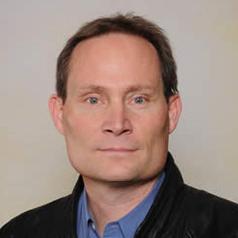
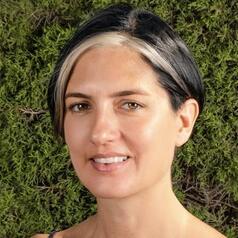
Professor of Mathematics, Director of Institute for Mathematics and Democracy, Wellesley College Ismar Volić is a professor of mathematics at Wellesley College. His research area is algebraic topology. He has written over 30 scientific articles and three books, and has delivered some 300 lectures in over 20 countries. He also interested in the the ways mathematics and politics intersect. He teaches classes in this area and has co-founded the Institute for Mathematics and Democracy.
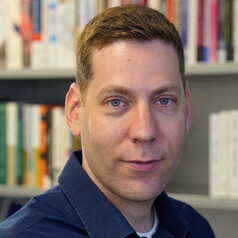
Professor of Anthropology, University of Notre Dame Ian Kuijt is Professor of Anthropology at the University of Notre Dame. He specializes in the social geography of village life within small-scale prehistoric and historic communities. Drawing upon ethnography, social theory, and archaeology, his scholarship is focused primarily on emerging social inequality, identity, and the construction of community through ritual and economic means. Professor Kuijt is the author or co-editor of seven books, including Transformation by Fire: The Archaeology of Cremation in Cultural Context (2014); People of the Middle Fraser Canyon: An Archaeological History (2012); Macroevolution in Human Prehistory (2009); and Life in Neolithic Farming Communities: Social Organization, Identity, and Differentiation (2000). His most recent co-authored book, Island Places, Island Times (2015), employs photographic recognition software to play 23 linked two-minute films designed, filmed, and produced by Wiliam Donaruma (Notre Dame, Film Television and Theater) and Kuijt. He has written over one hundred scholarly articles, including publications in Proceedings of the National Academy of Sciences, Current Anthropology, American Antiquity, The Journal of Economic Anthropology, and The Journal of Archaeological Science. He serves on a number of editorial boards, including Antiquity and Paléorient. Professor Kuijt’s research has been supported by major fellowships and grants from the National Science Foundation, the Social Sciences and Humanities Research Council of Canada, the University of Notre Dame Institute for Scholarship in the Liberal Arts, the Canadian Federation for the Humanities and Social Sciences, the Wenner Gren Foundation for Anthropological Research, the Amerind Foundation, the John Tynan Foundation, the Ministry of Foreign Affairs and Cooperation-Spanish Agency for International Cooperation, Spain, the John Templeton Foundation, the British Academy, the Mellon Foundation, and the Sigma Xi Foundation. In 2005 he was awarded a National Endowment for the Humanities fellowship, and in 2009 he served as the Naughton Distinguished Visiting Professor, Keough-Naughton Institute for Irish Studies.
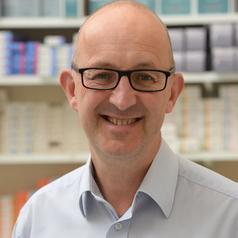
Professor and Director of the Gildenhorn Institute for Israel Studies, University of Maryland Dr. Ilai Saltzman is the Director of the Gildenhorn Institute for Israel Studies at the University of Maryland, College Park. His scholarship and teaching focus on international security, Israeli foreign and security policy, US foreign policy, and political psychology. Dr. Saltzman is the author of Securitizing Balance of Power Theory: A Polymorphic Reconceptualization (2012). He has also written numerous scholarly articles and book chapters, and commentaries in the Los Angeles Times, Ha’aretz, The Jerusalem Post, and other prominent outlets. Dr. Saltzman earned his Ph.D. in International Relations in 2010 from the University of Haifa and was a postdoctoral research fellow at the International Security Program (ISP), Belfer Center for Science and International Affairs, John F. Kennedy School of Government, Harvard University (2009-2010). Before he arrived in College Park, Dr. Saltzman was the Israel Institute’s Associate Director for Academic Program. In the past, he served as a professor of government at Claremont McKenna College where he taught classes in International Relations, Israeli foreign and security policy as well as US foreign policy. He had also taught at the Hebrew University of Jerusalem’s International Relations Department and the Rothberg International School (RIS), and Tel-Aviv University’s Political Science Department.
Professor in Clinical Pharmacy, Aston University Dr Maidment is an experienced academic and clinical pharmacist. Prior to moving to Aston he spent 20 years in practice within community pharmacy, the acute sector and mental health/dementia. He has been chief pharmacist in two trusts and led R&D in another trust. In addition to his PhD, he has two diplomas (in management and mental health pharmacy), a masters in health services research and a teaching certificate. He has published over 120 papers in peer-reviewed journals and he led six NIHR/UKRI grants. He has been working clinically and as a researcher in dementia for over 25 years.
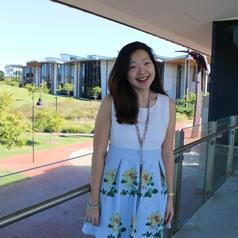
Lecturer in Evolutionary Biology, University of Oxford I am an evolutionary biologist broadly interested in reproductive ageing, nongenetic parental effects, sexual selection and life-history theory. My postdoc work addressed an important but understudied aspect of reproductive ageing: declining ejaculate performance with male age. I used a short-lived tractable animal model, the fruit fly Drosophila melanogaster to investigate sperm- and seminal fluid-mediated male reproductive ageing and interventions to delay it. Now, as a Royal Society Dorothy Hodgkin Fellow, I am interested in understanding how paternal age and paternal diet influence the fitness of the offspring. Recent evidence suggests that a father’s age and diet can have important effects on offspring physiology. These studies highlight that paternal effects are likely to be powerful determinants of offspring fitness, yet many important questions in the study of paternal effects remain unanswered, such as why and how they occur. I use fruit flies to identify the causal relationship between paternal age, diet and offspring fitness, and to uncover the ejaculate-mediated mechanisms driving these relationships. My group also studies the transgenerational effects of gametic ageing and experimentally tests the predictions of life-history and ageing theories.