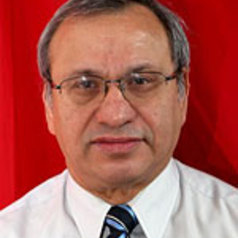
Professor, Finance, RMIT University Imad Moosa obtained a BA in economics and business studies, MA in the economics of financial intermediaries and a PhD in financial economics from the University of Sheffield (UK) in 1975, 1976 and 1986, respectively. He has received formal training in model building, exchange rate forecasting and risk management at the Claremont Economics Institute (USA), Wharton Econometrics (USA), and the International Center for Monetary and Banking Studies (Switzerland). Until 1991, Imad had worked as a financial analyst, financial journalist and a professional economist/investment banker. As a result, he gained practical experience in foreign exchange, money market operations, new issues, securities portfolios and corporate finance. He was also an economist at the Financial Institutions Division of the Bureau of Statistics at the International Monetary Fund (Washington, DC). Imad has served in a number of advisory positions with private and public institutions, including KPMG, AUSAID, US Treasury, Central Bank of Kuwait and the United Nations. In 1991 he started an academic career by lecturing in Economics and Finance at the University of Sheffield (UK). In 1994 he joined La Trobe University, where he ended up holding a chair in finance, before joining Monash University as a professor of finance during the period September 2006-July 2010. He has published 13 books and over 160 papers in academic journals. His work has appeared in the Journal of Futures Markets, Journal of Applied Econometrics, Quantitative Finance, Journal of Financial Studies, American Journal of Agricultural Economics, IMF Staff Papers, Southern Economic Journal, Journal of Development Economics, Journal of Comparative Economics, and Journal of Economic Behavior and Organization. He has also written for professional magazines such as the prestigious Euromoney. His most recent books include Quantification of Operational Risk Under Basel II: The Good, Bad and Ugly (Palgrave), The Theory and Empirics of Exchange Rates (World Scientific), and The Myth of Too Big to Fail (Palgrave).
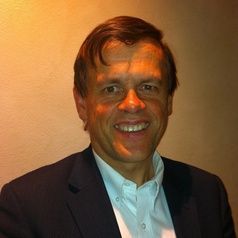
Adjunct Clinical Associate Professor, AMREP Department of Medicine, Alfred Hospital, Melbourne & Senior Medical Oncologist and Palliative Care Physician, Melbourne Oncology Group, Cabrini Haematology and Oncology Centre, Wattletree Road, Malvern, Monash University *Medical Oncology Fellowship- Alfred Hospital, Melbourne 1983-4 *Clinical and Research Fellowship in Medical Oncology, Memorial Sloan-Kettering Cancer Centre, NY, NY 1985-7. (The first Australian to be accepted into this program) *Palliative Care Physician, RGH, Victoria, 1987-90 (The first such position in Victoria) *Established and ran first formal undergraduate teaching courses in palliative care at Melbourne University in 1987-90 and Monash University 1991-2004. Details of the Monash course were seen as novel and innovative and were published as a fast-track publication in ‘Psycho-oncology’ in 1994. *Helped draw up the guidelines for the establishment of first free-standing, dedicated palliative care unit (Fairfield House) at Alfred Hospital Melbourne in 1988. *Commenced and established the inpatient and day hospital medical oncology service at Cabrini Hospital, Melbourne in 1987, now one of the largest in Australasia. *Helped to establish the first dedicated and free-standing palliative care unit in the private sector in Australia at Cabrini Hospital, Prahran. This 22 bed unit opened in Nov 1999. *Helped establish Cabrini’s own dedicated 24-hour domiciliary palliative care nursing service in 1999. *Visiting Medical Oncologist, Alfred Hospital, Melbourne 1987-2011 *Involved in many oncology clinical trials at Alfred Hospital and Cabrini Hospital. *Regular teaching of Monash undergraduate medical students in PBL tasks and in private office at Cabrini Hospital, a 550 bed, private not-for-profit university-affiliated acute care teaching hospital. *Supervisor of Advanced trainees in Medical Oncology/Palliative Medicine *Various publications on novel therapies; evidence-based clinical cancer research; palliative care; PSA screening for, and treatment of, early stage prostate cancer; alternative cancer therapies; and relationships between physicians and industry.
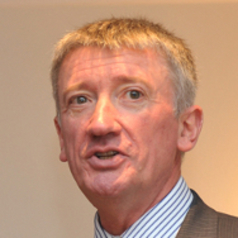
Associate Lecturer in International Relations, Anglia Ruskin University In the RAF Ian was a navigator, initially on the Vulcan bomber but later on the Hercules transport aircraft. He commanded a front-line squadron and saw service in the Falklands, Iraq and Afghanistan among other places. He entered an academic stream towards the end of his career, gaining two master’s degrees, and ended his career in an MoD think-tank looking forward 40 years to gauge security threats broadly, and the roles of air and space power in particular. Since leaving the RAF he has lectured at a number of UK Universities in the fields of International Relations and Security, and presently is the coordinator for the MA in International Relations at Anglia Ruskin University, where he also lectures in Criminology and Working in the Public Services. He maintains his MoD links, and has written for both MoD and wider, defence publications. Ian’s prime research area is the relationship between the Government and the Media over the use of military force, but he is also researching the International Order and challenges it is facing, as well as broader issues within the International Relations and Security fields. Having helped establish the MA in International Relations at ARU, Ian continues to deliver modules on Conflict and Communication and on War, Peacekeeping and Military Intervention, as well as continuing to help develop the degree. He also delivers modules on Leadership and on Terror as a Crime.
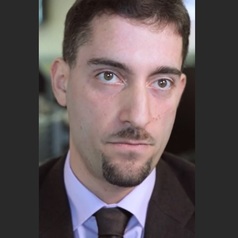
Senior Lecturer in Law, University of Westminster Ioannis Glinavos is Senior Lecturer in Law at the University of Westminster. He studied at Essex (LLB) and Kent (LLM, PhD) before taking a Teaching Fellowship at SOAS (Contract Law). He then held lectureships at Kingston (Contract Law) and Reading (Company and Commercial Law). Ioannis has published two books with Routledge (2010, 2013) and a series of articles on Law and Development, Law and Economics and Investment Arbitration. He is currently researching foreign investor rights in the context of the economic crisis. Ioannis is also a blogger and commentator on Greek politics.
Senior Lecturer in Finance, University of Stirling I have maintained an active personal interest in stock market investment since the BT3 privatization in 1993. Much of my research and teaching is motivated and informed by practical experience as a private investor: both through the dot com bubble and collapse, as well as, the more recent financial crisis. I am particularly interested in the practical applications of investment theory and research for individual, as well as for institutional investors. I was awarded the Diploma in Financial Planning (DipPFS) in 2010, the CFA designation in 2003, the ASIP in 2002 and the IMC in 1998. My PhD thesis titled "The relationship between concentration and realised volatility: an empirical investigation of the FTSE 100 Index January 1984 through March 2003" was completed at the University of Stirling in 2004 and in 1999 I was awarded the MSc with distinction in investment analysis from the University of Stirling. I have been at the University of Stirling since September 1998. I was appointed as a lecturer in finance in September 2003. Prior to this, I was a PhD student, teaching assistant, research assistant and MSc student. Before studying finance and investment, I worked as a marine biologist in Canada, after graduating with an upper second in marine and environmental biology from the University of Saint Andrews.
Honorary Professorial Fellow, School of Chemistry, University of Melbourne Ian Rae is an Honorary Professorial Fellow in the School of Chemistry at the University of Melbourne. He has a PhD from the Australian National University and many years of experience with university research, reviews, and industry consulting. Since leaving the laboratory Ian has served as an adviser to government agencies in Australia and to the United Nations Environment Program. He writes about the history of chemistry, chemical technology, and chemists and is co-editor of the Australian Academy of Science journal Historical Records of Australian Science. He was previously the Dean of Science at Monash University and is a former President of the Royal Australian Chemical Institute.