Associate Professor in Marketing, Heriot-Watt University I joined Heriot Watt as a Reader from the University of Edinburgh and before that held the post of senior lecturer at University of Sydney. My main interests revolve around sustainability. I am the Sustainable Consumption theme leader for the International Sustainable Development Research Society and my research focusses on anti-consumption, consumer’s responses to scarcity and how consumers dispose of goods. This has led to policy work exploring ways to rebalance dysfunctional relationships with materialistic consumption. http://allofusfirst.org/library/from-i-to-we-changing-the-narrative-in-scotlands-relationship-with-consumption/ Starting with an interest in how the Scottish Green party were influencing the Scottish Independence referendum, I have spent the last 4 years studying volunteer participation in this event and the marketing practices deployed, including the use of Hope vs Fear appeals. As part of this, I conducted what is the most comprehensive survey of the Yes volunteers to date, the findings of which, published by CommonWeal “available via http://allofusfirst.org/library/the-yes-volunteers-capturing-the-biggest-grassroots-campaign-in-scotlands-history This work has been widely reported in new media outlets such as Bella Caledonia, Common Space and Independence live and the Scottish Independence podcast. It is also making its way through academic journal review processes.
Professor in the Department of Economics, UCL Ian Preston is Professor in the Department of Economics at University College London. He received his D.Phil in Economics from Nuffield College, Oxford in 1989. He is a Research Fellow of the Institute for Fiscal Studies and is Deputy Research Director of the Centre for Research and Analysis of Migration at UCL. He has been the Editor of the Economic Journal Conference Volume and the Editor of Fiscal Studies. His main research interests are in applied microeconomics, particularly consumer demand, consumption and savings, income distribution, taxation, public spending and child costs, political economy and the economics of sport. His interests in the economics of migration concern especially the impact on receiving countries and the nature of attitudes towards immigrants.
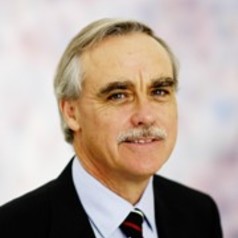
Emeritus Professor, University of Melbourne Ian McDonald graduated with a PhD from Simon Fraser University in 1974. His fields of study are Behavioural Economics and Macroeconomics. Ian has been at the University of Melbourne since 1974. He was promoted to Senior Lecturer in 1981, Reader in 1986 and Professor in 1990. In 2012 he was appointed emeritus professor. He has held visiting positions at the Massachusetts Institute of Technology, Monash University, Nanyang University, Oxford University and Queen’s University. Ian has held a number of administrative positions including Head of the Department of Economics, University of Melbourne 1993 to 1996, Chair of the Teaching and Learning Quality Assurance Committee, University of Melbourne, 1999 to 2000 and Deputy Dean, Faculty of Economics and Commerce, University of Melbourne, 1999-2002 and 2005. Ian is an Editor of the Australian Economic Review and a Fellow of the Academy of Social Sciences, Australia.
Professor of Sports Analytics, University of Salford Ian gained a BSc (Hons) in Mathematical Physics from the University of Liverpool before studying for a PhD at the University of Manchester in Extreme Value Statistics. After a short time as an Investment Analyst, Ian returned to academia at the University of Salford. Ian is now Reader in Business Analytics and Director of the Centre for Sports Business Research. He is also Chair of the Statistics in Sport Section of the Royal Statistical Society. His research interests include statistics in sport and the analysis of gambling markets and various gambling issues. Ian has been involved in several high-profile consultancy projects with, for example, the General Medical Council, the Press Association, Football DataCo, the Premier League, and various bookmakers. He was co-creator of the EA SPORTS Player Performance Indicator, the official player rating system of the Barclays Premier League.
Senior Lecturer in Human Biology, Loughborough University I am a Human Biologist with a keen interest in global health and well-being throughout the lifespan. My research focus on child growth and health in low-income countries, and among children suffering from poverty, and discrimination. I use a biocultural approach on my research, which puts in perspective the symbiotic effects biology and culture have on humans. I am passionate in disseminating my research through artistic outputs. Science and arts should mingle more. (see my CV here https://www.visualcv.com/dr-ines-varela-silva)
I am a political sociologist and my primary area of research over the last 10 years has been on the politics of identity, representation and violence in relation to development and governance. I believe that good research should make a social impact and I have taken inspiration from and evolved through connections with academic, practical and policy spheres. Soon after completing my PhD in International Development from the University of Bath in 2010 I joined BRAC University’s Institute of Governance Studies (now called Institute of Governance and Development) as their Head of Research between 2010-2012. I was steering the IDRC’s Think Tank Initiative programme and during my tenure I led the research team on the publication of the first and very influential State of Cities report on Dhaka. In 2012, I joined the University of Surrey’s Department of Politics where I was engaged with the Centre for Critical Research on International Intervention. I came to the U.K. for the first time in 2001 to study for a Master’s in Gender Studies at the University of Warwick, returned to India to work as a journalist and then a scholarship brought me back to the U.K. in 2004 for an M.Res and Phd in International Development. At present, I am settled in the U.K. but like most cosmopolitan migrants I remain connected with my peers in India, Bangladesh and the rest of South Asia.