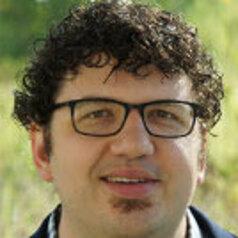
Assistant Professor, Chemistry, Binghamton University, State University of New York The Swierk group is broadly interested in understanding and controlling radical reactions initiated by single electron transfer, most often via photo- or electrochemistry. Use of spectroscopic and electroanalytical methods is central to much of the research in the group. One major area of emphasis within the group deals with understanding photoredox reactions. This class of reactions is transforming modern synthetic chemistry by substituting hard-to-handle, expensive and toxic reagents (e.g., HSnBu3) with short-lived excited states that can themselves be potent oxidants or reductants. Challenging bond-forming reactions can be accessed with this chemistry and, often, a variety of functional groups can be tolerated. Despite the promise of photoredox methods, a mechanistic understanding is lacking. Using a variety of experimental approaches and kinetic modeling, the Swierk group seeks to completely characterize photoredox catalytic cycles and identify the kinetically limiting steps, with an eye towards informing the design of new reactions. A second area of emphasis deals with electrosynthetic reactions and seeks to understand the role of electrode materials and double-layer structure on novel, bond-forming reactions initiated electrochemically. Systems of interest range from the desulfurization of fuel oils to small molecules for pharmaceutical applications. Standard electrochemical methods (e.g., CV, LSV, impedance) are partnered with the development of new spectroelectrochemical methods. There is also an NIH-funded effort in the lab focused on the safety and photochemistry of tattoo inks. Despite the popularity of tattoos and the billions of dollars spent every year on laser tattoo removal, we do not understand how tattoo inks transform under illumination and what risks they may pose to human health. The Swierk group utilizes a transdisciplinary approach that draws from analytical chemistry, materials science and cell biology to address the simple question, "How do tattoos fade?" In addition to the major project areas described above, there is also work in the group on the synthesis of carborane transition metal complexes for photophysical and catalytic applications, deep eutectic solvents for organic reactions, and photoelectrochemical methods for initiating radical reaction mechanisms.
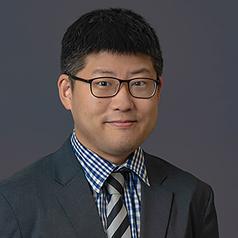
Assistant Professor, North Greenville University In 2009, I received B.A. in Political Science at the American University School of Public Affairs (SPA) In 2011, I received M.A. in Political Science at Fordham University. In 2018, I received M.Phil in International Relations at the American University School of International Service (SIS). In 2023, I received Ph.D. in International Relations from the American University School of International Service. Currently, I am an assistant professor of political science at North Greenville University. From 2011 to 2014, I served as an intelligence officer in the Republic of Korea Air Force.
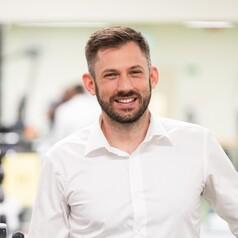
Senior Lecturer in Clinical Exercise Physiology, Queensland University of Technology Justin Holland is a Senior Lecturer in Exercise Physiology in the Sport, Exercise, Health and Physical Education discipline at QUT. Justin undertook his PhD at the University of Queensland examining the role of hydration in motorsport performance. Justin continues working with motorsport bodies to assist driver and pit crew performance. Justin undertakes a program of clinically meaningful research focused on exercise and lifestyle interventions in those with chronic disease (rheumatological and oncology) with a direct translational impact on the lives of patients and caregivers. He has developed a unique thematic program of research that consists of translational outcomes that impact on the health and wellbeing of communities. His program of research reinforces and promotes the value of allied health professional practice particularly exercise physiology in disease and lifestyle management which have a direct impact on the lives of patients, community and caregivers.
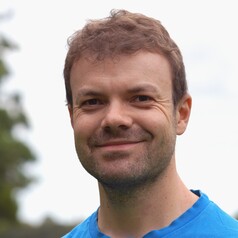
Lecturer in Plant Ecology, Macquarie University I am a vegetation ecologist with a special interest in plant functional ecology, biogeography, and conservation biology. I work as a Lecturer at Macquarie University. I have a broad interest in ecological research spanning from plant adaptations of single species to community assembly processes and patterns of biodiversity at a global scale.
Professor, Social and Behavioural Sciences, University of Amsterdam Joyeeta Gupta is the 2023 winner of the Spinoza Prize, the highest prize in the Netherlands for academic work (Euro 1.5 Million). She co-chaired UNEP’s Global Environment Outlook-6 (2016-2021), published by Cambridge University Press, presented to governments at the United Nations Environment Assembly in 2019, and won the Association of American Publishers PROSE award for Environmental Science. She is presently cochair of the Earth Commission (2019-2022), set up by Future Earth, together with Johan Rockström and Dahe Qin and has a plenary presentation to the World Economic Forum in Davos in 2023; and is member of the Global Commission on the Economics of Water (2022-2024) which is preparing a report for the UN Water Conference of 2023. In 2022, she was awarded the 2022 Piers Sellers Prize for world leading contribution to solution-focused climate research, recent world-leading research outputs and evidence of resulting impacts; application of an interdisciplinary approach; and focus on climate solutions, Priestley International Centre for Climate, Leeds University. She is full professor of environment and development in the global south at the University of Amsterdam and IHE Delft Institute for Water Education. She is also the Faculty Professor on Sustainability (2019-2024). She leads the programme group on Governance and Inclusive Development. She was lead author in the Intergovernmental Panel on Climate Change which won the 2007 Nobel Peace Prize with Al Gore and of the Millennium Ecosystem Assessment which won the Zaved Second Prize. She has published several books, is on the editorial board of seven journals, and has (co-)edited 13 Special Issues. Her Google Scholar Impact Factor is 64, with 120 journal papers and more than 17,000 citations. She has successfully supervised 29 PhDs and is currently supervising 20 PhD students in the areas of climate change, forest, food/fish, water and disaster governance as well as in development challenges such as food governance and child marriage. She has been on the scientific steering committees of international and national scientific programmes. At national level, she was the Vice-President of the Commission on Development Cooperation (2011-2019) and member of the Advisory Council on International Affairs (2011-2019), a statutory body that advises three Cabinet Ministers in the Netherlands. In 2019 she won an ERC Advanced Grant of 2.5 million Euros for work on climate change and fossil fuels. Photo credit: NOW, Studio Oostrom
Professor of Geology, University of Michigan-Dearborn Jacob Napieralski is a Professor of Geology at the University of Michigan - Dearborn. He is currently the Director of the Master of Science in Environmental Science and Director of the Environmental Interpretive Center. His expertise focuses on understanding the impact of past and future environmental change on people.