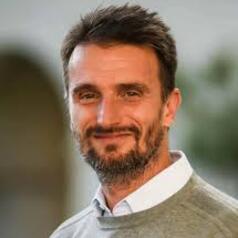
Associate Professor, Research, Coventry University Jan Pospisil is Associate Professor (Research) at Coventry University’s Centre for Trust, Peace and Social Relations and Co-Investigator of the Peace and Conflict Resolution Evidence Platform (PeaceRep), funded by UK FCDO. He has been working on South Sudan and Sudan since 2009.
Lecturer in Accounting, University of Sheffield James Brackley is a Lecturer in Accounting, specialising in Financial Reporting, Audit and Public Sector Accounting. James' PhD project was on the transfer of Public Health to Local Authorities following the 2012 Health and Social Care Act. He is also an ICAEW Chartered Accountant, qualifying in the Public Sector practice of PwC. His research interests include Science and Technology Studies based theorisations of how things are made valuable in public life via accounting representations in a range of empirical settings. These include the Audit industry, local government, healthcare and higher education. James convenes the Critical Accounting Podcast, which you can follow on Twitter or subscribe to on YouTube.
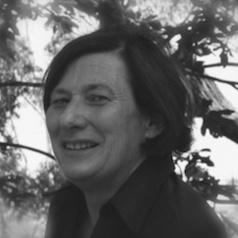
Honorary (Senior Fellow) School of Culture and Communication University of Melbourne. Editor in Chief, Design and Art of Australia Online, The University of Melbourne Joanna Mendelssohn studied under Bernard Smith as one of the first cohort of honours graduates in Fine Arts at the University of Sydney. She then worked at the Art Gallery of New South Wales, under Daniel Thomas and Tony Tuckson. After some years of working as a curator and then art critic, she joined UNSW where she became the coordinator of the Master of Art Administration, at the College of Fine Arts, UNSW where she also taught Australian art history and writing. On her retirement she was appointed an honorary associate professor. Her first book was the seminal study on Sydney Long (1979). This was followed by a series of studies on Lionel Lindsay. The research for her book, Lionel Lindsay: an artist and his family (Chatto & Windus, London 1988) was supported by a Literature Board Fellowship. She later revisited the ways in which the mythology of the Lindsay family had been created in her PhD thesis at the University of Sydney, This was reworked and published as Letters & Liars: Norman Lindsay and the Lindsay family (Angus & Robertson 1996). She wrote the catalogue for the 1990 Yellow House exhibition at the Art Gallery of New South Wales and was curator for the touring exhibition Larter Family Values (Casula 2006) and Lionel's Place ( Maitland 2017). Her most recent book, co-authored with Catherine De Lorenzo, Alison Inglis and Catherine Speck, is Australian Art Exhibitions: Opening our eyes, (T&H 2018). This project is the culmination of an ARC Linkage Project with UNSW, University of Melbourne and University of Adelaide in partnership with the National Gallery of Australia, National Gallery of Victoria, Art Gallery of New South Wales, Art Gallery of South Australia and Museums Australia. In 2003 Mendelssohn was instrumental in organising the national collaboration of universities and cultural institutions that ensured the future of Joan Kerr's research for The Dictionary of Australian Artists by creating the Dictionary of Australian Artists Online, which has now evolved into Design and Art of Australia Online (aka DAAO). The DAAO is one of the data bases collaborating with the University of Melbourne to create the Australian Cultural Data Engine for Research, Industry and Government.
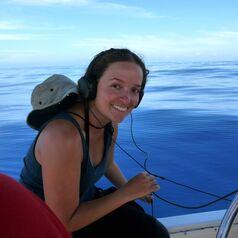
Enseignante chercheuse en éthologie, Université Paris Nanterre – Université Paris Lumières Depuis 2008 Juliana López Marulanda s’intéresse a l’écologie et le comportement des cétacés. Elle possède de solides compétences dans la collecte de données acoustiques et comportementales chez les mammifères marins. Elle a participé à un projet de recherche sur le comportement de pêche des dauphins de Guyane (Sotalia guianensis) au Brésil pendant ses études de premier cycle. De retour dans son pays natal, elle a cofondé et dirigé une organisation à but non lucratif en Colombie (www.macuaticos.org) pour la conservation des mammifères marins. Elle a conçu et développé un projet de recherche pour diagnostiquer la composition taxonomique, la distribution spatiale, la structure sociale et les menaces de conservation de la communauté des mammifères marins dans le golfe de Tribuga, dans le Pacifique Nord colombien. De ce projet, il a acquis les compétences nécessaires pour concevoir et gérer des expériences sur le terrain. Au cours de sa première année de maîtrise, il a étudié les changements dans la fréquence respiratoire des globicéphales noirs (Globicephala macrorhynchus) par rapport au bruit sous-marin et a constaté que les changements respiratoires chez cette espèce ne semblent pas être un bon indicateur du stress. Au cours de sa deuxième année de maîtrise, elle a étudié la perception sensorielle des grands dauphins (Tursiops truncatus) captifs et a trouvé des preuves de magnétoréception en détectant des champs magnétiques expérimentaux (Kremers et al., 2014). Au cours de son doctorat, elle a étudié la communication chez les grands dauphins à l'Institut de Neurosciences Paris-Saclay encadrée par le Pr. Olivier Adam et le Dr. Fabienne Delfour. Elle a analysé la production des sifflements des dauphins captifs en relation a ces séances de training et elle a trouvé une augmentation significative des sifflements après les interactions avec les humains (Lopez-Marulanda et al., 2016). Elle a participé au développement d’un système d’enregistrement audio-vidéo appellé BaBeL, que consiste a 4 hydrophones et une caméra 360º. Ce système permet la localization du dauphin emetteur d’un son et ainsi permet faire le lien entre la production sonore et les observations comportementales. Le système BaBeL a ete testé avec des dauphins en liberté (Lopez-Marulanda et al., 2017) et avec des dauphins captifs (Lopez-Marulanda et al., 2019) en plusieurs delphinariums d’Europe. Actuellement elle est enseignante-chercheuse temporaire à l'université de Paris Nanterre dans le Laboratoire de Éthologie Cognition et Développement (LECD).
Director, Disaster Research Center and Professor, Public Policy & Administration, University of Delaware Research interests include community resilience and recovery, emergency planning, crisis management, and organizational improvisation and resilience. Conversant on topics such as disaster planning, coastal hazards, technology in emergency management and risk perception and communication. Has published articles and made presentations about emergency response to disasters including: the Indian Ocean tsunami, the September 11th World Trade Center terrorist attacks, Hurricane Katrina, and Hurricane Sandy Co-author of American Dunkirk: The Waterborne Evacuation of Manhattan on 9/11, Temple University Press
Adjunct Senior Research Fellow, James Cook University, Australia and Senior Marine and Climate Scientist, OceanCare, Switzerland, James Cook University James is an Adjunct Senior Research Fellow at James Cook University, Townsville, Australia. He completed his PhD in marine biology at James Cook University in November 2015, under the supervision of Prof. David Bellwood. James coordinated the National Coral Bleaching Taskforce from 2015-2019, when he moved to the Great Barrier Reef Marine Park Authority as a Deputy Director. In 2022, James moved to Switzerland where he works on science and policy for an international oceans NGO; OceanCare.