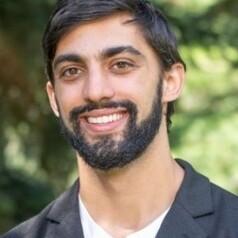
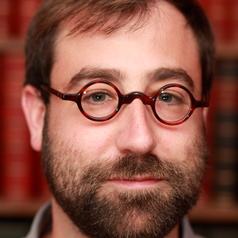
Assistant Professor of Plant Evolutionary Biology, University of Tennessee As a plant evolutionary biologist, I apply my research and education experience to understand how plant traits are constructed, how they function, and how they have evolved across geologic time. The techniques I use to ask and answer these fundamental questions integrate anatomy, physiology, and phylogenetics, using both large-scale analyses across thousands of species and small-scale analyses narrowing in on key organisms. I am also a science communicator working closely with a fellow botanist to democratize the study of plant biology through the production of academically rigorous (yet accessible) videos free to the public on social media. Check us out @letsbotanize.
Assistant Professor of Political Science, St. Francis Xavier University Jamie Levin is an Associate Professor in the Department of Political Science at St. Francis Xavier University in Nova Scotia, Canada. He earned his PhD in Political Science at the University of Toronto and an MsC from the London School of Economics. His work focuses on the role of weapons in the resolution of civil wars. Jamie’s research demonstrates how weapons can be a stabilizing force in the resolution of conflict. Previously, Jamie was a Post Doctoral Fellow at the Henry M. Jackson School of International Studies at the University of Washington and the Harry S. Truman Research Institute for the Advancement of Peace at the Hebrew University of Jerusalem with funding from the Azrieli Foundation. Prior to undertaking PhD studies, Jamie worked as a director of a not-for-profit organization engaged in peace process advocacy in New York City. His work has appeared in both the academic press and popular media, including: Journal of Peace Research, Foreign Policy, International Peacekeeping, International Politics, International Studies Review, the Palestine Israel Journal, Harper’s Magazine, the Washington Post’s Monkey Cage, the Walrus, Policy Options, Haaretz, the Jerusalem Post, the Toronto Star, and the National Post. Jamie is a Resident Fellow at the Brian Mulroney Institute of Government and a Research Fellow at the Centre for the Study of Security and Development.
Assistant Professor of Urology, School of Medicine, University of Washington Dr. Ahn is an Assistant Professor of Urology at the University of Washington. She earned her bachelor’s degree from Harvard University and went on to complete her medical degree at the University of Maryland School of Medicine. She completed urology residency training at New York-Presbyterian/Columbia University in New York, NY and pediatric urology fellowship at Seattle Children’s Hospital. She obtained a master’s degree in Health Services at the University of Washington. Her clinical and research interests include genitourinary reconstruction, health disparities, and quality improvement in Pediatric Urology.
Assistant Professor of Economics, University of Oklahoma Judith Liu is an Assistant Professor of Economics at the University of Oklahoma. Fields: Health Economics, Public Economics, Labor Economics
Senior Lecturer in Public Health, University of Stirling James Nicholls is a substance use researcher with a specialism in alcohol and drug policy. He has written extensively on the history of drinking cultures and their relationship to policy, and on the role of regulation in shaping outcomes for both alcohol and other drugs. He has previously acted in an advisory capacity to the UK Government, sitting on the Public Health England Alcohol Leadership Board and coordinating the All Party Parliamentary Group on Alcohol Harm. As Chief Executive Officer of Transform Drug Policy Foundation, he worked with partners across the globe to explore pathways to drug policies that could better promote human rights, public health and social justice. He is now a Senior Lecturer in Public Health at the University of Stirling.
Professor of political science, Michigan State University Jennifer Wolak is a professor of political science at Michigan State University. She studies American political behavior, with a particular focus on political psychology, public opinion, state politics, and gender.