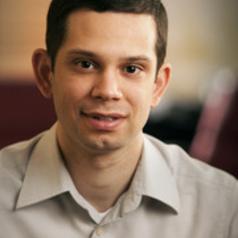
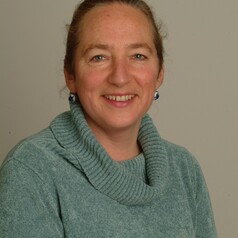
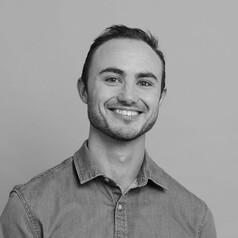
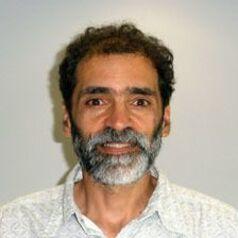
Lecturer in International Relations and Comparative Politics, University of Sydney Justin Hastings is Professor in International Relations and Comparative Politics in the Department of Government and International Relations at the University of Sydney, where he is also affiliated with the Sydney Southeast Asia Centre, the China Studies Centre, the Sydney Cyber Security Network, and the Centre of International Security Studies. He is also a Visiting Senior Research Fellow at the Korea Centre of the National University of Singapore. From 2008 to 2010, he was an Assistant Professor in the Sam Nunn School of International Affairs at the Georgia Institute of Technology, where he remains affiliated with the Center for International Strategy, Technology, and Policy. He received an MA (2003) and PhD (2008) in political science from the University of California, Berkeley, and an AB in public and international affairs from Princeton University in 2001.
Professor of Russian Literature (Emerita), University of Oxford I retired in September 2021 after a 30-year career teaching and researching Russian literature and culture at the University of Oxford. Most of my publications have related to banned satirical authors of the pre-WWII Stalin era (Bulgakov and Zamiatin), but more recently I led a project and edited a volume on protest theatre in Russia, Ukraine and Belarus during the Putin era. _____ Professor Curtis’s published research has largely been focused on subversive writers of the early Stalin Period (1920s and 1930s). She has spent a great deal of time working in archives in Russia and abroad, and this has enabled her to publish a range of analytical and biographical studies of the life and works of the satirical novelist and playwright Mikhail Bulgakov (1891-1940). She has also explored the life and works of Bulgakov’s friend and contemporary Evgeny Zamiatin (1884-1937), an anti-utopian writer much admired by George Orwell. In 2013 she published the first full biography of Zamiatin to appear in any language; she has also co-edited (with a St Petersburg colleague) a scholarly edition in Russian of his most famous novel, We / Мы, based on a unique typescript she discovered in an American archive. After publishing a new biography of Mikhail Bulgakov in 2017 ((Reaktion Books and University of Chicago Press: Critical Lives, 2017), she is currently completing a Companion to ‘The Master and Margarita’, Bulgakov’s most famous novel, for Academic Studies Press (Boston, USA), which will be published in 2018 or 2019. Professor Curtis has developed a particular interest in Russian drama, and runs a specialist option for students which involves the study of plays from the 1820s right up to the present day. Over the last few years she has been involved in helping with productions of Russian plays in several British theatres (the RSC at Stratford, the Barbican and National Theatres in London, the Belgrade Theatre in Coventry) by providing cast workshops, writing programme features, working on translations, and advising directors and design staff. She is currently undertaking research on 21st-century drama written in Russian in Russia, Ukraine and Belarus, which has been notably bold in its challenges to the political establishment and to socially conservative values. This research is being developed in association with two parallel research projects (2016-2020) funded by the AHRC Open World Research Initiative (OWRI) at the Universities of Oxford (https://www.creativeml.ox.ac.uk) and Manchester (http://projects.alc.manchester.ac.uk/cross-language-dynamics/). She will be editing a volume of essays and interviews on this topic for I.B. Tauris, due to be published in 2020.
PhD Student in Sociology and Social Justice, University of Windsor Jennifer Halliday is a PhD candidate in Sociology and Social Justice at the University of Windsor. She has a transdisciplinary, intersectional academic background with experience in archaeology, forensic anthropology, criminology, and sociology. Her research focuses on the intersections of ethics and environmental harms, environmental racism, and the effects of environmental degradation on human skeletal growth.
Research Assistant, Swinburne University of Technology I am a Research Assistant based at Swinburne University of Technology, Melbourne, Australia, working for Associate Professor Simon Knowles. I recently completed my Bachelor of Psychological Sciences (Honours), exploring the factors which influence mental health outcomes for individuals with gastroparesis. I am passionate about promoting greater understanding and awareness of the mind-body connection and the importance of holistic approaches to health and mental health. I intend to undertake future study with the hope to improve the lives of those with chronic health and mental health issues.
Professor of Geology, West Virginia University Recently I have been investigating the Paleozoic and Mesozoic tectonic evolution of Northern Alaska and the Arctic region in general. I enjoy exploring the geology of the remote northern mountain belts. In the last few summers I have been doing field work along the rivers that drain Alaska’s Brooks Range. With my students and collaborators, we map and sample for geochronology, thermochronology and paleothermometry in order to unravel the history of the assembly of Northern Alaska. I have also lead projects on the structure and evolution of the Appalachian fold-and-thrust-belt and the Appalachian basin. I am starting a new project in collaboration with Stockholm University and the USGS to study the evolution of the Koyukuk basin, located south of the Brooks Range.
Professor of Psychology, College of Charleston Dr. Wright received her Ph.D. in Developmental Psychology and M.A. in Philosophy from the University of Wyoming, doing most of her undergraduate work at Bennington College and the University of Colorado, Boulder. She specializes in moral psychology, studying the development and function of virtue (with a particular focus on humility), and the ways children, adolescents, and adults navigate the moral domain, including how the process and react to moral differences and disagreement. She has published over fifty articles and four books, including A Psychological Perspective on Folk Moral Objectivism (2023, Routledge Press), Understanding Virtue: Theory and Measurement (2020, Oxford Press), an edited volumes on Humility (2019, Oxford Press), and Advances in Experimental Moral Psychology (2014, Bloomsbury Publishing). Of particular interest to Dr. Wright is how people understand the nature and function of morality and how they use it to shape, control, and protect collective well-being and individual autonomy, balancing between promoting a diversity of beliefs, values, and practices, while discouraging (and prohibiting) those beliefs, values, and practices that cause harm.