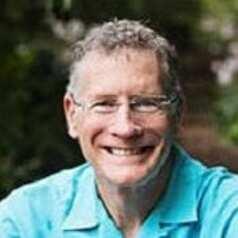
William H. Danforth Distinguished University Professor, Arts & Sciences at Washington University in St. Louis Jonathan Losos is an evolutionary biologist known for his research on how lizards rapidly evolve to adapt to changing environments. Jonathan was born and raised in Saint Louis. He graduated from Harvard University in 1984 and received his PhD from the University of California in 1989. After a two-year postdoctoral fellowship at U.C., Davis, Jonathan came to Washington University for his first faculty position. While there, he served as the Director of the Tyson Research Center and the Environmental Studies program, before leaving in 2006 to become a professor of biology at Harvard and Curator in Herpetology at the university’s Museum of Comparative Zoology. He returned to Washington University in 2018 and was appointed as the inaugural holder of the William H. Danforth Distinguished University Professorship and Director of the Living Earth Collaborative, a partnership between Wash U., the Saint Louis Zoo and the Missouri Botanical Garden. This new biodiversity center, nearly unique in partnering a leading university, zoo, and garden, has as its mission to advance knowledge of biodiversity and to ensure the future of earth’s species in their many forms. Jonathan has written three books, most recently "The Cat’s Meow: How Cats Evolved from the Savannah to Your Sofa," and is the author of "Improbable Destinies: Fate, Chance, and the Future of Evolution" (Penguin Random House, 2017) and one of the leading college biology textbooks (Raven et al., Biology). Jonathan has been elected to the National Academy of Sciences and the American Academy of Arts & Sciences and is the recipient of many awards, including the Daniel Giraud Elliot Medal from the National Academy of Sciences, the Theodosius Dobzhansky Prize from the Society for the Study of Evolution, the Edward O. Wilson Naturalist Award and the Sewall Wright Award from the American Society of Naturalists, and the David Starr Jordan Prize.
Distinguished Professor of Law and (by courtesy) Asian American Studies; Founding Vice Chancellor for Equity, Diversity and Inclusion (2015-20), University of California, Los Angeles Jerry Kang is Distinguished Professor of Law at UCLA. He graduated magna cum laude from both Harvard College (physics) and Harvard Law School, where he was a supervising editor of the Harvard Law Review. After clerking for the Ninth Circuit Court of Appeals, he started his professorship at UCLA in 1995. A leading scholar on implicit bias and critical race studies, Professor Kang collaborates broadly across disciplines and industries on scholarly, educational, and advocacy projects. An inspiring teacher, he has received UCLA’s highest recognition: the Eby Art of Teaching Distinguished Teaching Award. During 2015-20, he served as the University’s Founding Vice Chancellor for Equity, Diversity and Inclusion.
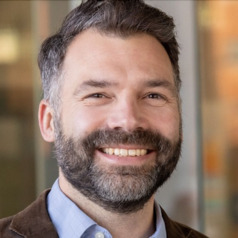
Associate Professor of Architecture, Sustainable Built Environments and Marketing, University of Arizona Jonathan Bean, PhD, understands processes of market transformation in the building industry through an immersive study of high performance building. His TEDx talk Demand Less describes the potential of high-performance building to reduce carbon emissions. Bean has served as the faculty lead for thirteen finalist teams in the Race to Zero and Solar Decathlon Design Challenge competitions. In 2022, his students' design for an affordable housing building incorporating the innovative SunBlock distributed district energy system concept was recognized with the Commercial Grand Prize. Bean is a PHIUS Certified Passive House Consultant and serves on the board of the Passive House Alliance US. Bean is also the scholarship chair for the Society of Building Science Educators. A second stream of Bean's research spans the fields of consumer research, human-computer interaction, architecture, and design with a focus on taste and consumption. Bean has received grants from the Social Sciences and Humanities Research Council of Canada, the National Institute for Transportation and Communities, and others. Bean writes the Consuming Tech column for ACM Interactions magazine and his work on IKEA hacking was featured on an episode of the 99% Invisible podcast. In 2013, Bean and Concordia University Montréal marketing professor Zeynep Arsel, Ph.D. published a Journal of Consumer Research article that built on theories of practice to develop the concept of the taste regime, which is defined as "a discursively constructed normative system that orchestrates practice in an aesthetically oriented culture of consumption." The article has been cited over 400 times and has established taste as a key area of inquiry in Consumer Culture Theory. Bean and Arsel co-edited the 2018 Routledge book Taste, Consumption and Markets. Bean is co-director of the Institute for Energy Solutions, affiliated with the Arizona Institute for Resilience.
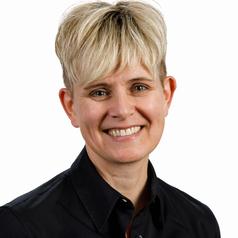
Associate Professor, Department of Physical Therapy, Faculty of Medicine, University of British Columbia Dr. Jackie Whittaker is an Associate Professor in the Department of Physical Therapy, at the University of British Columbia, and Research Scientist at Arthritis Research Canada in Vancouver, Canada. She holds a Michael Smith Foundation for Health Research Scholar Award. As a recognized clinical specialist in musculoskeletal rehabilitation, her research takes a lifespan approach to knee health, including the prevention of knee injuries and knee osteoarthritis. Her research is done alongside patients, healthcare providers, and other stakeholders to make it more relevant to real-world settings. Jackie recently co-led an international consensus exercise called OPTIKNEE which produced award-winning recommendations on how to prevent knee osteoarthritis after injury. Her research is guided by 21 years of clinical practice as a physiotherapist.
LIUNA Enrico Henry Mancinelli Chair of Global Labour Issues, School of Labour Studies, McMaster University Judy Fudge is the LIUNA Enrico Henry Mancinelli Chair of Global Labour Issues in the School of Labour Studies at McMaster University, which she joined in July 2018. Judy began her academic career in Canada, where she was Professor at Osgoode Hall Law School, York University (1987-2006) and Lansdowne Chair in Law at the University of Victoria (2007-2013), before moving to England to teach at the University of Kent (2013-2018). She has held visiting professorships and fellowships at several universities and institutes in Canada and Europe. In 2013, she was elected as a Fellow of the Royal Society of Canada; in 2014 she received an honorary doctorate from the Faculty of Law at the University of Lund in Sweden; and in 2019 she received the Bora Laskin Award for her distinguished contributions to Canadian Labour Law. Judy takes a socio-legal approach to studying work and labour and is committed to fostering a multi-disciplinary approach to understanding the challenges and opportunities facing workers. She has worked with women’s groups, legal clinics, trade unions and the International Labour Organization. Her most recent work focuses on labour exploitation, modern slavery and unfree labour in the context of labour migration and global supply chains.
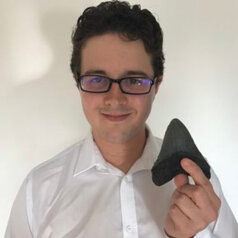
Doctoral researcher in Palaeobiology, Swansea University I am a doctoral researcher at Swansea University studying the functional diversity of sharks through time. This involves examining ecological changes of sharks across the last 66 million years using fossil teeth. I receive sponsorship from the Fisheries Society of the British Isles and am a member of the Pimiento Research Group, which aims to assess extinction mechanisms of marine megafauna such as sharks through time. The ultimate goal of the team is to use this information to inform ongoing conservation efforts. Additionally, I engage in outreach of shark palaeobiology through a variety of ways. My outreach, as well as previous work I have published, primarily focuses on the iconic megalodon sharks, its biology and ecology, and what the extinction of this apex predator could tell us about the effects of future shark losses.