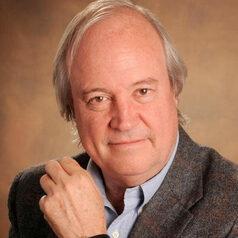
Centenary Professor, Centre for Deliberative Democracy and Global Governance, University of Canberra Professor John Dryzek is Centenary Professor in the Centre for Deliberative Democracy and Global Governance, University of Canberra. He was previously Distinguished Professor of Political Science and ARC Federation Fellow at the Australian National University. Research and teaching interests include: - democratic theory and practice - environmental politics - political theory - climate governance
Catedratico de Fisica Teórica, Universidad Autónoma de Madrid Soy Catedrático de Física Teórica de la Universidad Autónoma de Madrid y Académico de la Real Academia de Ciencias Exactas, Físicas y Naturales de España.
Assistant Research, Universidade do Porto I am a researcher at Institute of Astrophysics and Space Sciences (IA) in Porto. I got my first degree in Physics/Applied Mathematics (Astronomy) by the University of Porto in 2007. In 2008 completed the Mathematics Triplos with distinction at the University of Cambridge (UK). In 2012 obtained a PhD from the University of Portsmouth (UK). After my graduation at the Institute of Cosmology and Gravitation, I worked in Ciência Viva (PT), University of the Western Cape in South Africa, Università Degli Studi di Padova and Queen Mary University of London. I have been a member of IA since 2021. My current research interests focuses in studying the large-scale structure of the Universe in the optical and radio frequencies to understand the composition, formation and evolution of the universe and test General Relativity at cosmological scales. I am interested in using the Square Kilometre Array Observatory, and its precursor MeerKAT, in the radio and Euclid in the optical/infrared to probe the very early universe.
Maître de conférence en physique des astroparticules, Université Paris-Saclay Jonathan Biteau est maître de conférence et mène ses recherches au Laboratoire Irène Joliot-Curie de physique des deux infinis (IJCLab, Univ. Paris-Saclay, CNRS/IN2P3). Il enseigne la physique numérique, les astroparticules, l'astrophysique, la physique des particules et la physique nucléaire. Depuis 2015, il étudie dans la collaboration Pierre Auger les directions d'arrivée des rayons cosmiques d'ultra-haute énergie, qui ont permis en 2017 de valider leur origine extragalactique. Il a également été membre des collaborations d'astronomie gamma H.E.S.S. et VERITAS, et est un membre actif du consortium CTA depuis 2010. Il s'est spécialisé dans la variabilité des AGN à jet ainsi que dans les interactions entre les rayons gamma et le fond diffus extragalactique. Enfin, Jonathan Biteau contribue activement au développement d'instruments pour la physique des astroparticules, particulièrement pour les caméras qui équiperont les télescopes de taille moyenne du réseau de télescopes CTA-Nord.
Adjunct Lecturer of Philosophy, Georgetown University Jake Earl is Adjunct Lecturer of Philosophy at Georgetown University and a professional bioethics consultant. He completed a postdoctoral fellowship in bioethics at the National Institutes of Health Clinical Center and worked as a clinical ethicist at a comprehensive medical center. He holds a PhD in philosophy from Georgetown University, and his research interests include topics such as procreation and parenthood, biomedical research and innovation, population and climate change, and infectious disease.
Interim Director of the Frederick S. Pardee Center for the Study of the Longer-Range Future, Boston University Ambassador Jorge Heine is a lawyer, IR scholar and diplomat with a special interest in the international politics of the Global South. He was most recently a Public Policy Fellow at the Woodrow Wilson International Center for Scholars in Washington D.C. (2018-2019). He has served as ambassador of Chile to China (2014-2017), to India (2003-2007) and to South Africa (1994-1999), and as a Cabinet Minister in the Chilean Government. A past Vice-President of the International Political Science Association (IPSA), he was CIGI Professor of Global Governance at the Balsillie School of International Affairs, Wilfrid Laurier University, from 2007 to 2017, and a Distinguished Fellow at the Centre for International Governance Innovation (CIGI). He has been a Guggenheim Fellow; a Visiting Fellow at St Antony’s College, Oxford University; a United Nations Research Fellow at the Economic Commission for Latin America and the Caribbean (ECLAC); a Visiting Professor of Political Science at the University of Konstanz; and the Pablo Neruda Visiting Professor of Latin American Studies at the University of Paris. He is currently a non-resident Wilson Center Global Fellow at The Wilson Center in Washington D.C., a non-resident Senior Research Fellow at the Centre for China and Globalization (CCG) in Beijing, and an Honorary Visiting Professor of International Relations at the University of Sichuan in Chengdu. He has been a consultant to the United Nations, the Ford Foundation, the Canadian Ministry of Foreign Affairs, the Trinidad & Tobago Ministry of External Affairs, Oxford Analytica and Frost & Sullivan. A past president of the Caribbean Studies Association and of the Chilean Political Science Association, he served on the board of the Institute of International Relations (IIR) of the University of the West Indies, and was the first chair of the jury for the Luciano Tomassini International Relations Award of the Latin American Studies Association (LASA) in 2011-2012. He is on the editorial board of Diplomacy & Foreign Policy, World Affairs, Estudios Internacionales, Pensamiento Propio and the South African Journal of International Affairs. He has published fifteen books, including 21st Century Democracy Promotion in the Americas (with B. Weiffen, Routledge, 2015); the Oxford Handbook of Modern Diplomacy (with A. Cooper and R.Thakur, Oxford University Press, 2013,2015); and The Dark Side of Globalization (with R.Thakur, UN University Press, 2011), and some 100 journal articles and book chapters. An active commentator on current affairs, he is frequently interviewed by international media and has written for The New York Times, the Washington Post and the International Herald Tribune. He holds a law degree from the University of Chile, a B.Phil. in Modern Political Analysis from York University in England and an M.A. and a PhD in Political Science from Stanford University in California. Ambassador Heine’s areas of expertise include diplomatic studies, international relations, international politics of the global south, foreign policies of rising powers, globalization, multilateralism, democracy promotion, democratic transitions, transitional justice, as well as China, India, and Latin America.