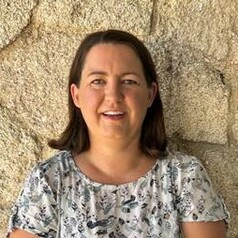
Adjunct Research Scientist in Marine Bioscience, University of Florida I earned a B.Sc. in Natural Sciences from Trinity College, Dublin, Ireland, where I developed an interest in animal behavior, marine biology, and conservation. I then obtained a M.Sc. in Evolutionary and Behavioural Ecology from the University of Exeter, UK and subsequently returned to Trinity College, Dublin to undertake my Ph.D., focusing on social group dynamics in zoo-housed animals, including elephants and orangutans. I have many years of experience in scientific research across a broad range of disciplines including behavioral ecology, cancer research, and marine biology.
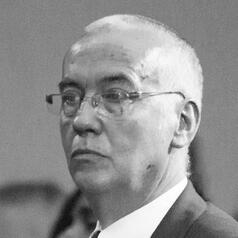
Assistant Professor of Educational Leadership, University of Tennessee Dr. Martinez's 30+ years of instructional and leadership experiences include roles in public, private, parochial and boarding school environments. He currently serves as an Assistant Professor in the Department of Educational Leadership and Policy Studies, a Division of the College of Education, Health, and Human Sciences at the University of Tennessee, Knoxville. After working for six years for Rockwell International as a systems engineer on the Space Shuttle Main Engines, Dr. Martinez changed careers and became a classroom teacher for seventeen years. He was fortunate to teach at all levels during these years, from kindergarten to 12th grade. Between 2007 and 2012, he served as a school administrator in both elementary and secondary schools in the Southern California area. As a faculty member, Dr. Martinez prepares future school leaders and develops intervention research studies to support early career teachers/administrators with their efforts to increase student success in Science, Technology, Engineering and Mathematics (STEM). Dr. Martinez completed his bachelor's degree in Mechanical Engineering from Stanford University in 1988, his master's degree in Educational Leadership from California State University, Channel Islands in 2009 and his doctoral degree in Educational Leadership from California Lutheran University in 2015.
PhD Candidate, Lancaster University I am a PhD researcher at Lancaster University currently writing my dissertation on the Gothic in musical theatre. My interests lie primarily in the Gothic, Romanticism, theatre history, contemporary theatre studies, the works of Victor Hugo, the works of the Brontës, and contemporary pop culture.
Professor of Fashion Thinking, University of Southampton Jonathan Faiers is Professor of Fashion Thinking at Winchester School of Art, teaching across a number of arts and design courses on the history of dress and textiles, and fashion as material culture. Jonathan’s early training as a fashion and theatre designer and his subsequent career as a visual artist have been fundamental to his interdisciplinary approach to teaching, writing and curation. Jonathan’s research examines the interface between popular culture, textiles and dress. His critically acclaimed work Tartan (Berg and V&A, 2008) interrogated the myth of clanship and established tartan as a ‘textile transporter’, a cloth of opposition whose troubled history has made it uniquely capable of expressing both subversion and conformity, innovation and tradition; a concept which Jonathan has lectured and spoken about widely on television and radio. A revised paperback edition of Tartan including a new chapter exploring tartan and masculinity was published by Bloomsbury in 2022. Jonathan was invited to be consultant curator for a major new exhibition on tartan based on his book (https://www.bloomsbury.com/uk/tartan-9781350193772/) for V&A Dundee which will open in April 2023.
Researcher, MRC Toxicology Unit, University of Cambridge The adaptive immune system depends on the vast proliferation of anti-pathogen lymphocytes. In order to proliferate in this way, lymphocytes have to maintain their replicative capacity in the face of anti-proliferative signals delivered by inflammation. My prior work has studied how the signal for terminal differentiation in these cells could be linked to the magnitude of their proliferation. My current focus is the study of how responding adaptive immune lymphocytes avoid the anti-proliferative signals of inflammation. This work has received substantial support from the MRC and hopes to identify new pathways for the therapeutic manipulation of immune responses. These scientific objectives stem directly from my clinical work, based at Addenbrooke’s hospital, where I look after patients with primary and secondary immunodeficiency. An ongoing research priority within our clinical department is the identification of novel immunodeficiencies and therapies.