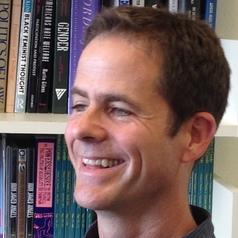
Associate Professor of Political Science, University of Oregon Joseph Lowndes is an associate professor of political science. He is the author of “From the New Deal to the New Right: Race and the Southern Origins of Modern Conservatism,” co-editor of “Race and American Political Development.” He is currently writing a book on contemporary American populism. He has written for Jacobin, Counterpunch, Huffington Post, Talking Points Memo, and other online media. He teaches courses on US politics, racial politics, political culture, and American political thought.
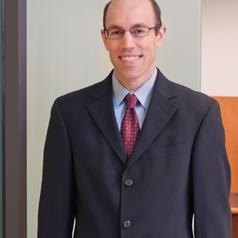
Mills E. Godwin, Jr., Professor of Law, William & Mary Law School Jeffrey Bellin is a professor at William & Mary Law School where he teaches about and researches the criminal justice system in the United States. He is a former prosecutor and the author of "Mass Incarceration Nation: How the United States Became Addicted to Prisons and Jails and How it Can Recover"
Lecturer in Biomedical Egyptology, University of Manchester My background in both ancient history and archaeological science is quite multidisciplinary, something which reflects itself in my research interests, and allows me to combine archaeological, historical and scientific sources in my work. The Archaeological Survey of Nubia The first Archaeological Survey of Nubia (or ASN) was one of the earliest rescue archaeology projects to take place and also one of the first large-scale studies of the ancient Nubian population. Due largely to the efforts of Sir Grafton Elliot Smith many of the human remains that were found during the excavation were retained for future study. The ASN material is extremely important as it includes many rare examples of disease and remains largely provenanced, something which is very rare in a collection of this age. Sadly, the human remains are now spread throughout the world. I am currently trying to bring this collection back together virtually and reunite the human remains with their archaeological and historical provenance. Radiocarbon dating and artefact provenance The issue of artefact provenance and dating is a particular research interest, and was the subject of my PhD. Radiocarbon dating has the potential to clarify a number of questions we have about the chronology of ancient Egypt, the development of mummification and the environmental changes that affected North Africa during the pharaonic period. The technique is currently under-exploited in this area due to problems in the past with poor sample choice and preservation issues. I am interested in the development of protocols for sample selection in this research area, in particular for the dating of Egyptian mummies. One aspect of this research that I hope to develop is the issue of taphonomy and the effects this has on artefact survival and suitability for long-term study. Dietary sources in ancient Egypt and Nubia A long-term research interest is ancient Egyptian and Nubian diet and the impact that influences such as political or environmental change may have. Although changes that have the potential to have affected food availability are well documented from both areas, the impact these have actually had on humans or animals are unknown. I am interested in whether stable isotope analysis of well-provenanced samples can begin to alter this picture and if isotopic studies of food sources themselves can refine our understanding of ancient human diet.
Jo Wilding is a lecturer in law at the University of Sussex. She is Principal Investigator on an ESRC-funded New Investigator Grant researching demand and provision of social welfare and immigration legal advice (SWILAmap). Her previous research has focused on access to immigration legal advice including projects commissioned or funded by the Welsh Government, East of England Local Government Association, Paul Hamlyn Foundation, Justice Together Initiative, Refugee Action, Community Justice Fund and more. Her book, 'The Legal Aid Market' was published by Bristol Policy Press in 2021. She was previously a barrister at Garden Court Chambers in London, and is a member of the Bar Council's research peer review panel.
John Patrick Hunt’s area of scholarly interest is law and finance. His recent work focuses on student loan law; previously, his scholarship has addressed municipal bankruptcy, credit rating agencies, and mortgage securitization, transfer, and modification. Before joining the UC Davis faculty in 2009, John was Research Director of the Law and Finance Program at the Berkeley Center for Law, Business and the Economy. He has also worked as a regulatory lawyer and litigator at two major law firms and as a credit derivatives research analyst. He holds a J.D. from Yale Law School and a Master’s in Financial Engineering from the U.C. Berkeley Haas School of Business, and served as a law clerk to the Honorable Stephen F. Williams of the U.S. Court of Appeals for the D.C. Circuit. Hunt is a member of the American Law Institute.