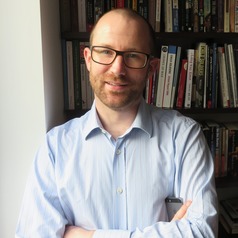
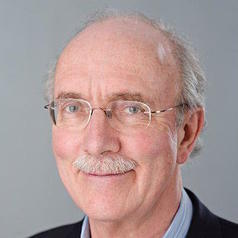
Doctoral Candidate in Sociology, Harvard University Jonathan J. B. Mijs is a PhD candidate in sociology at Harvard University. He is interested in stratification, morality, and the balance of structure/agency in shaping life outcomes. His dissertation is an investigation into how (young) citizens learn about social inequality, and how they come to explain setbacks and success in their own life and that of others. http://www.jonathanmijs.com
James Mehigan is a lecturer in criminology at the Open University and a barrister at Garden Court Chambers. As a lecturer his research interests include policing, prisons, human rights and criminal law. As a barrister he has acted in numerous high profile appeals and inquests and specialises in criminal defence, prison law, inquests and human rights. He is called to the bars of England & Wales, Ireland and Northern Ireland. He is a trustee of the UK branch of Front Line Defenders, a NGO that focuses on the protection of human rights defenders at risk around the world. James is a former member of the Independent Monitoring Board at Pentonville Prison.
Jacqueline is currently a lecturer in Animal Science at Nottingham Trent University, with a passion for domestic species, notably dogs and horses. Her academic and research interests are broad ranging, from the molecular biology of parasitic nematodes to the genetic basis of cryptobiosis and jump kinematics in agility dogs. Jacqueline is very much an academic practitioner and recognises the value of science that has direct application and potential to improve animal health and welfare.
Jonathan Wynn works at the intersection of urban and cultural sociology. His two major publications are The Tour Guide: Walking and Talking New York (2011, University of Chicago Press, Fieldwork Encounters and Discoveries Series) and Music/City (2015, University of Chicago Press). His work has also been published in City & Community, Qualitative Sociology, Sociological Forum, Cultural Sociology, and Contexts Magazine, and an article in Ethnography called “Hobo to Doormen: The Characters of Qualitative Analysis, Past and Present.” His forthcoming book, Music/City: Festivals and Culture in Great American Cities, is a comparative, multi-method analysis of three music festivals (the Country Music Association Festival in Nashville, the “Dunkin Donuts” Newport Folk Festival, and the South by Southwest festival in Austin, Texas). The book details the interrelationship between festivals and their cities, marking how they support and exploit each other through these internationally recognized events with rich description and interviews from a wide array of key urban and cultural placemakers. The book culminates with an argument for temporary events as critical to the culture of cities and their communities. He also working on an Urban Culture primer (co-authored with Andrew Deener) that is under contract with the Oxford University Press. Jonathan Wynn was recently the co-editor of the ASA Culture Section Newsletter (with Claudio Benzecry and Andrew Deener) between 2011 -2014 and was a regular contributor to Everyday Sociology in 2011-2014. On campus, he serves on the Common Read Book Committee.
John Cook is the Climate Communication Fellow for the Global Change Institute at the University of Queensland. He also runs skepticalscience.com, a website that makes climate science accessible to the general public and examines the arguments of global warming skeptics. He co-authored the book "Climate Change Denial: Heads in the Sand" with environmental scientist Haydn Washington and the university textbook "Climate Change Science: a Modern Synthesis" with geologist Tom Farmer. He completed a First Class Honours degree in Physics at the University of Queensland and is currently completing a PhD in Cognitive Psychology at the University of Western Australia.
John Shattuck is a former U.S. secretary of state for democracy, human rights and labor. He has had a distinguished career spanning more than three decades in higher education, international diplomacy, foreign policy and human rights. Before coming to CEU, he was CEO of the John F. Kennedy Library Foundation, a national public affairs center in Boston, and Senior Fellow at Tufts University, where he taught human rights and international relations. President Shattuck served as Assistant Secretary of State for Democracy, Human Rights and Labor under President Clinton, playing a major role in the establishment by the United Nations of the International Criminal Tribunals for Rwanda and the former Yugoslavia; assisting an international coalition under UN authority to restore a democratically-elected government to Haiti; and negotiating the Dayton Peace Agreement and other efforts to end the war in Bosnia. Subsequently he served as US Ambassador to the Czech Republic, working with the Czech government to assist in overhauling the country’s legal system, and with Czech educators to support innovative civic education programs in the country’s schools and universities. In recognition of his human rights leadership, he has received the International Human Rights Award from the United Nations Association of Boston; the Ambassador’s Award from the American Bar Association Central and East European Law Initiative; and the Tufts University Jean Mayer Global Citizenship Award. Prior to his government service, President Shattuck was a Vice-President at Harvard University, taught at the Harvard Law School, and was a Research Associate at the Kennedy School of Government. At Harvard, he was responsible for managing the University’s relations with the federal government, including federal support for research funding and student financial aid. While at Harvard he founded the Cambridge Partnership for Public Education, and worked to expand Harvard’s role in assisting public schools, including the creation of a new program of fellowships for Cambridge and Boston teachers at the Harvard Graduate School of Education. He was also active in expanding Harvard’s public service programs involving students and faculty members. He received the Distinguished Service to Public Education Award in 1990 from the Massachusetts Board of Education, and the Yale Law School Public Service Award in 1988. Shattuck’s career began at the American Civil Liberties Union, where he served as Executive Director of the Washington Office and National Staff Counsel. He helped enact federal legislation to protect individual privacy and to enforce civil rights in the election process. He also handled a number of prominent civil rights and civil liberties court cases, including the representation of persons who had been targets of illegal surveillance during the Nixon administration. In 1984 he received the Roger Baldwin Award for his national contribution to civil liberties. Shattuck is the author of three books, including Freedom on Fire, a study of the international response to genocide and crimes against humanity in the 1990s, published by Harvard University Press, and Rights of Privacy, a casebook on US constitutional law and the protection of privacy. He has published more than 50 articles on human rights, civil liberties, international relations, public service and higher education. In 2007 he was elected to the American Academy of Arts and Sciences, and he has received honorary degrees from the University of Western Bohemia in the Czech Republic, the University of Rhode Island, Kenyon College, and the John Jay College of Criminal Justice at the City University of New York.