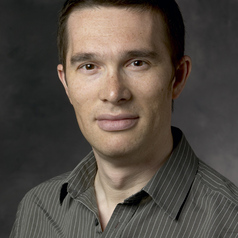
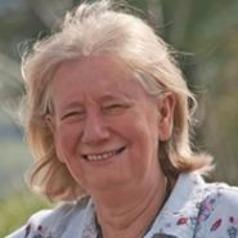
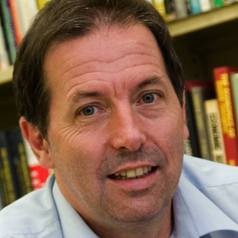
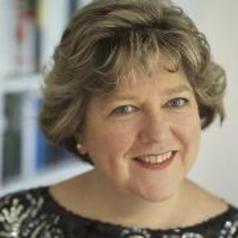
Jan Čulík is a graduate of Charles University, Prague. He has been working as Lecturer and Senior Lecturer in Czech Studies at the University of Glasgow since 1995. After being employed as a lecturer in Czech Studies at the Universities of Glasgow and Lancaster in the early 1980s, he worked as an independent producer and film maker for the UK TV station Channel Four Television. His Channel Four documentary “Orpheus through the Ages” (1984) received a Scottish BAFTA (TRIC) award for the best film in the Music and Arts category in 1986. In the 1980s and 1990s, Jan Čulík has also worked as a journalist for the Czechoslovak section of the BBC World Service and for the US station Radio Free Europe. In 1996, he founded a Czech-language cultural and political internet daily Britské listy (blisty.cz), which has currently some 3 million individual readers per year (Google Analytics). He is well-known as a public commentator in the Czech Republic. Jan Čulík is the author of two monographs on post-communist Czech cinema, one published in Czech and one in English. He has recently also produced an international monograph dealing with the construction of mythologies in the Central and East European TV series.
John Van Reenen is Professor of Economics at the London School of Economics and Director of the Centre of Economic Performance. He is the winner of the 2009 Yrjö Jahnsson Award (European equivalent to the Bates Clark Medal) He has been a senior policy advisor to 10 Downing Street, the UK Secretary of State for Health and European Commission. He is a Research Fellow at the CEPR and NBER. He received his BA from the University of Cambridge, his MSc from the London School of Economics and his PhD from University College London. Since 2003 he has been a member of the economics faculty of LSE, where he has taught industrial economics, labour economics and econometrics. He has been a Research Fellow at the Institute for Fiscal Studies, a visiting Professor at the University of California at Berkeley, at Princeton and Denning Visiting Professor of Global Business and Economics at Stanford.
Joanna Mack is an Honorary Senior Research Fellow in the School of Policy Studies at the University of Bristol and a Visiting Fellow in the Faculty of Social Sciences at the Open University. She was part of the successful bid team and the Open University's lead for the ESRC-funded, inter-university Poverty and Social Exclusion research project, which ran from 2010 to 2015 and was the largest ever research project in the UK into poverty. In 2012, she set up the Poverty and Social Exclusion website - www.poverty.ac.uk - which has become an important source of information on poverty and social exclusion in the UK and is now extensively used by researchers, educators, students and the general public. She is co-author (with Stewart Lansley) of 'Breadline Britain - the rise of mass poverty' (Onewold, 2015) which draws on thirty years of research in this field. Until January 2016, she was Head of Video and Audio for the university, overseeing the production of teaching materials. She worked, in particular, on a wide range of new modules for the social science faculty covering social policy, psychology, economics, politics and the environment. After graduating from Cambridge University, she worked on New Society magazine before moving into broadcast television where she had a long and successful career as a producer/director of factual programmes working ofr first London Weekend Television and then running her own production company, Domino Films. During this period, her films and documentaries won many prestigious awards, including from BAFTA, Royal Television Society, British Film Institute, and British Universities Film and Video Council, and, internationally, from New York International Film and Television Festival, Chicago International Film Festival, San Francisco Festival and the CableAce Awards of North America. She produced and directed the first Breadline Britain series in 1983 and was the series editor for the second series in the 1990s, both broadcast on the ITV network. For the 1983 series she set up the pioneering research survey behind the series which devised a new approach for measuring poverty based on the public's perceptions of necessities. This methodolog,y which she set out in 'Poor Britain' (1985), has been used by researchers and governments in the UK, the European Union and many other countries from Japan to South Africa. She also produced and directed Lost Children of the Empire, a ground breaking documentary uncovering the story of child migration from the UK under which children as young a three were shipped to Australia, Canada, New Zealand and the former Southern Rhodesia from the turn of the 20th century up until as the late 1960s. The film's broadcast in the UK and Australia, and the subsequent book of the same name, helped secure the foundation of the Child Migrants Trust and their work supporting families separated by these practices. Two decades later it led to official apologies from the Australian and UK governments. She has written extensively about poverty and inequality, including for The Guardian, The Scotsman and Tribune. She has regularly been interviewed for radio about her work and has presented at a number of festivals including The South Bank Centre and the Edinburgh Book Festival. Her books include: Poor Britain (with Stewart Lansley), George Allen & Unwin, 1983. London at War (with Steve Humphries), Sidgwick & Jackson, 1985. A Century of Childhood (with Steve Humphries and Robert Perks), Sidgwick & Jackson, 1988. The Making of Modern London (with Gavin Weightman, Steve Humphries and John Taylor), Ebury Press, 2007. Breadline Britain: The Rise of Mass Poverty (with Stewart Lansley), Oneworld, 2015.
Josephine is a chartered accountant. She was a senior manager with Ernst & Young, working principally in audit, until 1987, when she became a lecturer in Accounting at the University of Sheffield, leaving in 2008 to take a chair in Accounting and Finance at the University of York. She returned to Sheffield in 2014. Her work addresses a number of related issues: Financial Reporting, Governance and Audit I have written extensively on the closely related development of these three issues, in work on the 19th-century development of the accounting profession and of accounting regulation, and on the governance of UK companies from the early 20th century onwards. Savings Banks I am now (with Linda Perriton, York) exploring the use of savings banks (SBs) in the UK c1830 onwards. The SBs were designed explicitly to promote working-class thrift for the long-term: results to date suggest more varied behaviour and, again, significant departures from patriarchal dominance of family finances. See https://voice.adobe.com/a/1edGB for an outline. The 19th century use of SBs by the elite can, I suggest, be linked with 21st century neo-liberal attempts to promote financial 'responsibilisation' via savings. In addition to archival work, I am exploring the relationship between current and historic arguments for the need for individual thrift rather than state support. This is linked with my work on: Charity and financialisation The 19th century was a period in which traditional models of charity were challenged. Under the new 'business-like' model, applicants for help were closely monitored to ensure that they were likely to be efficient in their use of it. I plan for work on this (with Janette Rutterford, OU) to form the basis of a more extensive study of the current role of financialisation of the charitable/third sector. Narrative reporting This has been a subject of continuing interest for me, involving but not limited to, work on the history of social reporting. Narrative reporting has been a significant feature of financial statements for much of the 20th century, deployed as needed by companies in the face of different crises, and that modern reporting needs to be viewed in this context. Recent work with Abdelrehim (York) and Toms (Leeds) has addressed these issues.
John Quiggin is an Australian economist, a Professor and an Australian Research Council Federation Fellow and a Laureate Fellow at the University of Queensland, and a member of the Board of the Climate Change Authority of the Australian Government. He was awarded the Australian Social Science Academy Medal in 1993 and a Fellowship in 1996, received the 1997 and 2000 Sam Richardson of the Institute of Public Administration, Australia, received the 2001 Editors Prize of the Australian Journal of Agricultural Economics, a Fellowship of the Australian Institute of Company Directors in 2002, and a Distinguished Fellowship of the Australian Agricultural and Resource Economics Society in 2004. He is a Fellow of the Econometric Society and in 2011 received the Distinguished Fellow Award of the Economic Society of Australia. A prolific author and blogger, Professor Quiggin's most recent book, Zombie Economics: How Dead Ideas Still Walk among Us, was published in October 2010 from Princeton University Press.
Professor June Andrews FRCN, author of "Dementia - the One-stop Guide" was Director of the Dementia Services Development Centre (DSDC) in the School of Applied Social Science at the University of Stirling. The DSDC devised and implemented interventions to drive change in clinician behaviour and health and social care organisations in order to shape and achieve the ambitions of national dementia strategies in the UK and beyond. She is recognised leader in the world wide movement to improve services for people with dementia and their carers. She received a Founders Award of the British American Project where she is a Fellow, and was awarded the Robert Tiffany Award by the Nursing Standard for her international work. She has considerable experience in change management in health services, setting up and directing the Centre for Change and Innovation, in the Scottish Executive Health Department, for three years. She is a former trade union leader, NHS manager and senior civil servant.