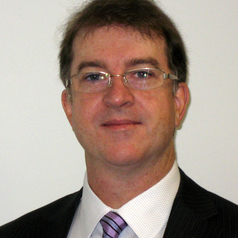
John E. McDonough, DrPH, MPA is Professor of Public Health Practice in the Department of Health Policy & Management at the Harvard T.H. Chan School of Public Health and Director of the HSPH Center for Executive and Continuing Professional Education. In 2010, he was the Joan H. Tisch Distinguished Fellow in Public Health at Hunter College in New York City. Between 2008 and 2010, he served as a Senior Advisor on National Health Reform to the U.S. Senate Committee on Health, Education, Labor and Pensions where he worked on the development and passage of the Affordable Care Act. Between 2003 and 2008, he served as Executive Director of Health Care for All, Massachusetts’ leading consumer health advocacy organization, where he played a key role in passage and implementation of the 2006 Massachusetts health reform law. Between 1998 and 2003, he was an Associate Professor at the Heller School at Brandeis University and a Senior Associate at the Schneider Institute for Health Policy. From 1985 to 1997, he served as a member of the Massachusetts House of Representatives where he co-chaired the Joint Committee on Health Care. His articles have appeared in Health Affairs, the New England Journal of Medicine and other journals. He has written three books, Inside National Health Reform, published in September 2011 by the University of California Press and the Milbank Fund, Experiencing Politics: A Legislator’s Stories of Government and Health Care by the University of California Press and the Milbank Fund in 2000, and Interests, Ideas, and Deregulation: The Fate of Hospital Rate Setting by the University of Michigan Press in 1998. He received a doctorate in public health in 1996 from the School of Public Health at the University of Michigan and a master’s in public administration from the John F. Kennedy School of Government at Harvard in 1990. He writes about national health care policy on his blog, Health Stew (www.healthstew.com).
Joseph’s research principally involves analysing regulatory challenges and issues posed by new and emerging communication technologies for traditional approaches to governance. Some of the areas examined include issues such as surveillance, identity theft, child online safety, peer-to-peer file sharing controversies, online dispute resolution and managing personal and corporate identities.Joseph is now exploring the legal, ethical, social and technological challenges posed by autonomous systems and robotics as they relate to aging, healthcare and warfare.
My research sits, most broadly, in the areas of geohumanities and mobilities, with more specific interests that weave together environmental perceptions; authenticity and alienation in travel motivation and experience; identity and bio-politics; and performance theories. My research interests include: The relationship of touristic motivation to tourism experiences; Authenticity and alienation in tourism motivation and experience; Environmental perceptions, ethics, and uses of sustainability rhetoric; Lifestyle mobilities, lifestyle travel, and hypermobile lifestyle pursuits; Tourism marketing, geographic imaginaries, and identity politics of place branding; Critical heritage studies and museum studies.
I was born and raised in Salina, Kansas, a town near the geographic center of the contiguous United States. I read History and English at the University of Kansas. I first came to Oxford on an undergraduate study abroad year and was immediately drawn to the tutorial system. I was fortunate to return to Britain as a post-graduate Marshall Scholar at Worcester College, Oxford. After finishing a D.Phil. in modern history, I went to Gonville and Caius College, Cambridge on a Junior Research Fellowship, before assuming my present post as University Lecturer in American History and Tutorial Fellow in History at Corpus Christi College. My principal research focuses on nineteenth century American history. From the perspective of the twenty-first century, the rise of the United States appears natural and inevitable. Yet there was nothing pre-ordained about the consolidation of the American Union, nor the establishment of the American empire. I am interested in why this group of former British colonies bound together and how their fragile union survived fundamental ideological and political disputes, such as those unleashed by the entrenchment of slavery in the Southern states. Most of my research has focused on nineteenth century US foreign relations and Americans' paradoxical relationship with empire. As Americans struggled to free themselves from their colonial past, they constructed their own empire, engaged in their own conquests, and exercised effective control over other peoples. My work connects the United States' foreign relations with its project of nation-building at home. In addition to the above, I have secondary research interests in the American Civil War, international finance and economics in the nineteenth century, Anglo-American relations, and US cultural expansion. I supervise post-graduate researchers working on America in the world in the nineteenth and early twentieth century, the American Civil War, and US economic development.
Jaime Luque joined the Wisconsin School of Business as assistant professor in the Department of Real Estate and Urban Land Economics in September 2012. Jaime has previously taught at the Department of Economics at the Carlos III University of Madrid. Jaime’s main academic research focuses on mortgages and securities lending. He also has some work on regional and urban economics. Jaime’s research has been published in journals such as Journal of Economic Theory, Journal of Public Economics, and Regional Science and Urban Economics. He has also written opinion pieces for the Financial Times, Expansion and La Repubblica, as well as for the Vox.eu and Eurointelligence economics op-ed sites. Professor Luque's teaching specializations include real estate finance and urban economics. He has recently published the textbook "Urban Land Economics" with Springer International Publisher, an initiative that involved the participation of numerous students from the Real Estate program at the Wisconsin School of Business.
Jeffrey Knapp has been with UNSW since 2007. Jeffrey’s background is in income tax (Coopers & Lybrand), financial reporting and audit advice (the Institute of Chartered Accountants in Australia) and teaching consolidation accounting (Macquarie University). Jeffrey’s strengths are his knowledge of accounting standards and his forensic ability to uncover financial reporting irregularities. Jeffrey is one of Australia’s most active media commentators on financial reporting regulation and practice. During 2010-2015, Jeffrey has publicly exposed omissions and irregularities in the financial reports of various large Australian companies that are politically and/or economically important.