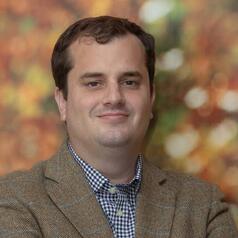
Investigador del Instituto Cultura y Sociedad, Universidad de Navarra, Universidad de Navarra Javier Gil Guerrero es investigador del Instituto Cultura y Sociedad y profesor de relaciones internacionales en la Universidad de Navarra. Su especialidad es la política exterior norteamericana en Oriente Medio y la historia contemporánea de Irán. En los últimos diez años ha impartido clases en la Universidad Francisco de Vitoria, UNIR y la Universidad Pontificia de Comillas. A lo largo de su carrera también ha sido investigador y profesor visitante de universidades como Columbia University, American University of Beirut, the Hebrew University of Jerusalem, Woodrow Wilson Center for International Scholars y University of California-Los Angeles (UCLA). Es autor del libro The Carter Administration and the Fall of Iran’s Pahlavi Dynasty (Macmillan, 2016). Sus artículos académicos han aparecido en revistas como British Journal of Middle Eastern Studies, Middle East Critique, Politics, Religion & Ideology, Journal of Cold War Studies, Journal of South Asian and Middle Eastern Studies o Historia del Presente. Sus publicaciones también han aparecido en medios como El País, El Mundo, ABC, El Confidencial, The Objective, El Español, Expansión o La Razón. Actualmente es el Investigador Principal 2 del proyecto del Ministerio de Ciencia, Innovación y Universidades 2024-2028 “Miradas cruzadas entre los mundos iranio e hispánico. Relatos y representaciones en la contemporaneidad” y coordinador del Reto ICS 2024-2025 “Orientalismo y occidentalismo: Miradas cruzadas.”
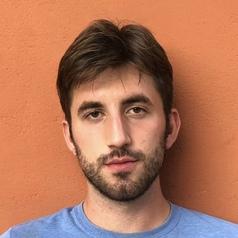
Professor of Psychiatry and Neurobehavioral Sciences, University of Virginia J. Kim Penberthy, Ph.D, ABPP, attended Wake Forest University where she majored in psychology and biology. After graduation, she did research for a year at the Center for Alcohol Studies at UNC-Chapel Hill School of Medicine. She then returned to graduate school at Wake Forest University where she obtained a master’s degree in experimental psychology. She worked at the Duke Cancer Center before obtaining her Ph.D. in clinical psychology at Virginia Commonwealth University. Dr. Penberthy completed her internship in clinical psychology in the Department of Psychiatry & Behavioral Sciences at the Eastern Virginia School of Medicine in Norfolk, VA. She went on to complete her fellowship in behavioral medicine in the Department of Psychiatry & Neurobehavioral Sciences at the University of Virginia School of Medicine from 1998-2000. Dr. Penberthy has also completed her board certification in clinical psychology, as well as a fellowship in humanism in medicine at UVA. She is trained to work with patients who have chronic medical conditions, such as cancer, diabetes or HIV. Additionally, she is trained to work with people who suffer with addictions, and conducts research exploring effective treatments for people with co-occurring psychological difficulties, addictions and medical conditions. She is a founding member of the UVA Contemplative Sciences Center and studies the therapeutic components of contemplative practices like mindfulness and a variety of psychotherapies. She is also the co-director of the Effective Coping and Communication Skills for Physicians program, which is a national CME program helping to improve the interpersonal skills of physicians. She joined UVA’s Department of Psychiatry & Neurobehavioral Sciences in 2000 and is currently a professor. Dr. Penberthy is active at UVA and regionally and is on the UVA cancer committee, the Emily Couric Clinical Cancer Center patient and caregiver advisory board, The Steward School board of trustees and the Bryan Innovation Lab in Richmond. She is married to David Penberthy, M.D., a radiation oncologist who practices in Richmond. They have one daughter, Morgan, who attends Wake Forest University. Kim and her family enjoy standup paddle boarding, cycling and traveling. Penberthy has published clinical works and guides on persistent depression, including "Persistent Depressive Disorders – Advances in Psychotherapy and Evidence-Based Practice," and co-authored "CBASP as a Distinctive Treatment for Persistent Depressive Disorder," "Group Treatment Manual for Persistent Depression: Cognitive Behavioral Analysis System of Psychotherapy (CBASP) Therapist’s Guide," and "Group Workbook for Treatment of Persistent Depression: Cognitive Behavioral Analysis System of Psychotherapy (CBASP) Patient’s Guide."
Ph.D. Student in Anthropology, Yale University Graduate student within the Department of Anthropology at Yale. Interested in primate morphological evolution and using morphology to understand what separated the earliest primates from other lineages. Additionally, I am interested in the evolutionary history of twinning in primates and the evolution of other life history characters, such as increased longevity relative to body size, seen in primates and other mammal groups such as Chiroptera (bats).
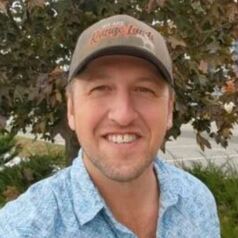
Assistant Professor of Environmental Studies, Boise State University I was born and raised in the Southwestern Idaho, like many generations before me, and I am deeply connected to these desert communities. My research is place-based and focuses on community collaboration in the environmental governance of the American West. I am environmental philosopher by training, but an interdisciplinary scholar by practice. I seek to better understand how diverse communities relate to the land and how this relationship poses obstacles and opportunities for collaboration and governance. In doing so, I study the role of science in collaborative policy, the role of place in environmental identity, and the role of the imagination in mediating both. Healthy land requires healthy communities (not only human) that dwell on it. Part of being a healthy community is being a resilient community — one that is able to withstand and adapt to the changing circumstances that are all too common in our contemporary era. Helping rural communities amplify their voice in collaborative spaces allows these communities the self-determination that is needed to adapt to a changing world. The relationships built and the sheer experience of collaborating builds the resilient capacity that is needed by these communities — collaboration, itself, is a resilient praxis. Specifically, I study grazing management and public land permitting, community-led monitoring programs, place-based environmental governance, rural environmental collaboration, conservation justice, and the imaginative experience of our natural and built environments — all in the contexts of the intermountain American West.
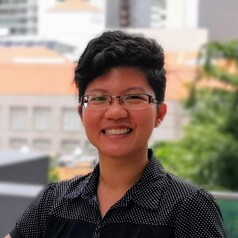
PhD Graduate in Social Geography, Flinders University I am a qualitative social geographer passionate about research that amplifies diverse community experiences, perspectives, and voices. My PhD research at Flinders University centered around rethinking ageing through LGBTQ+ and multicultural lenses. I currently work in local government, bringing research into policy and practice.
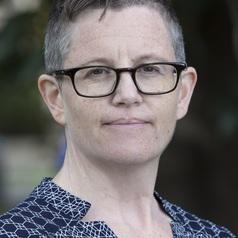
Associate professor, Qualitative Research in Health; Director Master of Public Health, University of Sydney An Associate Professor at the School of Public Health, University of Sydney, I am a social researcher with expertise in qualitative, creative, and community-based participatory methods working. I’m a leader in research on the health and well-being of LGBTIQ populations. Since 2009, I've been collaborating with community health organisations to run SWASH a periodic survey of lesbian, bisexual and queer women's health. Much of my current work is focused on substance use (smoking, vaping, alcohol and illicit drugs). I’m a member of the NSW Health LGBTIQ+ Health Strategy Implementation committee. I’m a dedicated educator, having taught qualitative research methods in health for more than a decade. I’m the Director of the Master of Public Health at the Sydney School of Public Health.