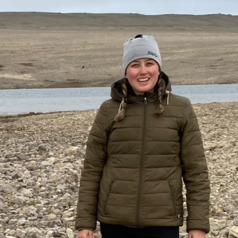
Research Assistant, Refuge Arctic, Université Laval Juliette is a research assistant at Laval University and coordinator of an oceanography project, focusing on the Arctic region and climate changes. She is specialised in environmental microbiology and holds a Master's degree in microbiology from Laval University.
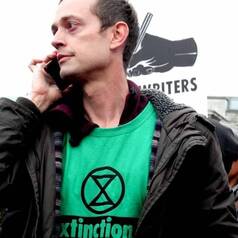
Senior Lecturer, School of Creative and Cultural Industries, Kingston University My areas of research include: connections between contemporary literature and critical theory; connections between literary form and technology; the impact of socio-economic and political events on the novel and narrative fiction, experimental fiction, pastiche, parody, blending and complicating genre boundaries. I am a novelist and Senior Lecturer in Creative Writing and English Literature. Since 2018 I've been course leader for the MA and MFA in Creative Writing. I am the author of the novels LOST BOYS (Little Brown 2008) and SUNSHINE STATE (Little, Brown 2010) and most recently UNAMERICAN ACTIVITIES (Dodo Ink 2017) and STRAYS (Haverthorn 2017) a collaborative work of experimental poetry based on my debut novel. I've also written numerous short stories and articles which have been published in various journals, websites and anthologies. I have a PhD in American literature from King's College London on the African-American author James Baldwin and the connection of his work to Civil Rights and post-colonial discourse. I'm also a founding member of Writers Rebel - we publish work about the climate and ecological emergency at www.writersrebel.com - and organise literary events that are also non violent direct actions with Extinction Rebellion. I also help run the Twitter for Extinction Rebellion UK.
Senior Lecturer at Newcastle University Business School, Newcastle University Dr Jonathan Jones is a Senior Lecturer at Newcastle University Business School and lead author of the Creative Policy and Evidence Centre’s latest State of the Nations report, Foreign Direct Investment in the UK’s Creative Industries. The Creative PEC is funded by the Arts and Humanities Research Council.
Chargé de recherche CNRS, Université Clermont Auvergne (UCA) Jules Gazeaud est chargé de recherche CNRS à l'Université Clermont Auvergne au sein du CERDI. Il est également chercheur associé à l’IC Migrations. Économiste du développement, ses travaux portent essentiellement sur l’étude des politiques de protection sociale, la migration, et la microfinance. Avant de rejoindre le CNRS, il a travaillé au J-PAL (laboratoire d'action contre la pauvreté du MIT) en tant que chercheur postdoctoral à l’Université américaine du Caire. Durant sa thèse, il a passé plusieurs années dans l’archipel des Comores pour étudier l'impact d’un filet de sécurité social mis en place par le gouvernement Comorien et la Banque Mondiale pour lutter contre la pauvreté.
Professor in Computer Science and Artificial Intelligence, Universidad de Salamanca PhD in Computer Science (University of Salamanca) and Artificial Intelligence (University of West of Scotland). Full Professor in Computer Science and Artificial Intelligence, Department of Computer Science and Automation, University of Salamanca, Spain.
Research Fellow in Wildlife Conservation, University of Adelaide Jasmin is passionate about protecting Australia's threatened communities and species. Her research aims to design innovative solutions, linking world-leading science with on-ground management, to better protect South Australia’s threatened communities and species as they adapt to global change. She works with wildlife as well as flora and fungi, and is the Vice President of Fungimap Inc., Austalia's national citizen science-led NGO for fungi. Jasmin’s transdisciplinary research focuses on understanding how ecosystems respond to differing disturbance and other global changes - and what we can do to enhance their capacity to cope with the negative impacts. Her transdisciplinary approach bridges basic and applied research, and co-designs field surveys with industry partners to ensure their findings are put into action to make a difference for conservation. Jasmin uses design thinking to draw on her deep understanding of the needs of others, and brings together global (biogeography and invasion science) and local (community ecology, population ecology and citizen science) approaches, to build long term partnerships that have a real impact on improving biodiversity conservation.