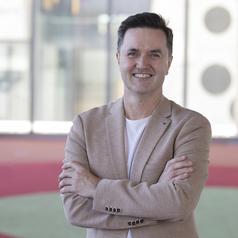
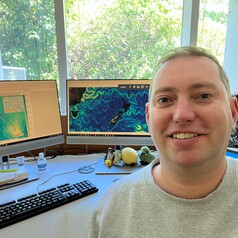
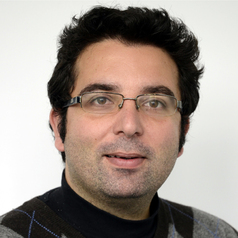
Postdoctoral Research Fellow, Harvard University I am a Postdoctoral Research Fellow in the Department of Global Health and Social Medicine at Harvard Medical School. My research interests lie at the intersection of psychiatry and development economics. My work focuses on developing and implementing cost-effective and scalable interventions to treat depression in low-resource settings.
Program Director: Secondary Programs and Senior Lecturer: English and Literacy Education, University of South Australia Jill is Program Director of the undergraduate and masters level secondary teaching programs at the University of South Australia, where she is a Senior Lecturer in English/literacy education, and a researcher in the Centre for Research in Educational and Social Inclusion. Jill has extensive experience teaching and leading in secondary schools and university settings. Her research interests include teaching and learning with diverse students, multimedia and learning spaces, and engaging young people in reading and writing.
Associate Professor of Management, Swinburne University of Technology John Hopkins is an Associate Professor of Management and Innovation Fellow from Swinburne University of Technology. He has worked extensively in industry, for organisations such as General Motors and Cadbury, in addition to academic institutions in the UK, USA, Ireland and Australia. John has been one of Australia’s leading experts on the topic of flexible and remote work practices for the past decade, and has worked on a range of workflex projects for both public sector and private sector clients, including: the Australian Fair Work Commission, NSW Public Service Commission, Transport for NSW, the Australian National Mental Health Commission, and the Australian Productivity Commission. Specialising in survey, interview and case study-based methods, John's research has featured in many high ranking, peer-reviewed academic journals and industry publications, and John is regularly invited to provide expert opinion in the local, national and international media, for outlets like Channel 7 News, ABC News, SBS World News, ABC Radio, Forbes Magazine, The European Financial Review, World Economic Forum, The Age, The Australian Financial Review, The Australian, The Sydney Morning Herald, The Saigon Times and The Hong Kong Herald.
Climate Scientist, University of Reading PhD in computational physics (2008) and subsequent experience in climate modelling, past environmental change, environmental consultancy and the public understanding of science.
Professor in Development Studies, Institute of Development Studies Professor Jeremy Allouche is a co-director of the Humanitarian Learning Centre and principle investigator of the GCRF-funded project Islands of Innovation in Protracted Crisis and the AHRC/DFID-funded project New Community-Informed Approaches to Humanitarian Protection and Restraint. He is a political sociologist trained in history and international relations with over 20 years research and advisory experience on resource politics (water, mining) in conflict and borderland areas and the difficulties of aid delivery in such contexts, as well as studying the idea of ‘islands of peace’. He previously worked at the University of Oxford, the Massachusetts Institute of Technology – MIT, ETH Lausanne, the Swiss Graduate Institute of Public administration, and at the Graduate Institute of International and Development Studies, Geneva. He has extensive fieldwork experience in West Africa, most notably Cote d’Ivoire and Sierra Leone, conducting research with international donor and aid agencies, peacebuilding international NGOs, local civil society, and human rights activists. His advisory experience includes work with the Conciliation Resources, DFID, IrishAid, SDC, UNHCR and the World Food Programme. He is on the editorial board of International Peacekeeping Journal and the Annual Review of Environment and Resources
Chief Operating Officer of RADx Tech, Emory University Julie Sullivan serves as the chief operating officer of Emory University’s National Institutes of Health-funded Rapid Acceleration of Diagnostics (RADx) Center, which has contributed directly to the development of COVID-19 diagnostics used by millions of Americans every day.