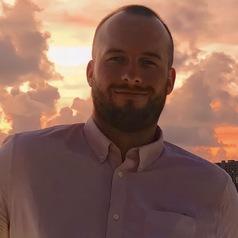
Adjunct lecturer in psychology, Charles Sturt University Jane Selby studied babies for her Masters at St. Andrews, Scotland, an interest that continued as National Research Fellow at La Trobe University, Australia, after gaining a PhD from the Child Care and Development Group, Cambridge University for her study of ‘Feminine Identity and Contradiction’. Since 1986 she has built clinical psychology practices in the UK and Australia, conducted research with Australian Indigenous groups as Senior Research Fellow at James Cook University, and with youth ‘at risk’ in New South Wales. Whilst lecturing at Charles Sturt University, she set up an infant laboratory with Ben Bradley in 1998.
Reader in Latin American Archaeology, Institute of Archaeology, UCL As a Reader Latin American Archaeology, my interests are quite broad, covering practically all periods of human history in the Americas, from Paleoamerican to the early colonial period, particularly in South America (Andes and tropical lowlands) and the Caribbean Islands. Since 1992, I directed (PI) archaeological excavations along the Mississippi River (Tennessee, Arkansas), the Gulf Coast of Florida-Alabama, Dominican Republic, Puerto Rico, Culebra Island, St. Tomas-Virgin Islands. Since joining the Institute of Archaeology (1994), I have continued to direct projects in Puerto Rico (Utuado-Caguana Archaeological Project) and northern Dominican Republic (Macorix Archaeological Project) and currently added the margins of the Orinoco river region of Venezuela and Colombia. My research topics are quite diverse, including among others the development of agricultural economies, the rise of middle-range to complex state polities, the archaeology of sacred landscapes (burial caves, rock art, megalithic architecture), the meaning and symbolism of potent/powerful objects (material culture), trade and exchange, and processes of ethnogenesis and culture change. One particular interest is in ceramic analyses, its classification methods, and theoretical assumptions, and what these tell us about social relations among producers and consumers and about their identities. In my fieldwork, I adopt a reflexive approach to archaeology approach, which involves partnerships with indigenous communities and leaders in jointly building past and recent historical knowledge and enhancing the conservation as well as promotion of tangible and intangible cultural heritage. I teach undergraduate (yrs. 2-3) modules on the archaeology of the Andes and Amazonia and co-teach two graduate (Masters) courses: "Comparative Archaeologies of the Americas-1: First Peoples to Emerging Complexity". and "Comparative Archaeologies of the Americas-2: Empire, States & Settlement." I also teach the 1st year undergraduate core module "Introduction to Social Anthropology".
Post-Doctoral Research Associate at the Department of Anthropology, Durham University I am a postdoctoral research associate in the Department of Anthropology at Durham University. At Durham, I work on the European Research Council-funded project 'ALIVEAfrica: Animals, Livelihoods and Wellbeing in Africa'. Within ALIVEAfrica, I lead a case study on hunting and bushmeat-related livelihoods in Sierra Leone, exploring topics such as the legitimacy and local knowledge of wildlife laws, dynamics of trust and secrecy among different actors, zoonotic disease risks in markets, and livelihood impacts of the bushmeat trade. This research builds upon my previous work investigating rural lives and livelihoods in Liberia and Sierra Leone, which examined how improved transport connectivity contributes to development in areas like agriculture, education, employment, community cohesion, health, and women's economic empowerment. Through my research, I aim to contribute to interdisciplinary understandings of the complex relationships between transport, mobility, livelihoods, and development in sub-Saharan Africa.
Professor of history, University of Wisconsin-Milwaukee Jonathan Kasparek is professor of history at the Waukesha campus of the University of Wisconsin-Milwaukee, where he has taught since 2004. He earned a Ph.D. in U. S. History with a minor in Folklore from the University of Wisconsin-Madison and specializes in Wisconsin and Midwestern history and public history. Prior to joining the faculty, he worked in the public history division of the State Historical Society of Wisconsin and was part of the interdisciplinary team working on the restoration of the Wisconsin State Capitol. Dr. Kasparek is the author of Fighting Son: A Biography of Philip F. La Follette (2006) and Proxmire: Bulldog of the Senate (2019) both published by the Wisconsin Historical Society Press. Since 2021 he has been the book review editor for Middle West Review.
Oral Historian, Department of History, University of Texas at Arlington Joseph Harris Carpenter served eight years in the United States Air Force Medical Corps and is a veteran of Desert Storm. After his military career, he spent 25 years in medical device and insurance sales before pursuing his life-long passion for history. Joe has a B.A. in History with a minor in Military History, as well as an M.A. in History (with Public History and Archives certificates) - both from UTA. Since 2020, Joe has worked as an Oral Historian for UTA & Texas Tech's Vietnam Center and Archive, collecting and documenting the experiences of U.S. military veterans. With his extensive life experience and sincere dedication to sharing the stories of those who have lived history, Joe brings a wealth of knowledge and enthusiasm to his position.
Affiliate Assistant Professor, Department of Geography, Concordia University My work focuses on the engagement of diverse stakeholders at the interface of science, policy, and society on issues that bridge environmental sustainability and digital innovation. In addition to my role as Affiliate Assistant Professor, I am also Deputy Director of the non-profit organization Future Earth Canada and of the think tank Sustainability in the Digital Age. Since 2020, I have held the elected position of North America Regional Facilitator for the UN Environment Programme.