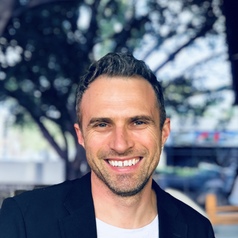
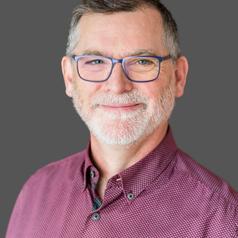
Lecturer in Philosophy of Mind and Cognitive Science, The University of Melbourne I’m a Lecturer (i.e. assistant professor) in philosophy. I hold a PhD in philosophy from New York University and a PhD in music from the University of Cambridge. My research explores the place of music, and musical experience, in human mentality at large. I'm currently developing a novel theory of musical meaning, according to which a piece of expressive music is a moving picture of feeling. On this view, a piece of expressive music is as good a candidate as a picture for having representational content -- and the widespread assumption that music lacks representational content is therefore misplaced. I'm working on a series of papers wherein I defend this 'representational' view of musical expression against objections, and explore its potential for explaining the communicative and social significance of music. In addition to my work on music, I also write about the impact of digital technology on our encounters with value: in particular, the moral value of others and the aesthetic value of artworks. I'm particularly interested in mapping the different kinds of attention involved in moral and aesthetic experiences, and how these forms of attention are being directed and shaped by today's Internet. I am an active musician, and I contribute essays to the program books at both Carnegie Hall and the San Francisco Symphony.
Professor of cognitive neuroscience, UNSW Sydney Joel Pearson is a Psychologist, Neuroscientist and public intellectual working at the forefront of science, innovation and agile science. Joel started his career studying art and filmmaking at one of Australia’s top fine arts school, Collage of Fine Arts, University of New South Wales. However, he then decided to apply his creative discovery techniques to the scientific mysteries of human consciousness and the complexities of brain. He completed his science PhD in 2 years, while fitting in several around the world trips and invited conference and university talks, alongside several publications. An internationally recognised leader in human consciousness research, Pearson’s group takes an innovative, agile, first principles approach to developing new methods to measure dimensions of human experience previously thought to be immeasurable. A few examples are the group’s novel methods to measure the human imagination, intuition and hallucinations, using objective, reliable, neuroscientific methods. This work spans from fundamental science to helping individuals in the clinic – translational cognitive neuroscience. Joel’s research has been recognised with major accolades including the 2009 William James award for the greatest scientific contribution to understanding consciousness. His team’s efforts have been featured in The Huffington Post, The Sydney Morning Herald, The Australian Financial Review, LiveScience, Discovery Channel, BBC and a host of other major media outlets. Recognising that the most exciting and surprising scientific discoveries of the 21st century will likely involve a high number of accidental breakthroughs and large amounts of rapid iterative pilot testing. Joel is a passionate proponent of high-risk discovery science and has developed a method called Agile Science, a practical guide to both practicing and reporting scientific discoveries – the ‘Lean Startup’ for the world of science. Joel takes a multidisciplinary agile approach to running his lab, bringing in staff and students from art, architecture, mathematics, computer science, psychology, neuroscience and medical imaging. The group studies many different exciting and cutting-edge topics, from new methods to map the human brain, treating mental illness, how to boost the human imagination and decision-making, to cognitive biases in financial risk assessment. A prolific writer and speaker, Joel sits at the intersection between science, innovation and art.
Head of Research, Senior Researcher, UK in a Changing Europe, King's College London Joelle is a Head of Research and a Senior Researcher at UK in a Changing Europe. She is an expert in the rule of law, working in the fields of EU law, and UK public law. She is also a Senior Research Fellow at the CEU Democracy Institute in Budapest, and a Visiting Senior Research Fellow at the UCD Sutherland School of Law in Dublin. She is a legal academic with expertise in EU and UK law.
Senior Lecturer in Criminology, Nottingham Trent University John is a recent transplant to the UK and Nottingham Trent University, having previously lived and studied in Australia and South Africa. His PhD thesis, Restorative Justice in the South Pacific: Responding to Sexual Violence in Fiji, focused on customary justice practices, traditional leaders, and their role in responding to the above crimes. Alongside other publications on Pacific Indigenous justice, John has an interest in cybercrime and the Global South, and the challenges faced by incarcerated LGBTI+ populations.
Assistant Professor Of Management, University of North Texas Jeffrey A. Chandler is an Assistant Professor in the Department of Management of the G. Brint Ryan College of Business at the University of North Texas. His research focuses on how stakeholders perceive strategic leaders like entrepreneurs and top executives. Dr. Chandler’s research has appeared in the top academic journals in the field including the Strategic Management Journal, Journal of International Business Studies, Journal of Management, and Journal of Business Venturing among others. His research has also been covered by media outlets such as the Wall Street Journal, Forbes, Fox Business News and Harvard Business Review.
Associate Professor, Human Resources and Labour Relations, Athabasca University Jason Foster is the director of Parkland Institute at the University of Alberta and an associate professor of human resources and labour relations at Athabasca University. Jason is the author of Gigs, Hustles, & Temps (2023) and Defying Expectations: The Case of UFCW Local 401 (2018), as well as co-author of Health and Safety in Canadian Workplaces (2016). His research interests include workplace injury, union renewal, labour and employment policy, and migrant workers in Canada. He is committed to sharing research to as broad an audience as possible, so that it might contribute to policy change and making people’s lives better.