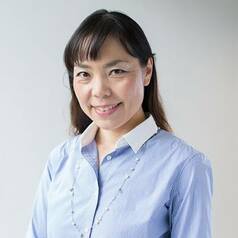
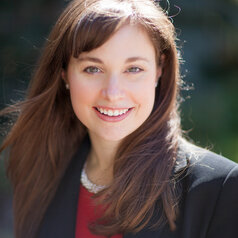
Senior Lecturer in Human Genetics, Liverpool John Moores University I am a Biological Anthropologist from Japan, speciliased in genetics. My research is to look at genetic variations that are responsible for phenotypic variations, to understand human adaptation and evolution, especially about externally visible traits including pigmentation and cranifofacial morphology.
Postdoctoral Fellow, University of Nebraska-Lincoln I study the interdependencies and connections among sociality, communication, and cooperation. Modeling suggests that communication and cooperation can be stabilized by social interactions. At the same time, we know communication reduces the potential costs of intergroup competition and cooperation is a way to realize the benefits of sociality. Further, a number of evolutionary hypotheses predict that complexity in one of these three leads to or requires complexity in another. My work uses observations of and experiments with wild and captive animals to tease apart the factors governing how these complex behaviors evolve and interact. As a PoE Fellow, I am working with Dr. Eileen Hebets to study the cooperative hunting behavior of a social pseudoscorpion (Paratemnoides nidificator) and the neural development and intelligence of the amblypygid (Phrynus marginemaculatus). Paratemnoides nidificator lives in colonies, shares parental care, and hunts large insects. Their unique social structure allows us to ask questions about how social ties and communication signals affect their ability to cooperate to obtain food. From this, we can determine whether social bonds built up over time or signals emitted during hunting are more important for cooperation. Our work with P. marginemaculatus tests two popular hypotheses for the evolution of large brains in primates: environmental complexity and social complexity.
Assistant Professor, Department of Geography and Planning, University of Saskatchewan Dr. Krys Chutko is an Assistant Professor in the Department of Geography and Planning and has been teaching at the University of Saskatchewan since 2016. Krys has been a field researcher since 1999 in a variety of fields, primarily looking at paleoenvironmental reconstructions, hydro-climatology, and the influence of land use change on terrestrial and aquatic systems. In 2018, Krys was awarded with a USSU Teaching Excellence Award.
Professor of Sociology and Director of the Carolina Population Center, University of North Carolina at Chapel Hill Dr. Guzzo received her PhD in Sociology in 2003 from UNC Chapel hill, followed by postdoctoral work at the University of Pennsylvania. After holding faculty positions at other universities, Dr. Guzzo returned to UNC Chapel Hill in 2022 to join the Sociology faculty and serve as Director of the Carolina Population Center.
PhD Candidate in the Nutrition, Psychopharmacology & Brain Development Unit, University of Salford I am a second-year PhD student researching food insecurity (lack of access to healthy and nutritious food) and obesity. More specifically, my research looks at childhood food insecurity and its impact on adulthood eating behaviours. During my time as a master's student, I was able to publish one journal article https://www.ijmar.org/v9n2/22-006.html
Assistant Professor of Conflict Management, Kennesaw State University I am an Assistant Professor of Conflict Management at Kennesaw State University’s School of Conflict Management, Peacebuilding, and Development. As an anthropologist and scholar-practitioner, I specialize in genocide and mass atrocity prevention, emerging technologies and disinformation, post-conflict reconstruction, and war-related environmental degradation. A specialist in Ukraine and Russia, I have worked in 25+ countries including across Eastern Europe, the Balkans, the Middle East, East Africa, Southeast Asia, and the Caribbean. Supported by National Science Foundation, Fulbright, USAID, and other grants and fellowships, I am writing a book about the Ukraine-Russia war. This book discusses Joseph Stalin's historical genocide against Ukraine (the Holodomor) and how modern leaders interpreted this history to predict both Russia's modern genocidal war and Ukraine's stunning resistance. This book draws from more than 8 years of research on the Russia-Ukraine war, including 2.5 years of fieldwork across 32 Ukrainian cities and towns. My book is also based on my doctoral dissertation, which won the Kellogg Institute for International Studies Distinguished Dissertation in Democracy and Human Rights Award and was nominated for several other university and international awards. I received my joint PhD in peace studies and anthropology from the University of Notre Dame’s Kroc Institute for International Peace Studies and Department of Anthropology. I hold M.A. degrees in anthropology (2019) and in international development (2012) from the University of Notre Dame and the University of Denver’s Josef Korbel School of International Studies respectively. My B.A. in anthropology is from the University of Florida, where I graduated as a valedictorian. Prior to my time in academia, I served as a policy advisor at the U.S. Department of State's Bureau of Conflict and Stabilization Operations and as a political/economic officer in an embassy abroad. I received a U.S. Department of State Meritorious Honor Award for my work on preventing and responding to mass atrocities and was a 2013-2015 Presidential Management Fellow. I have also held leaderships roles at several international development and conflict resolution non-governmental organizations (NGOs). At George Mason University's Jimmy and Rosalynn Carter School for Peace and Conflict Resolution, I served as the inaugural Executive Director of the Better Evidence Project which bridges gaps in policy, research, practice, and donors in the war prevention field. In 2017, I was recognized with the Society for Applied Anthropology's Human Rights Defender Award. Presently, I am a non-resident fellow at the Marine Corps University's Krulak Center for Innovation and Future Warfare. I regularly consult with government, multilateral, and human rights organizations.