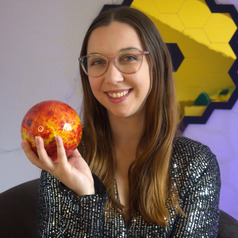
Lecturer, School of Science, Computing and Engineering Technologies, Swinburne University of Technology Dr Kirsten Banks is a passionate astrophysicist and Lecturer at Swinburne University of Technology, working with the ARC Centre of Excellence for Gravitational Wave Discovery (OzGrav) to connect cutting-edge research with the public. Her love for the universe was sparked during a high school excursion to see a documentary about the Hubble Space Telescope. With a PhD in astrophysics and proud Wiradjuri heritage, Kirsten offers a unique perspective in her science communication. She captivates audiences worldwide with her infectious enthusiasm, sharing fun facts and leading workshops to inspire wonder in people of all ages. Join Kirsten on a cosmic journey to explore the wonders of the universe like never before.
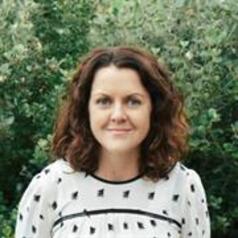
Lecturer in Education - Applied Learning, Deakin University Kellie Tobin is an Early Career Researcher in the Faculty of Arts and Education at Deakin University. Her doctoral research investigated the challenge of creating and maintaining enduring school-university partnerships in Initial Teacher Education (ITE). Kellie’s role in Education has been that of a change agent where she has worked across various settings to build school student capacity, partnerships and collaborations in the field of Initial Teacher Education. Kellie is the Course Director in the Master of Applied Learning and Teaching and is lecturing in areas of Applied Learning, Middle Years Education, teaching Aboriginal and Torres Strait Islander Students and Literacy and Numeracy teaching. Kellie has also served in a range of other capacities including the School Centres for Teaching Excellence Site Director, Wannik Strategy Co-coordinator for Aboriginal and Torres Strait Islander Students and as an English Secondary School Teacher.
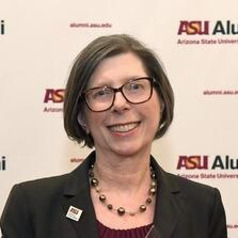
Professor Emerita, School of Public Affairs, Arizona State University Karen Mossberger is Professor Emerita in the School of Public Affairs in the Watts College of Public Service and Community Solutions at Arizona State University. She is Director Emerita of the Center on Technology, Data and Society and also a senior sustainability scholar with the Julie Ann Wrigley Global Institute of Sustainability. She formerly held the Frank and June Sackton Chair in the School of Public Affairs. Her research interests include local governance, urban policy, digital inequality, evaluation of broadband programs and digital government. She is author/editor of 7 books, including "Choosing the Future: Technology and Opportunity in Communities" (Oxford University Press 2021, with C. Tolbert and S. LaCombe), which won the 2022 Goldsmith Prize for Best Academic Book from the Shorenstein Center, Harvard Kennedy School of Government. The book demonstrates with nearly two decades of data the impact that widespread, inclusive broadband use has for community prosperity. She is also a co-editor for "Transforming Everything? Evaluating Broadband's Impacts Across Policy Areas" (Oxford University Press 2021, with Eric Welch and Yonghong Wu). Other books on technology, inequality, and public policy include "Digital Cities: The Internet and the Geography of Opportunity" (Oxford University Press 2012, with C. Tolbert and W. Franko), "Digital Citizenship: The Internet, Society and Participation" (Mossberger, Tolbert and McNeal 2008, MIT Press), and "Virtual Inequality: Beyond the Digital Divide" (Mossberger, Tolbert and Stansbury 2003, Georgetown University Press), She is also a co-editor of the "Oxford Handbook of Urban Politics" (2012 with S. Clarke and P. John) and author of "The Politics of Ideas and the Spread of Enterprise Zones" (2000, Georgetown University Press). In 2023, she received the NASPAA/ASPA Research Award from the Network of Schools of Public Policy, Affairs and Administration and the American Society for Public Administration. She was also honored with the ASU Founder's Day Award for Faculty Research in 2023. Her research on “Race, Place, and Information Technology” won the best paper award for the Public Policy Section of the American Political Science Association in 2005, and "The Effects of E-Government on Trust and Confidence in Government" was chosen as one of the 75 most influential articles in the first 75 years of Public Administration Review. In 2018, she received the Donald C. Stone Scholar award from the American Society for Public Administration's Section on Intergovernmental Administration and Management (SIAM). In 2019 she was selected by UK nonprofit Apolitical as one of the World's 100 Most Influential People in Digital Government - a list including practitioners and academics. Her research has been supported by the National Science Foundation, Smith Richardson Foundation, the U.S. Department of Housing and Urban Development, the Chicago Community Trust, and the John D. and Catherine T. MacArthur Foundation, among others. She has served as president of the American Political Science Association's Urban Politics section and Information and Technology Politics section, chair of the International Political Science Association's research committee on Electronic Democracy and was elected a fellow in the National Academy of Public Administration in 2016. Education Ph.D. Political Science, Wayne State University 1996 M.A. Political Science, Wayne State University 1992 B.A. Honors Political Science (Summa Cum Laude), Wayne State University, MI 1991
Senior Lecturer, Business School, University of Newcastle I'm an accounting academic with a PhD in Accounting from Macquarie University, MBA from the University of Cape Town in Finance, and BSC Honours majoring in Computer Science and Accounting at Rhodes University, South Africa. I have been employed as a software developer in mining and retail; as a small business owner in both Canada and Australia; as an academic in Canada and Australia teaching retail management and accounting and finance subjects. I am also a Chartered Accountant. My research interests centre on Small and Medium-sized entities. I have published articles and book chapters on accounting standard setting; knowledge management; and work-life balance in this sector and in the accounting profession. I have completed a number of studies for industry partners including on social impact measurement and work-life balance. I am currently working on a number of projects funded by the NSW State Insurance Regulatory Authority examining the impacts of COVID on SMEs and mental health in micro businesses.
Senior Lecturer in Criminology, University of Derby Kirsty Teague is a Senior Lecturer in Criminology at the University of Derby. Her research focuses on the rehabilitation and reintegration of individuals with sexual convictions post-release from prison. Kirsty’s professional activities are aligned with this focus, with Kirsty being a Trustee of the Safer Living Foundation. Kirsty’s work is informed by public criminology, with a particular a commitment to social justice.
Professor of Environmental Geochemistry, Queen Mary University of London Kate has over 20 experience as an environmental geochemist and coastal scientist. Her work is interdisciplinary and she works with geomorphologists, modellers, oceanographers, engineers and ecologists to provide the fundamental science to help manage sediment and pollutants in coasts, estuaries and lowland rivers. Much of her work explores how climate change (sea level rise, flooding, erosion) and anthropogenic activities impact polluted sediments and the potential consequences for ecological health and the water environment. She has also worked with material scientists and engineers to develop innovative approaches to examine the microscale structure of sediments to help predict their transport and how coastal salt marshes respond to storm events. She has been president of the Estuarine and Coastal Science Association and provided expert advice to Defra, the Environment Agency, the United Nations and the environmental sector on issues associated with sediment pollution, sediment management and historic landfills.