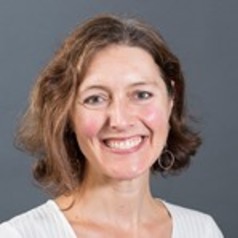
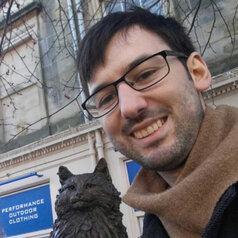
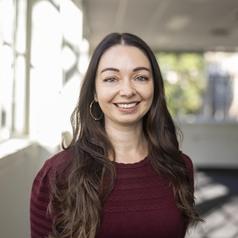
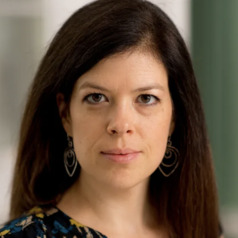
Professor of Geology, Macalester College As a geomorphologist, I study the forces that shape the physical surface of our planet. I measure active processes in the field (such as glacier motion, subglacial erosion, water velocity, and sediment transport), and use these data to constrain numerical models of landscape evolution over geologic timescales. My current research focuses on understanding the role of glaciers in shaping alpine landscapes. I use tools such as GPS to understand how glaciers behave over daily to annual timescales, and numerical models to examine their role in creating the fantastic mountainous landscapes we see today. In addition to my work on glaciers, I am interested in the effects of dams on sediment and water transport in river systems. By looking at historical data and making measurements of current river dynamics, we can quantify changes in sediment transport, which has important implications for riparian habitats over time. I teach a wide range of classes, including Geomorphology, Rivers and the Environment, Environmental Geology, History and Evolution of the Earth, and Glaciers and Climate.
Lecturer in Education, The University of Queensland Dr Katherine McLay is a sociocultural scholar whose areas of expertise include literacy and English education, dialogic pedagogy, and technology-enhanced learning.
Lecturer in Macroecology, University of Galway I earned my PhD in 2015 researching macroecological questions relating to the evolution of lifespan in animals and birds, the evolution of venom in snakes and the evolution of time perception in vertebrates. I held two post doctoral positions, one studying population dynamics at Trinity College Dublin and a following one as a Marie Curie Research Fellow at the University of St Andrews where I developed energetic models of scavenging foraging behaviors. In 2019 I started as a Lecturer in Zoology at the university of Galway Ireland, where my macroecology research group is based. I have over 25 published papers on topics relating to Macroecology published in journals such as Natural Ecology and Evolution and Ecology Letters and I am currently an associated editor for the journal Global Ecology and Biogeography
Senior Research Associate, National Centre for Clinical Research on Emerging Drugs, UNSW Sydney Dr Kathryn Fletcher is a clinician researcher with over 15 years of experience in the field of mental health. She has published widely on phenomenology, psychological factors and treatments for psychiatric conditions, and digital health interventions. Her current research focuses on developing novel treatments for people who use stimulants, with an interest in expanding the evidence base for psychedelic-assisted therapies. Kathryn is a registered Clinical Psychologist with the Australian Health Practitioner Regulation Agency (AHPRA) and completed her PhD examining the psychological profile of bipolar disorder.
Senior Lecturer in German and History, King's College London Katrin Schreiter’s main research lies in the field of 20th-century German history. One area of focus has been the interplay of economics and culture during the Cold War, and how these arenas are connected to the politics of German and European diplomacy through negotiations over the German-German relationship. She employs material culture methodology as an anchor for identity discourses on national, regional, and individual levels. Related publications have included analysis of the two German states’ nation branding efforts as well as an examination of East German firm identity under the institutional pressures of communism. Currently, Katrin is working on a new project that expands her scope of inquiry from Germany to Britain, Italy, and France at the turn of the 19th century. It will address port cities as zones of encounter between European populations and colonial products in the context of national imperial discourses. The comparison between major colonial ports of early and late colonial empires aims to shed light on the role of transnational links for socio-cultural development and formation of class identity in these four countries.