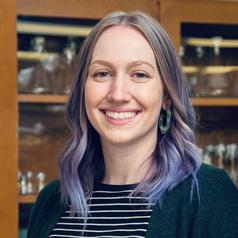
Professor in Particle Cosmology, Lancaster University I am a Professor in Particle Cosmology in the Physics Department of Lancaster University. My research is in Theoretical Cosmology and, in particular, in the physics of Cosmic Inflation. Inflation is a period of superluminal expansion of space that occurred a tiny fraction of a second after the Big Bang. It is responsible for making the observable Universe large and uniform. Also, it generated the small variations (perturbations) in the density of matter that gave rise to the formation of galaxies. These cosmological perturbations reflect themselves onto the Cosmic Microwave Background (CMB) radiation by causing small temperature variations. Models of inflation are based on fundamental physics like quantum field theory, supersymmetry, supergravity and string theory. The characteristics of cosmological perturbations which are observed in the CMB can tell apart models of inflation and, therefore, can constrain fundamental theories. Thus, theoretical cosmologists, like myself, use the Early universe as a giant laboratory to test fundamental physics, well beyond Earth based experiments, like particle accelerators.
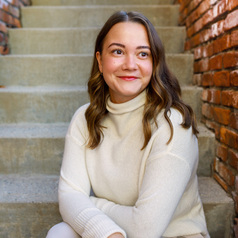
Assistant Professor of Entomology & Plant Pathology, University of Tennessee Hi! I’m an Assistant Professor in the Department of Entomology & Plant Pathology at the University of Tennessee Institute of Agriculture. I study insect viruses – specifically those viruses that have evolved to be beneficial to their hosts, which has repeatedly occurred within insects called parasitoid wasps. Viruses are primarily considered to be pathogenic entities that exploit host organisms for their own gain. However, increasing evidence suggests that viruses often evolve to persist within hosts, and some are even beneficial for their hosts. The best-studied examples of ‘good’ viruses are found within parasitoid wasps, in which viruses are inherited by wasp offspring and act as biological weapons that incapacitate insect hosts of the wasps during parasitism. A growing number of heritable viruses have been identified in various parasitoid wasp lineages, including wasps that serve as important biological control agents used to suppress agricultural pest populations. Very little is known about most of these viruses, even though some are pivotal for parasitoid wasp success. These viruses could therefore represent hidden aspects of natural biological systems that are used to mitigate pest species. My lab group uses a combination of molecular biology, manipulative genetics, and genomic sequencing techniques to explore these novel insect-virus interactions and aims to use this knowledge in the future to develop innovative biological control strategies that promote sustainable agriculture.
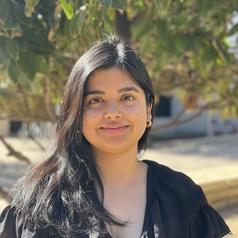
Adjunct Professor, Department of Psychology, Wilfrid Laurier University Dr. Katie Shillington is an Adjunct Professor in the Department of Psychology at Wilfrid Laurier University and a Post-Doctoral Scholar in the Department of Neurobiology at UC San Diego. She completed her PhD in 2023 and was one of three recipients of the Governor General’s Gold Medal at Western University. Her program of research focuses on resilience-promoting behaviours toward positive mental health, including kindness, prosocial behaviours, compassion, and other coping strategies during challenging times.
Visiting Assistant Professor of Political Science, University of Texas at Dallas I am a Visiting Assistant Professor in the Department of Political Science at the School of Economic, Political & Policy Sciences at the University of Texas at Dallas.
Senior lecturer, University of Wollongong Kylie's primary research interest is access to justice. Her research explores this theme in various legal areas, including criminal, intellectual property, environmental and administrative law. She adopts a pragmatic approach, and is motivated by contributing to tangible change.
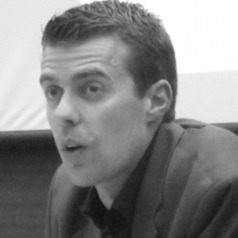
Researcher, IPIS Ken Matthysen holds a degree in political and social sciences (University of Antwerp), and obtained a Master of Conflict and Development at Ghent University. Since March 2008 he joined our research team. His focus is on natural resources and security in Central Africa.