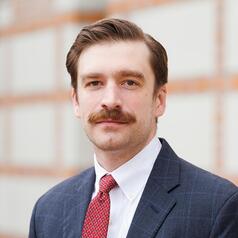
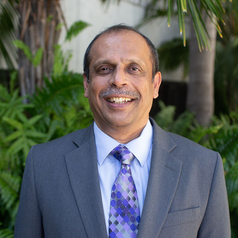
Scholar in Science and Technology Policy, Baker Institute for Public Policy, Rice University Kenneth M. Evans, Ph.D., is a scholar in science and technology policy at Rice University’s Baker Institute for Public Policy, assistant director for innovation policy at Rice’s Office of Innovation, and lecturer in the Wiess School of Natural Sciences. He also serves as the program manager and co-founder, along with Kirstin R.W. Matthews, of the White House Scientist and Science Policy Dynamic Digital Archive — a heritage collection housed in Rice University’s Woodson Research Center, which preserves materials related to the contemporary history of U.S. presidential scientific advisors. Evans studies the U.S. federal science, technology, and innovation policymaking system, including funding for research and development, international scientific collaboration, and the governance of emerging technologies. In particular, his research focuses on the role and history of the White House Office of Science and Technology Policy (OSTP) and the President’s Council of Advisors on Science and Technology (PCAST).
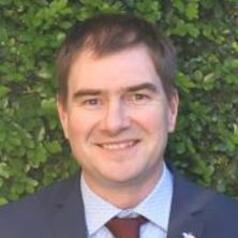
Professor of Environmental Health, The University of Queensland Professor Kevin Thomas is Director of the Queensland Alliance for Environmental Health Sciences (QAEHS). Kevin is an environmental health scientist with a particular interest in understanding the environmental exposures associated with contaminants of emerging concern (CECs) with the goal of protecting environmental and human health. Kevin also leads the Minderoo Centre- Plastics and Human Health at UQ and is Deputy-Director of the Australian Research Council Industrial Transformation Training Centre for Hyphenated Analytical Separation Technologies (HyTech). His current research is focused on understanding human exposure to plastics pollution and developing mass spectrometric analytical methods for characterisng plastics and other CECs, assessing community-wide health status through analysing wastewater (wastewater-based epidemiology) and establishing alternative approaches to exposure monitoring, for example explanted silicone prostheses and wristbands.
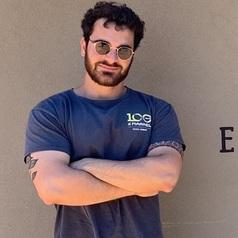
Maître de conférences, Université Savoie Mont Blanc Kevin Vezirian is a lecturer (Maître de conférences) at the University Savoie Mont-Blanc and a Honorary Research Fellow at the University of Western Australia. He is interested in the understanding of human-animal relations through the lens of social psychology.
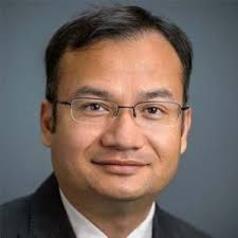
Associate Professor of Environmental Science, Villanova University Kabindra Shakya is an environmental scientist working in issues of outdoor and indoor air pollution, specifically particulate matter, ozone, and nitrogen oxides. His work also involves assessing trace metal contaminants (heavy metals such as lead) in soil samples from community gardens, residences, and parks. He is specifically interested in issues of environmental justice and also working in various environmental issues in developing countries. Rriginally from Kathmandu, Nepal, Shakya completed most of his earlier education in Nepal. His PhD work focused on chemical characteristics of particulate matter and his postdoc work focused on assessing health effects from the exposure to particulate matter.
Assistant Professor of Earth and Environment, Florida International University Shetty's research interests and expertise are in basic and applied aspects of microbial processes related to environment, agroecosystem and health. He is interested in synergistic integration of both basic and applied science aspects in our research projects. His areas of research interest and expertise include - Management of soil-borne fungal diseases using biofumigants; Biocontrol of phytopathogens; Biological control of exotic invasive plant species using indigenous phytopathogens; Microbial biodegradation of marine and fresh water algal biotoxins; Endophytic microorganisms; Detection of Indoor toxic mold growth using signature volatile organic compounds; Allelopathic chemical interactions in suppression of invasive plant species; Microbial and plant based biofuel and bio-product production; Plant-microbial symbiosis; plant microbiome and soil microbial diversity; Biocontrol of foodborne pathogens in soil and on plant; Bioremediation (Heavy metals using plants, Pentachlorophenol and Polycyclic aromatic hydrocarbons using bacteria and white-rot fungi); Restoration ecology and ecological risk assessment following bioremediation. He enjoys teaching a wide variety of courses within the fields of Agriculture and Environmental sciences. Courses he teaches - Sustainable Agriculture, Integrated pest management, Soil Microbiology, Energy Resources, Introduction to Environmental Science and sustainability, Food Security and food safety, Sustainable Bioenergy, Agroecology, Special topics "Agriculture Colloquium".
PhD Candidate, School of Agriculture, Food and Ecosystem Sciences, The University of Melbourne Katherine is an urban ecologist and horticulturalist with a passion for greening cities and returning nature to urban sites. She is investigating new uses for waste subsoils, and methods to return flora from critically endangered plant communities to urban landscapes in the context of native wildflower meadows. Her recent work has returned species from critically endangered natural temperate grasslands and grassy woodlands of southern Victoria to a range of sites in Melbourne