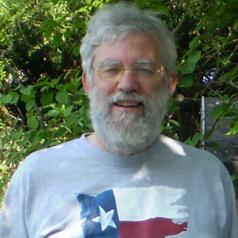
Emeritus Fellow, Downing College, University of Cambridge Dr Ken McNamara is a retired University Senior Lecturer in the Department of Earth Sciences and former Director of the Sedgwick Museum. He is an Emeritus Fellow Downing College. He is also an Adjunct Professor at the University of Western Australia. The underlying thread that runs through much of his research is the relationship between evolution and development, with particular reference to the fossil record. Current projects include: the role of developmental change in macroevolution, with particular emphasis on heterochrony; analysis of patterns of evolution and extinction in trilobites before and after the Late Devonian mass extinction event, 370 million years ago; diversity, palaeoecology and patterns of gastropod predation on Eocene and Miocene sea urchins; biotic responses to mass extinctions in Late Cretaceous serpulid worms, with particular emphasis on phenotypic variation as an indicator of environmental stress; Permian echinoderms from Western Australia; the archaeology and folklore of fossils, with an emphasis on sea urchins; and the contribution of Dr John Woodward (1667-1728) to the early development of geology. He has written, co-written or edited a number of books, including 'Unearthing the Underworld: a Natural History of Rocks' (2023); 'Dragons' Teeth and Thunderstones: the Quest for the Meaning of Fossils' (2020); 'The Star-Crossed Stone' (2010); 'Prehistoric Mammals of Western Australia' (2010); 'Australia's Meteorite Craters' (2009); Pinnacles' (2009); 'Stromatolites' (2009); 'The Evolution Revolution' (2007); 'Human Evolution and Developmental Change' (2002); 'Ancient Floras of Western Australia' (2001); 'Shapes of Time: the Evolution of Growth and Development' (1997); 'Evolutionary Change and Heterochrony' (1995); 'Heterochrony: the Evolution of Ontogeny' (1991).
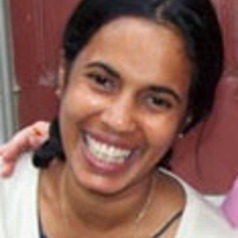
Professor in Development Geography, University of Gothenburg Kanchana N Ruwanpura is a Professor of Development Geography at the Human Geography Unit, University of Gothenburg, Sweden and a Fellow at the Centre for South Asian Studies (CSAS), University of Edinburgh, Scotland. Her PhD in Development Studies is from Newnham College, University of Cambridge. She has worked at the Edinburgh, Southampton, Hobart & William Smith Colleges, the University of Munich and the International Labor Office (Geneva). Kanchana’s recent research explores themes around debt justice, the political economy of debt and feminist politics, with generous funding from the Bromanska and Adlerbertska Foundations and the University of Gothenburg. She came to this research through involvement in debt justice activism for Sri Lanka, which has resulted in a voluntary and virtual initiative called the Institute of Political Economy, Sri Lanka (https://ipe-sl.org) Previously, she has broadly worked on themes around feminism, labour practices, ethical trade, infrastructural politics and ethnicity in South Asia. Her research has been funded by the AAUW, ESRC, the ERC and the British Academy, amongst others. Her research has been published in peer-reviewed journals, edited volumes, edited books and as research monographs published by Michigan University Press and Cambridge University Press. She served as editor for the journals Gender, Place and Culture and Geoforum and is on the Editorial Boards of Feminist Economics, Contemporary South Asia, Gender, Place and Culture and Environment and Planning A. During 2019-20, she was awarded fellowships by the Humboldt Foundation, Max Weber Stiftung (declined) and France-ILO Chair at IAS-Nantes (France), where she finalised her last book, Garments without Guilt? Global Labour Justice and Ethical Codes in Sri Lankan Apparels published by Cambridge University Press. She recently completed and co-edited (with Amjad Saleem) the Routledge Handbook of Contemporary Sri Lanka (2025), which is published open access.
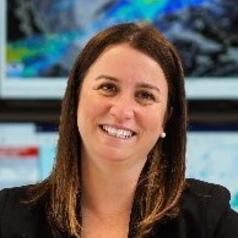
Director, North Carolina State Climate Office, North Carolina State University Kathie Dello is the state climatologist of North Carolina and the director of the North Carolina State Climate Office. She is the 5th permanent director and first woman to hold this position at the NCSCO in the office’s history. Kathie also serves as the co-director of the NOAA Regional Integrated Sciences and Assessment (RISA) for the Carolinas, the Carolinas Collaborative on Climate, Health, and Equity (C3HE). Kathie is involved with climate resilience planning and impacts assessment. She is also a proficient science communicator, and frequently collaborates with local and national media, NGOs, and other climate organizations. She works closely with North Carolina’s state agencies to help them understand their climate risk. She led Oregon’s first Climate Assessment in 2010, and was a co-author in 2017 and 2019. Kathie was a lead author for the 2020 North Carolina Climate Science Report and a member of the Climate Advisory Panel. She has also participated in adaptation planning in New York and Oregon, and was a technical advisor to North Carolina’s 2020 Risk and Resilience Plan. Kathie is an author on the Southeast chapter of the 5th National Climate Assessment. Kathie comes to us from Oregon State University, where she was the associate director of the Oregon Climate Change Research Institute and the deputy director of the Oregon Climate Service for almost 10 years. She has a Ph.D. in Environmental Sciences from Oregon State University, a Master’s in Geography and a Bachelor’s in Atmospheric Science from the State University of New York at Albany.
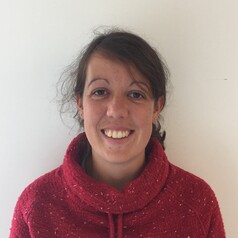
Postdoctoral Researcher in Sustainable Land Use, University of Manchester I am currently working as a postdoc at Manchester University on the Sustainable Forest Transitions project. Me and my colleagues are exploring the drivers behind the patterns of reforestation occurring in many parts of the tropics and sub-tropics, and the social and environmental impacts of these changes. I am also very interested in the impacts of mining as a land use. During my PhD I investigated the impacts of mining on the forests, and by proxy, biodiversity of Madagascar, and the effectiveness of measures to mitigate that impact, including biodiversity offsetting. In my research, I use spatial and statistical methods to investigate the causes and effects of different land uses and conservation policies. The aim is to find pragmatic solutions which balance the needs of humans with that of the environment.
Professor of English and Director, Program in Medical Humanities, College of Charleston My areas of interest are two-fold but mostly relate to stories and storytelling. I am a British Romanticist and write about the connections between developing theories of the mind and literature of the period. My first book, *Creating Romantic Obsession: Scorpions in the Mind,* dealt with the ways in which obsession became categorized and viewed as an illness during the period. My newest book will be about cognitive disability and how it intersected with ideas of feeling, race, and gender during the period. In addition, I direct our Medical Humanities program and work on illness and disability narratives; I believe that stories are very powerful and can change minds and, in turn, societies.
Professor of Nursing, Associate Dean International and Engagement, Western Sydney University Kath Peters is a Professor, Associate Dean (AD) (International and Engagement) and registered nurse in the School of Nursing and Midwifery at Western Sydney University with over 35 years of clinical and research experience.Professor Peters holds a Bachelor of Nursing (Hons), a Graduate Certificate in Higher Education and PhD (Flinders). She is internationally recognised for her expertise in women’s health, and underserved and marginalised populations.