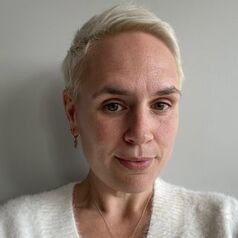
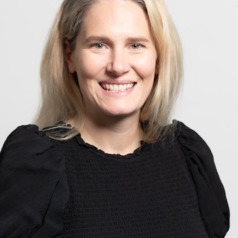
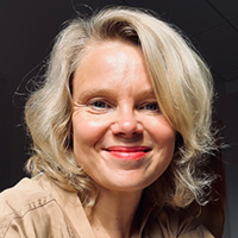
PhD Candidate, Department of Politics and International Relations, University of Sheffield Katie is studying for a part-time PhD, whilst continuing in her role as a KE Lead for the Faculty of Science at the University of Sheffield. Her professional background includes five years as a political communications and campaigns consultant, and five years as the senior parliamentary assistant to an MP. PhD Title: Trump Priming: the anatomy of a Wedge Lie and its impact on democratic health PhD Supervision Team: Dr James Weinberg (Primary), Professor Charles Pattie (Secondary) Katie's research looks at the impact of elite lies on democratic health, using the case study of the 2020 US Presidential election and its aftermath. Her investigation conceptualises a new type of lie, exploring how this relates to polarisation and the breakdown of societal trust, and what impact this has on democratic health in the US.
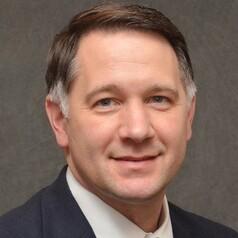
Associate Professor of Neurology and Ophthalmology, UMass Chan Medical School Kevin Houston, OD, M.Sc. is a Doctor of Optometry with specialized training in low vision and neurological rehabilitation, focusing on restoration and rehabilitation in neurological diseases. His research focuses on restoring movement and repairing ocular structures paralyzed by stroke and other neuro-pathologies. Dr. Houston's ocular rehabilitation research has pioneered using rare-earth static magnetic materials including neodymium in prosthetic devices. Focusing on the need to develop solutions for visual impairments, Houston's Lab has combined innovative engineering and visual therapeutic technologies to diagnose and investigate the benefits of virtual reality-based oculomotor rehabilitation, perceptual motor training, spatial neglect, magnetic actuators for restoring ocular movements, magnetic prosthesis for VI nerve palsy, and improving low vision. Houston, OD, collaborates with the U.S. National Institutes of Health, Department of Defense, Veterans Administration, and other non-profit foundations to develop new prosthetic and assistive devices and create restorative movement therapies to promote visual system recovery through continuous funding. As a clinical research specialist, patients can participate in vision rehabilitation exercises including vergence and oculomotor therapy, and prism adaptation therapy, while trialing new optic and prism glasses developed from Dr. Houston’s Vision Rehabilitation Laboratory. The goal of vision rehabilitation therapy is to develop solutions for visual impairments caused by neurological diseases.
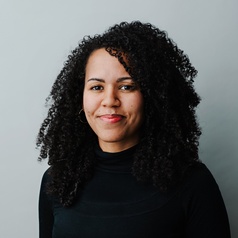
Assistant Professor, Department of Recreation and Leisure Studies, University of Waterloo Kaleigh Pennock is an Assistant Professor in the Department of Recreation and Leisure Studies in the Faculty of Health at the University of Waterloo. Her research addresses risk, responsibility, and harm in youth sport. Her interests include psychosocial aspects of sport-related concussions, decision-making and safe sport practices in community sport organizations, and inclusion and belonging for Black and racialized Canadian youth athletes. Her work emphasizes the complex interplay of personal, social, and cultural factors that shape athletes’ experiences in sports, highlighting the responsibility of sport leaders in safeguarding and supporting youth athletes.
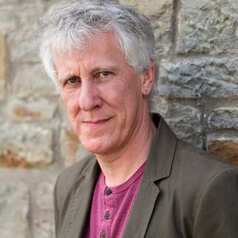
Professor of English Literature, University of South Wales My main research interests lie in the exploration of language and representation. My doctoral research and the book based on it (Justifying Language) extrapolated from the writings of Saint Paul a theory of interpretation formulated in dialogue with the work of modern theorists and philosophers including Mikhail Bakhtin, Jacques Derrida, Paul Ricoeur and Emmanuel Levinas. In Approaching Apocalypse my focus shifted to Victorian literature in order to examine the persistence and transformation of an ancient literary mode during a period characterised by literary realism, utilitarian thought, demythologising of the bible, technological progress and Darwinism. My third book contributed to the highly praised ‘Critical Inventions’ series published by Sussex Academic Press. The Prodigal Sign combines traditional modes of critical writing with dramatic monologues, parables, autobiography and less-easily defined modes of writing, in order to characterise the critical enterprise as a set of prodigal procedures and practices. My poetry collection Stations of the Boar draws on the eleventh-century life of St Cadoc. I collaboratied with my brother, Vic Mills, on a theatrical production based on the research that underpinned that collection. The play Cadoc and the Drowned Boys was performed in Churches named after the saint around south east Wales. I am currently working on another collection of poems based on the hymns of an ancient Mesopotamian priestess, and on a novel set in the 1590s.
Senior Research Fellow & Sydney Horizon Fellow, The Matilda Centre for Research in Mental Health and Substance Use and School of Public Health, University of Sydney Dr Katrina Champion is a Senior Research Fellow at The Matilda Centre for Research in Mental Health and Substance Use and School of Public Health at the University of Sydney. She holds a Bachelor of Arts-Psychology(Hons)/Bachelor of Health and a PhD in Public Health and Community Medicine. She is Program Lead of Healthy Lifestyles Research at the Matilda Centre and holds a prestigious Sydney Horizon Fellowship. Dr Champion works at the nexus of disease prevention and mental health, with a focus on the bidirectional relationships between poor mental health and unhealthy lifestyle. She develops, evaluates and disseminates digital interventions to improve both physical and mental health in adolescents.
Associate Professor in Art History, Liverpool Hope University I studied Art History and Italian in Berlin (Germany) and Siena (Italy) and gained my BA, MA and PhD from the Free University Berlin. After working in museums in Berlin and New York, I joined Liverpool Hope University from Cardiff University in 2011. My role is divided into two major strands. I currently act as Associate Dean (Student Experience) in the Faculty of Creative Arts and Humanities. I also work as Associate Professor in the Art History team, where I teach and supervise Art History, Fine Art and Graphic Design students. My research focuses on the late medieval and premodern period. It includes northern European ecclesiastical art work and its role and function within a variety of communities but also the investigation of movement and migration of visual artists. Another strand of my research is the exploration of gender and sexuality in imagery of swimming and bathing in premodern art, which is discussed in a monograph I am currently preparing (publisher Routledge).