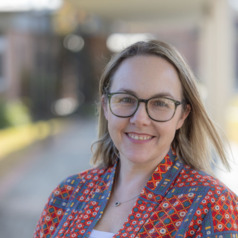
Assistant Professor, School of Nursing, Toronto Metropolitan University Dr. Kateryna Metersky is an Assistant Professor at the Daphne Cockwell School of Nursing. She completed her PhD in nursing at the University of Western Ontario in 2020. Both of her previous degrees (BScN and MN) are from the Daphne Cockwell School of Nursing. Dr. Metersky’s program of research focuses on: 1) international and cross-national collaborations and partnerships; 2) persons with social, economic and health challenges; 3) nursing and interprofessional practice and education; and 4) intersectionality and positionality in population-centred care. She has expertise with qualitative research methods as well as systematic and scoping reviews. Fittingly, her research program is focused on the integration of her Scholarly, Research and Creative work in pedagogy and practice to promote social justice, local and global community well-being, and health equity. Dr. Metersky continues to maintain her nursing practice in general internal medicine at Toronto Western Hospital. Dr. Metersky is currently the Toronto co-city lead for the Inclusive Communities for Older Immigrants project. She is also a member of the manuscript review board of several peer-reviewed journals and on the Editorial Board of the International Journal of Health Trends and Perspectives. She sits on the Toronto Metropolitan University’s Research Ethics Board as a Reviewer and is the co-chair of the University Senate. She is also the current co-chair of the Registered Nurses’ Association of Ontario’s redevelopment of the Person- and Family-Centred Care Best Practice Guideline. Finally, Dr. Metersky sits on the Board of Directors of the Canadian Interprofessional Health Collaborative. Dr. Metersky has recently completed the Sigma Theta Tau International Academy training on global advocacy as well as the University of British Columbia’s Program for Open Scholarship and Education.
Research Fellow in the Public Health Collaborating Unit, Bangor University Kat is the research lead in the Public Health Collaborating Unit, School of Health Sciences, Bangor University. Kat’s research interests include violence prevention, specifically adverse childhood experiences (ACEs). Kat has led a number of regional and national ACE studies and the first study in the UK to explore the prevalence of ACEs in an offender population. Kat is a mixed-methods researcher with expertise in survey design, evaluation, systematic reviews and evidence synthesis. Kat also has experience of conducting research with vulnerable populations and in high-risk environments. Kat's role is funded by Public Health Wales and she works closely with the World Health Organization Collaborating Centre on Investment for Health & Well-being.
Lecturer, School of Nursing, University of Wollongong Katherine is a nurse academic and in the final stages of her PhD candidature at the University of Wollongong. Her research focuses on the resuscitation experiences and practices of rural nurses, utilising an ethnographic methodology. Katherine is dedicated to raising awareness of the challenges faced by the rural health workforce and shed light on critical aspects of rural health care. Katherine's research will continue to support the delivery of optimal care for deteriorating patients in low-resource and understaffed rural settings through co-design strategies.
Assistant Professor of Veterinary Medicine, University of Arizona Dr. Kerri Rodriguez is an Assistant Professor in the College of Veterinary Medicine. As the director of the HAB (Human-Animal Bond) lab, her research explores the role and impacts of the human-animal bond for both human and animal well-being across a variety of settings, populations, and contexts. Dr. Rodriguez received her Ph.D. in Human-Animal Interaction from the Purdue University College of Veterinary Medicine in 2020, completed a postdoctoral research fellowship with the Human-Animal Bond In Colorado at Colorado State University, and joined the University of Arizona in 2023. She has led projects investigating the benefits of assistance dogs for individuals with disabilities, the effects of therapy and facility dogs on staff and client/patient wellbeing, and the potential stress-buffering effects of dogs. Her work has been highlighted in media outlets such as the BBC, Washington Post, New York Magazine, People Magazine, and National Geographic. Dr. Rodriguez is an internationally recognized scholar in the field of human-animal interaction, with appointments on the advisory boards of Fetch Pet Insurance, Pet Partners, and American Humane. She has served on the board of the International Society for Anthrozoology (ISAZ) since 2019 and is on the editorial board of the journals Human-Animal Interactions and Frontiers in Veterinary Science. Dr. Rodriguez has also served as a subject matter expert for leading HAI organizations, including the North American Veterinary Community (NAVC) and the Association of Animal-Assisted Intervention Professionals (AAIP).
Cornell University, Cornell University I am an environmental scientist and epidemiologist, and my research aims to understand the interactions among environmental change and livelihood, food, and nutrition security. My work is focused on global fisheries and the households that are reliant on the environment to access food and income. I use interdisciplinary methods and my work aims to foster a deeper understanding of how ecological and social systems interact, the ways communities and households adapt to and mitigate environmental change, and the links between human well being and ecological sustainability. I hold a PhD in environmental science, policy & management and a Master of Public Health from the University of California, Berkeley, and an AB in ecology and evolutionary biology from Princeton University.
Assistant Professor, Boston University Kimberly (Kim) Zayhowski, MS, CGC, is an assistant professor, genetic counselor, and clinical researcher at Boston University Chobanian & Avedisian School of Medicine. Much of Kim’s current research within genetic counseling focuses on improving care for LGBTQIA+ patients, specifically focusing on the transgender and intersex communities.