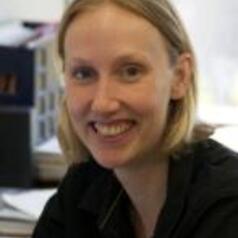
Science Communications Coordinator, Universität Wien I am interested in creating healthier urban landscapes that preserve habitat and biodiversity. My work has focused on using spatial wildlife population modeling to guide the management of both threatened and invasive species. In addition to research, I am engaged in science communication, aiming to make complex environmental and ecological issues accessible to a wider audience. My experience spans from community radio to media relations and developing National Parks interpretation for state government.
Senior Lecturer, School of Agriculture, Food and Wine, University of Adelaide Kate is the Curator of the Waite Arboretum and Waite Conservation Reserve, a position that enables her to implement her knowledge of trees and Australian native plants, her skills in working with volunteers and community groups, and grow her various research interests. Kate’s main interest is improving Australian native plants for horticulture by research into propagation, cultivation, and breeding and selecting new varieties and species. She also has interests in supporting indigenous knowledge of food/medicines from plants; renewing the Urban Forest, sustainable agriculture and the environment; amenity horticulture (nursery, cut flower, garden design), and general horticulture (in particular small fruits and new crops such as essential oils, herbs, spices and Asian vegetables).
Assistant Professor of Urban Planning, University at Buffalo Kelly Gregg, assistant professor of urban planning, pursues place-based research at the intersection of planning, urban design, and landscape architecture. Specifically her work focuses on street design and pedestrian environments in both an historic and contemporary context. Her current research includes examining recent street adaptations to enable physical distancing during the coronavirus pandemic. She strives to approach challenges in practice and in research with an interdisciplinary perspective that references her background in both planning and design. She completed her PhD in Planning at the University of Toronto in 2019. She also holds a Master's Degree in Urban Planning (MUP) and Urban Design (MUD) from The University of Michigan and a Bachelor of Landscape Architecture (BLA) from The Pennsylvania State University. Her publications from 2019 include a chapter co-authored with Paul Hess PhD that was published in the New Companion to Urban Design edited by Tridib Banerjee and Anastasia Loukaitou-Sideris. Additionally, part of her dissertation work on pedestrian malls was published in the journal Planning Perspectives. And a co-authored article on ‘Complete Street’ municipal policy was in the International Journal of Sustainable Transportation. Prior to joining the faculty at Buffalo, Gregg taught first-year common core courses for planning, landscape architecture, and architecture students at Ball State University. Her other previous experience includes work at the University of Cincinnati, where Kelly managed technical service projects, program development, and assisted with studio teaching at the Niehoff Urban Studio and Community Design Center. Additionally, she worked at The Graham Sustainability Institute at the University of Michigan and assisted the Detroit Climate Action Collaborative (DCAC) in developing a community lead climate action plan for the City of Detroit. Gregg has also worked on urban design visioning for climate adaptation in Manhattan, NY. This collaborative work was featured in The Atlantic Cities shortly after Hurricane Sandy in December 2012.
Professor of Media and Information and Interim Director of the Quello Center, Michigan State University Keith N. Hampton, Ph.D., is a Professor in the Department of Media and Information and Interim Director of the Quello Center for Telecommunication Management and Law at Michigan State University. Dr. Hampton is a network scholar who studies community, with a focus on digital media and social inequality. His research investigates the connections between digital access and disparities in areas such as gender, education, and well-being. He has examined how variation in the use of digital media (i.e., social media, video games, etc.,), digital skills, parental mediation, and access inequalities influence outcomes, particularly in rural communities. Dr. Hampton's research has received a number of awards. This includes the 2022 Career Achievement Award from the Section on Communication, Information Technologies, and Media Sociology of the American Sociological Association. In 2017 he was elected a member of the Sociological Research Association. Hampton's prior faculty appointments include Rutgers University, the University of Pennsylvania, and the Massachusetts Institute of Technology.
Professor, Physics, Engineering Physics and Astronomy, Queen's University, Ontario Kristine Spekkens is a professor in the Department of Physics, Engineering Physics and Astronomy at Queen's University. Her research focusses on understanding the structure of nearby galaxies.
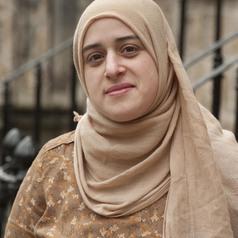
Research Fellow, Alwaleed Centre for the Study of Islam in the Contemporary World, The University of Edinburgh Khadijah Elshayyal is a Research Fellow at the Alwaleed Centre for the Study of Islam in the Contemporary World at the University Of Edinburgh. She is currently working on the ESRC-funded Digital British Islam project. Her research interests include the political agency of Muslims in diaspora contexts, on which she has published widely, and is author of Muslim Identity Politics: Islam, activism and equality in Britain (IB Tauris, 2018) and Scottish Muslims in Numbers: understanding Scotland’s Muslims through the 2011 Census (University of Edinburgh, 2016).