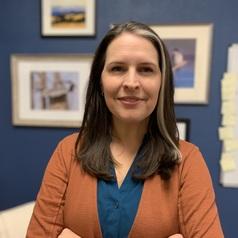
Associate Professor of Biology, Indiana University I want to understand how behavioral evolution unfolds and why animals behave how they do. I love bold experiments that embrace the complexity of the natural world. I began my career studying why females are aggressive, using large scale field experiments to induce territorial competition among cavity-nesting birds. Through analysis of the winners of such competition, I have integrated how and why questions in animal behavior, combining muddy boots field biology with endocrinology, neurobiology, and genomics. Recently, I have applied these tools to a new combination of age-old and emerging questions that extend my work into to macroevolution, range expansion, stress resilience, and the physiological mechanisms that facilitate these universal phenomena. My research group works entirely on free-living birds.
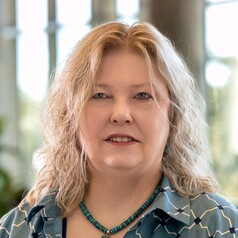
Associate Professor of Instruction, University of Texas at Arlington Kimberly Breuer is an Associate Professor of Instruction in the Department of History at the University of Texas at Arlington, where she teaches courses in the history of science and technology and Iberian history and conducts research on teaching and learning. She holds a Ph.D. in history from Vanderbilt University, specializing in Latin American and Native American history in the late medieval and early modern eras. She also earned a BS in Aerospace Engineering and worked in the aircraft industry for several years.
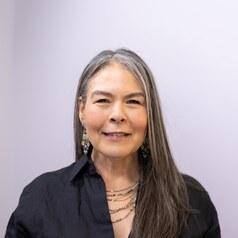
PhD Candidate in Public Health and Social Policy, University of Victoria Kimberly Fairman is Nunavummiut her home community is Taloyoak. She is the Executive Director at the Institute for Circumpolar Health Research and holds the NEIHR Grant for the Northwest Territories and Yukon. Kimberly was trained in Nursing and obtained her Master of Public Health Degree from the University of Alberta. She is currently a PhD Candidate at the University of Victoria in Public Health and Social Policy. She is working with researchers, Indigenous knowledge holders, clinicians and policy makers in health systems research that impacts on the northern patient experience. Playing an important role by weaving partnerships into the research fabric, engaging with communities and building northern capacity for health research. Kimberly has been showcasing the valuable contribution of northern communities, practitioners, and indigenous knowledge holders to the modern research agenda. Kimberly also serves on the board of the Canadian Society for Circumpolar Health.
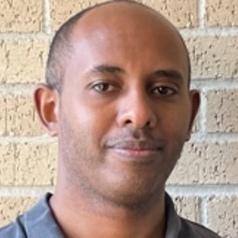
Assistant Research Scientist, Mosbacher Institute for Trade, Economics, and Public Policy, Texas A&M University Dr. Kaleb Abreha holds a Ph.D. in Economics and Business Economics from Aarhus University in Denmark, a Master’s degree in Agricultural Economics from the University of Copenhagen in Denmark, and a Bachelor’s degree in Economics from Addis Ababa University in Ethiopia. Since earning his Ph.D., he has completed several research projects and peer-reviewed publications as a research fellow at Aarhus University and as a consultant at The World Bank. He was also a World Bank Africa fellow. Besides research, he lectured and assisted several undergraduate and graduate courses in economics, international business, and strategic management. His research interests are in the areas of international trade and investment, global value chains, firm and industry dynamics, industrialization, and economic growth and transformation.
Assistant Professor, Faculty of Health Sciences; Senior Scientist, Pacific Institute on Pathogens, Pandemics and Society, Simon Fraser University I'm a scientist with a particular interest in One Health (the collective health of wildlife, people, and the environment) and health communications. I am an Assistant Professor in the Faculty of Health Sciences and a Senior Scientist in the Pacific Institute on Pathogens, Pandemics and Society at Simon Fraser Universty. I am also the Regional Deputy Director of the British Columbia node of the Canadian Wildlife Health Cooperative, where I work on a variety of wildlife-health related issues. I completed a Masters in Evolutionary Biology as well as a Bachelor of Science in Animal Biology from the University of Alberta. In addition to my wildlife health work, I am the host of Genome British Columbia's podcast "Nice Genes!" which explores how genomics (study of genomes) can be used to understand the world around us. I'm also the co-founder and co-host of Nerd Nite Vancouver, a monthly science-focused lecture series and a facilitator for SciCATs: the Science Communication Action Team which creates modular open-access science communication training.
Honorary Research Associate, Institute for Marine and Antarctic Studies, University of Tasmania Dr Keith Reid is a marine scientist with a passion for conservation and education. From 2008 to 2021 he was the Science Manager at the Secretariat of the Commission for the Conservation of Antarctic Marine Living Resources (CCAMLR). Prior to moving to CCAMLR Keith was a research scientist with the British Antarctic Survey (1991 – 2007) where he was project leader for the Ocean Ecosystems and Management programme and also completed a secondment as a polar science and policy advisor to the UK Foreign and Commonwealth Office. He has PhD from Liverpool University, is an author of over 80 peer-reviewed publications and was formerly the editor of the journal CCAMLR Science. Keith’s work focuses on the use of science in conservation and the interface of science and policy. He is also an Adjunct Professor at the College of Marine Sciences, Shanghai Ocean University and an Adjunct Research Associate at the University of Tasmania. Since 2021 Keith has been a Director of Ross Analytics, specialising in ecological and environmental risk assessment in the fisheries and renewable energy sectors.