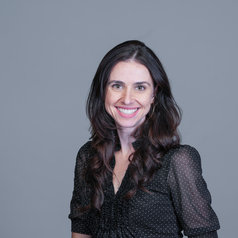
Associate Professor of Psychology, Hope College Kendra Thomas is an Associate Professor of Psychology at Hope College. She researches character development among parents of young children (in a Zulu South African community) and in elementary schools (in Brazilian public education). Kendra looks for contextual and relational variables that influence longitudinal change. She is particularly curious about how adolescents grapple with (in)justice and how people can develop hope in complex circumstances.
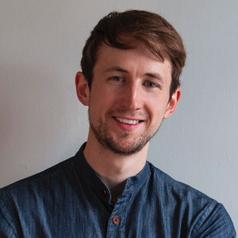
Postdoctoral Research Scientist, Computational Social and Behavioural Science, Columbia University Dr. Kelton Minor applies data science to study how humans adapt to planetary changes and climate stressors.
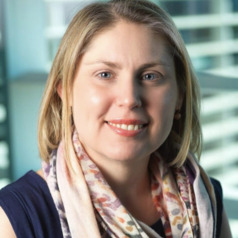
Research Fellow, Centre for Childhood Nutrition Research, Queensland University of Technology Kimberley Baxter is a dietitian and Research Fellow at the Queensland University of Technology. Her research aims to promote the use of responsive feeding practices among families experiencing food insecurity through a collaboratively designed intervention. Kimberley has a background in infant and child feeding and health services research. She holds a PhD from the University of Queensland which explored clinical outcomes with weight change in young people with excess weight.
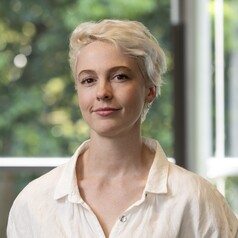
PhD candidate, Queensland University of Technology Kelsey Adams is a PhD candidate at the School of Justice at QUT. She is an interdisciplinary scholar in psychology and criminology. Her thesis, Understanding the Rape Acknowledgment Process: A Follow-up Study (submitted 2024) explored rape survivors’ journeys of labelling personal experiences of sexual violence. She spoke to her PhD findings at TEDxQUT 2023. Kelsey holds a Bachelor of Psychological Science from UQ.
Ph.D. Student and Transdisiplinary Biomolecular and Biomedical Sciences Fellow, Florida International University Kaylee’s research in the Laboratory of Tropical Genetics focuses on the molecular basis for mosquito attraction to humans. Mosquito-borne diseases annually account for over one million deaths worldwide. She hopes to connect what makes some people more attractive to mosquitoes than others with the variability of each person’s skin microbiome. Using this, she hopes to create a more effective and long-lasting mosquito repellent that can potentially save lives.
Professor of Statistics and Health Data Science, UCL Professor Harron's research falls into two main areas. Her methodological research focuses on the development of statistical methods for data linkage, and particularly for evaluating the quality of linkage. Her research develops methods to exploit the rich data that are collected about populations as we interact with services throughout our lives. Prof. Harron leads the ECHILD Research Database which links data from health, education and children's social care services for all children in England. This work facilitates the wider use of population-based administrative and electronic data sources for epidemiological research, to support clinical trials, and to inform policy. Her applied research focuses on exploiting existing data sources to improve services for mothers and families, and particularly vulnerable families. Her aim is to improve our understanding of the health of individuals from birth to young adulthood. Her current research projects are using national linked data from health, education and social care to evaluate and explore variation in Health Visiting across England, and to understand the impacts of Special Educational Needs provision on child health. Prof. Harron's work involves collaborations with a number of key stakeholders for national data, including the Office for National Statistics, NHS England, and the Department for Education. She is a BMJ Statistical Editor and a Royal Statistical Society Council member.