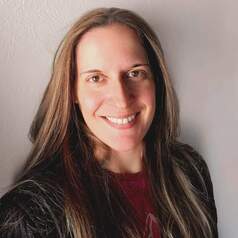
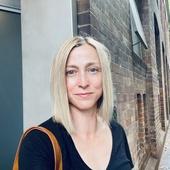
Senior Lecturer in Criminology, Aberystwyth University I worked for a large city Youth Offending Team for several years as a case manager, and while there, completed my PhD looking at the emotional intelligence of children who have offended. Subsequently relocating to a tiny village in Wales, I worked on a Welsh Government/Youth Justice Board Cymru project looking into the resettlement practice of YOTs across North Wales (the ‘Resettlement Broker’ project), before moving into academia, lecturing in Criminology at Aberystwyth University. My writing and research covers a variety of areas within youth justice, such as systems/processes, resettlement policy and practice, the voice of the child/collaboration, Child First justice, and the effects of Covid-19 on justice-involved children.
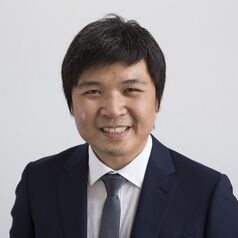
Group leader in Single molecule imaging, Max Planck Institute for Solid State Research I have worked for ~10 years in the field of single molecule imaging. Using a tool called 'Scanning Tunnelling Microscopy', I was able to study chemical reactions on surfaces one-molecule-at-a-time. I recently extended the use of such microscope to determine structures of carbohydrate-decorated proteins and lipids - also known as glycoconjugate - as they are key molecules in many biological functions - and dysfunctions. I started my PhD in 2013 at the University of Toronto under Prof. John C. Polanyi (Nobel Laureate in Chemistry in 1986). Graduated in 2018, I joined Prof. Klaus Kern at the Max Planck Institute for Solid State Research, Stuttgart, Germany as Alexander von Humboldt postdoctoral fellow. Since 2023, I have started my own research group funded by the European Research Council.
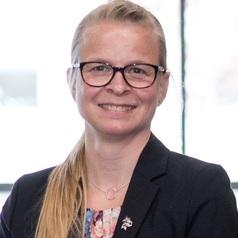
Professor of Organisational Psychology, University of Canterbury Katharina's research focuses on employee well-being and factors which lead to psychologically healthy workplaces, using psychology. She often collaborates with organisations in the diagnostic of stress and wellbeing, along with the implementation of initiatives aimed at increasing health and wellbeing at work, applying psychological principles and knowledge about human behaviour and emotions. She has worked on several projects on how organisations and managers can make a positive difference and contribute to employee wellbeing.
PhD Candidate in Medicine and Health, George Washington University I am non-clinical faculty in graduate medical education for HCA Healthcare where I am a regional director of research. I develop and teach research curriculum to medical residents and fellows as well as mentor and oversee their research projects during residency and fellowship.
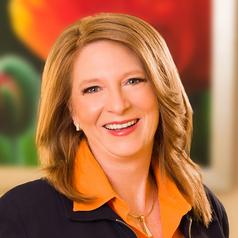
Professor of supply chain management, University of Tennessee Kate Vitasek is an international authority on the art, science and practice of highly collaborative business relationships. Her Vested® business model for highly collaborative relationships has been featured on CNN International, Bloomberg, NPR and Fox Business News. Vitasek is the author of seven books, including Vested: How P&G, McDonald’s and Microsoft Are Redefining Winning in Business Relationships; Getting to We: Negotiating Agreements for Highly Collaborative Relationships; and Contracting in the New Economy. Her work has been featured in more than 300 articles including in the Harvard Business Review, Chief Executive Magazine, Forbes and Journal of Commerce. Vitasek is in the Sourcing Industry Group’s Hall of Fame and is a World Commerce and Contracting Fellow. She has been named a Rainmaker by DC Velocity Magazine, Woman on the Move in Trade and Transportation by the Journal of Commerce, and a Power Influencer by World Financial Magazine. She is the lead faculty for UT’s Certified Deal Architect Program.