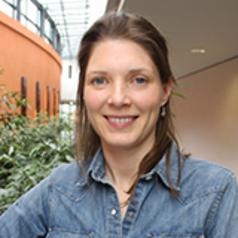
Professor of Clinical Nursing, Dublin City University Kate is currently working in Dublin City University, where she is Professor of Clinical Nursing, a joint appointment between DCU and the CHO9. She completed her PhD in 2001 at Curtin University of Technology, Western Australia. This thesis was entitled: Case studies in restraint use. Kate has a significant leadership role Irish dementia policy development and successfully led the national Dementia training initiative: Dementia Skills Elevator, aiming to develop dementia skills capacity in services and communities. Kate has led several European research consortiums in dementia prevention and approaches to care and support. Kate currently teaches the practice development module in Dementia and Ethics in Nursing on the under graduate curriculum. Kate’s research interests include Dementia prevention/delay (Principle investigator FP7 Funded: Innovative Midlife Intervention for Dementia Deterrence), timely intervention in dementia care (Partner in FP7 funded Dem@care Ambient assisted living for dementia and JPND Actifcare, care pathways post diagnosis). Feasibility of a dementia register for Ireland (NGO commissioned). Dementia and sensor technology (Partner Demcare FP7 Funding).
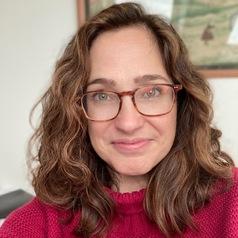
Professor of Migration Studies, University of Bristol Katharine Charsley is Professor of Migration Studies at the School of Sociology Politics and International Studies at the University of Bristol. She specialises in the area of gender, family and migration, particularly transnational marriage. She is currently PI of the ESRC-funded project 'UK-EU Couples after Brexit: migrantization and the UK family immigration regime' - www.brexitcouples.ac.uk
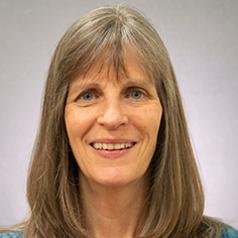
Professor of Criminology, University of South Wales Katy Holloway is a Professor of Criminology at the University of South Wales. She obtained her PhD from the University of Cambridge in 2000 and moved to Wales as a Research Fellow in 2002. Since completing her PhD, Katy's academic career has been focused on issues related to substance use and misuse. Originally, her primary research interest was on the link between drug use and crime. Over time, however, she has become far more interested in the people who use different substances and of finding ways to help keep them alive and reduce drug and alcohol-related harm. Katy has published widely in the field of substance use (80+ publications) and has secured more than £1.5m of external grant funding. She is currently working on several research projects including: an evaluation of Buvidal (long-acting injectable buprenorphine); an assessment of the impact of Minimum Pricing for Alcohol in Wales; and an NIHR-funded evaluation of the Staying Safe Programme (an online course about drugs and alcohol for university students). Katy is Director of the Substance Use Research Group at the University of South Wales and is a member of a range of advisory boards and steering groups. This includes Welsh Government's National Implementation Board for Drug Poisoning Prevention and the Western Bay Drugs Commission.
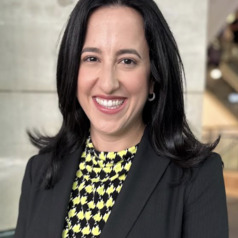
Associate Professor of Public & Ecosystem Health, Cornell University Katherine Dickin conducts formative and implementation research on the effectiveness of community-based programs to improve nutritional status and reduce health inequities in the U.S. and globally. This includes qualitative and quantitative research on maternal and child nutrition, responsive parenting and social support, food security, obesity prevention, capacity building for multisectoral nutrition and sustainable food systems. A central focus is the interface between public health practitioners and communities, to understand contextual influences on delivery and use of interventions for low-income families. In her teaching, she focuses on experiential learning in global and public health, and mentoring on research methods. Engaging with communities and students, she aims to design programs reflecting local knowledge, norms, and values.
Research Assistant, College of Health, Medicine and Wellbeing, School of Biomedical Science and Pharmacy, University of Newcastle Senior Project Officer at the Australian Commission on Safety and Quality in Health Care and a Research Assistant in the School of Biomedical Science and Pharmacy at the University of Newcastle.