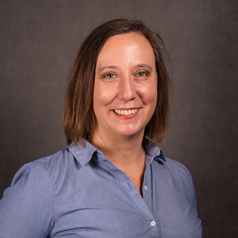
Professor of Anthropology, Clemson University My current research focuses on estimating the time of death or postmortem interval in medicolegal death investigations. Research funded by the National Institute of Justice utilizes an application, geoFOR to provide predictions of the postmortem interval. I also continue to examine changes that have occurred in the craniofacial morphology of modern populations during the past 200 years. The past two centuries have been a unique experiment on the effects of extreme environmental change on human populations. I am exploring both the proximate and ultimate causes underlying the effects of changes in mortality patterns, migration rates, and socio-economic parameters in a modern population and their outcomes on the phenotype. I have also been working as a forensic anthropology consultant for various counties in the Upstate of South Carolina. When skeletal remains are discovered, I assist law enforcement officers with the identification of the remains.
Associate Professor and Reader of French, University of Warwick In October 2013 I began an AHRC-funded project on French Theatre of the Napoleonic Era. This project involves a team of doctoral and postdoctoral researchers working on linking close textual readings to larger cultural, social and political issues. I am currently putting the finishing touches to a critical edition of Pixerécourt's La Forteresse du Danube (1805) for the playwright's complete works being published by Garnier. In 2012 I published a monograph on 'non-political' fiction of the 1790s as a response to the trauma of the Revolution (Narrative Responses to the trauma of the French Revolution (Oxford, Legenda, 2012)). The research has shown how the apparent continuity of Ancien Régime tropes, settings and characters is in fact an indication of writers' traumatised response to the Revolution. My first book on The Moral Tale in France and Germany 1750-1789, examining the development of short fiction in the two countries in the years leading up to the French Revolution, was published by the Voltaire Foundation as SVEC 2002:7. Much of my work is centred on questions of literary history and the thorny problem of literary influence.
PhD Student, University of Tennessee Katrina Stack is PhD student in the Department of Geography & Sustainability at the University of Tennessee, Knoxville. Her primary research areas are cultural historical geography and geographies of memory with a focus on race, public memory, heritage tourism and preservation, and critical place naming. Katrina holds a MS in Historic Preservation from Eastern Michigan University, with a concentration in heritage interpretation and museum practice. She earned a BA in History from the University of Michigan-Dearborn. Katrina is a research fellow for Tourism RESET (Race, Ethnicity, and Social Equity in Tourism), a multi-university and interdisciplinary research and outreach initiative that seeks to identify, study, and challenge patterns of social inequity in the tourism industry.
Professor of Political Science, SWPS University of Social Sciences and Humanities Klaus Bachmann, professor of political science at the University of Social Sciences and Humanities, board member of the Stefan Batory Foundation, president of the board of the Foundation for European Studies (FEPS) in Wrocław, in the years 1988-2001 foreign correspondent for German, Austrian and Swiss media in Poland, Ukraine, Belarus and Lithuania, between 2001-2004 correspondent in Brussels. A graduate of universal history and the history of Eastern Europe at the University in Heidelberg and Vienna, in 2000 he defended his doctoral thesis at the University of Warsaw on Polish-Ukrainian relations in Galicia before the First World War. In 2004, he published his habilitation on the European Convention. In the years 2004-2009 assistant professor, then professor at the University of Wrocław, since 2006 professor at the University of Social Sciences and Humanities and from 2013 professor of social sciences. He specializes in the “Transitional Justice” area, European integration (the treaty reform and decision-making mechanisms) and modern history. Author (together with Thomas Sparrow-Botero and Peter Lambertz) of the monograph “When Justice Meets Politics. Independence and Autonomy of Ad Hoc International Criminal Tribunals”, Frankfurt/M.: Peter Lang 2013.
Professor of Urban Studies, King's College London Katherine Brickell is Professor of Urban Studies in the Department of Geography at King's College London. She is a feminist geographer whose research focuses on experiences of precarious home and working lives.
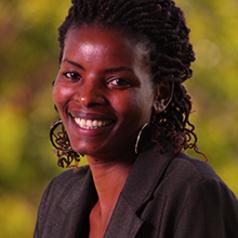
Associate Research Scientist, African Population and Health Research Center Kanyiva Muindi is an associate research scientist and a FLAIR research fellow at the African Population and Health Research Center (APHRC). She works under the Urbanization and Wellbeing Research Programme and has over ten years’ research experience on urbanisation issues. Kanyiva is passionate about air quality, lay perceptions of exposure to air pollution and the effects of this exposure on health. Her fellowship work is seeking to address household air pollution in Kenyan rural households through the introduction of ethanol cookstoves. She most recently worked on an urban refugee project on access to infrastructure among refugees living in Nairobi. She holds a PhD in epidemiology and global health from Umeå Universitet, Sweden and a master’s degree from the University of the Witwatersrand, South Africa.