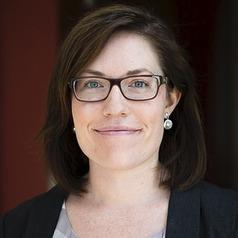
Assistant Professor, Mechanical and Aerospace Engineering, Carleton University Dr. Schell’s research areas include: wind power modelling and forecasting, power systems planning for negative emissions, strategic behaviour in electricity markets, renewable energy policy design, and design for adoption of adaptable, modular microgrids. Dr. Schell’s current focus is on amplifying the share of electric power generated through renewable energy sources like wind power and overcoming the problems that the integration of these sources poses to system resource adequacy, reliability and resilience. Her models are informed by large, empirical datasets from wind power producers, electric utilities, independent system operators, numerical weather prediction models and earth systems models. She works to develop novel machine learning and optimization methods that support decision-making for the energy transition, from the community to the federal level.
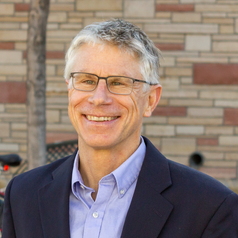
Professor of Chemical and Biological Engineering, Colorado State University Dr. Reardon joined the department in 1988 after a year of postdoctoral research at the Universität Hannover as an Alexander Von Humboldt Fellow. He is Professor and Jud and Pat Harper Chair of Chemical and Biological Engineering, and holds joint appointments in several other science and engineering programs at CSU, including Cell and Molecular Biology, Ecology, and Biomedical Engineering. Dr. Reardon received his BS degree from the University of Pennsylvania and his PhD from the California Institute of Technology, both in chemical engineering. His research combines bioreactor analysis, systems biology (primarily proteomics), and applied microbiology and microbial ecology. His group’s current projects involve biosensors, the application of proteomics to microbiome analysis, and the analysis and engineering of bacteria and algae for the production of biofuels and other chemicals. He is also interested in the interconnected challenges of food, energy, and water production (the food-energy-water nexus), which is becoming a major issue around the world. Dr. Reardon is the Director of the Sustainable Bioenergy Development Center and a co-Director of the Colorado Center for Biorefining and Biofuels. He is also the founder and Chief Technology Officer of OptiEnz Sensors, which is based on research from his laboratory. Dr. Reardon received the Faculty Excellence Award from the College of Engineering at CSU in 2009.
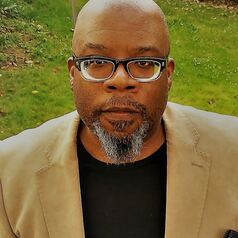
Researcher, Department of Sociology, University of Cambridge Kenny Monrose is a researcher at the University of Cambridge in the Department of Sociology and a Fellow of Wolfson college Cambridge. He is the lead researcher on the Black British Voices Project at Cambridge Sociology. Kenny has many year's experience in teaching, supervising and examining undergraduate and post-graduate students in the areas of Sociology, Behavioural Sciences and Criminology and Criminal Justice. He completed a PhD in Sociology at the University of Essex in 2013. His doctoral thesis was a qualitative study centred in East London, examining the life course of maturing black men, with a focus on criminal preclusion and non-criminal participation. The study made an original contribution to knowledge by highlighting the scholarly omission of black adult male populations within academic deliberation on 'race' and crime. The thesis highlighted the continued confinements of prejudice, discrimination, and everyday racisms in the lives of black men, whilst rigorously engaging with several related areas such as familial configuration, identities, and social position. Kenny acted as a Research Fellow with Middlesex University in collaboration with the Mayors of London’s office for policing and crime, examining the development of specialist support services for young people who have been victims of crime, abuse and/or violence. Dr Monrose is the author of Black men in Britain: an ethnographic portrait of the post Windrush generation. The book engages with an invisible population of Black men who grew up during 1970s and 80s post-industrial Britain, and as part of an environment that rendered them irrelevant and indistinguishable. He is an affiliate at The Centre for Screen & Film within the Faculty of Modern & Medieval Languages & Linguistics, and a member of Centre for the study of Global Human Movement at the University of Cambridge.
Senior Investigative Editor, The Conversation Kurt is the New York Times bestselling author of six non-fiction books. In addition to his distinguished work as a senior writer at Newsweek and a contributing editor at Vanity Fair, he spent two decades as a senior writer at The New York Times, where he was a two-time finalist for the Pulitzer Prize. He is also a two-time winner of the George Polk Award, and a winner of the Payne Award for Ethics in Journalism, the SABEW Award for business enterprise reporting, and an Emmy Award nominee.
PhD Candidate, Frazer Institute,, The University of Queensland Khadija AL Smadi is a PhD candidate at the University of Queensland. Her interest is in Skin cosmeceuticals and treatment of skin disorders. Her work revolves around formulation development and characterisation. She has expertise in novel and unique skin drug delivery vehicles and their assessment for pharmacokinetic and pharmacodynamic outcomes. Khadija’s PhD is focused on treatment of Vitiligo with novel Vitamin D formulations. Khadija’s work also involves testing skin product sensorial attributes through Sensory Panel tests.