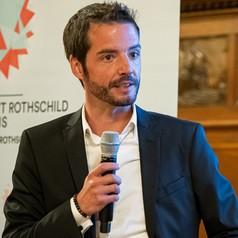
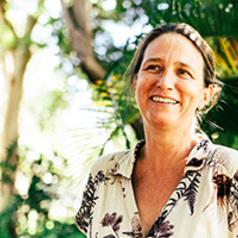
Assistant Professor in the School of Education, Durham University Karen Jones is Assistant Professor (Research) at the School of Education. Following her degree in mathematics Karen qualified as a secondary mathematics teacher (QTS) and a careers advisor. After several years working in a wide range of schools and colleges Karen joined the Centre for Evaluation and Monitoring (CEM) in 2004 and then the School of Education in 2017. With over 14 years of research experience at Durham University, Karen specialises in quasi-experimental designs, mixed-methods research, assessment and the analysis of large secondary datasets. Karen is interested in a wide range of research areas including the effects and side-effects of school inspections and accountability systems (the subject of her ongoing PhD thesis), progress in mathematics, measuring student attitudes and the impact of grammar schools and independent schools. She is currently investigating the differential impact of Covid-19 lockdown on students' writing skills.
Assistant professor of economics, University of Groningen Konstantin M. Wacker is an assistant professor at University of Groningen, Netherlands. He has worked and consulted for the World Bank, the International Monetary Fund, the European Central Bank, UNU-WIDER, and the Austrian Central Bank. His research investigates questions of macroeconomic development and globalization, particularly foreign direct investment and export quality.
Associate Professor of Human Geography, University of Tasmania Kate Booth is Associate Professor of Human Geography in the School of Geography, Planning, and Spatial Sciences. Her work addresses socio-ecological inequity in the context of rapid and unprecedented global change. She leads a strategic insurance research program, investigating on the intersections of geography, insurance and society. This program is the only program of its kind in Australia. Kate’s research has established her as a world leader in insurance in a changing climate. She is instrumental in defining the field of critical insurance studies. Kate also leads the University of Tasmania’s postgraduate planning program and the professionally accredited Master of Planning. She co-ordinates the Master’s thesis stream, and teaches regional and urban planning. Her teaching addresses rising inequity and the escalating economic and social impacts and risks of unmitigated climate change.
Professor of Anthropology, University of Minnesota Kieran McNulty is a professor of anthropology at the University of Minnesota, where he was awarded the McKnight Land-Grant Fellowship 2008, named Scholar of the College in 2017, and has received multiple teaching awards. His principal interests are in the evolution of apes and humans, pursued simultaneously through laboratory research on the morphogenesis of skeletal anatomy and through paleontological fieldwork in eastern Africa. Kieran conceived of and directs the NSF-funded REACHE project, a collaborative network that coordinates field research at all of the Early Miocene fossil ape sites in eastern Africa, working in close association with the National Museum of Kenya and Uganda National Museum. His research has been funded by the National Institutes of Health, Wenner-Gren Foundation, and Leakey Foundation. He also serves as (senior) associate editor for the flagship publication American Journal of Biological Anthropology.
Translational Fellow Nulungu Research Institute, University of Notre Dame Australia Kathryn has been a researcher in the Kimberley for the previous 18 years, working across a number of discipline areas including Indigenous policy and its impacts, Indigenous governance and empowerment, exploring opportunities for traditional owners in the emerging renewables space, social histories of ALT reserves in Broome and remote child health services. She has worked with Aboriginal Community Controlled Organisations for a number of years, including at Marninwarntikura Fitzroy Women's Resource Centre in Fitzroy Crossing, and more recently as Senior Policy Advisor to the CEO of Nyamba Buru Yawuru in Broome.
Senior Lecturer in Engineering, University of Waikato Kris is currently a Senior Lecturer in Civil Engineering at the University of Waikato (UoW). He obtained his PhD in Civil Engineering from the University of Auckland and masters in Earthquake Engineering from the Indian Institute of Technology Roorkee (IIT Roorkee). Before joining the UoW, he was a Lecturer at the University of Auckland. After the completion of his master’s degree, Kris spent one year working for Geodata Spa, one of the world’s leading engineering firms for underground structures. During this time, he specialized in tunnel portal design, steel construction, seismic design of steel structures, and the designing of underground structures. After obtaining his PhD degree, Kris spent a further two years at the Kiwi Steel Holding LTD as a Research and Development Manager before joining the University of Auckland as a Lecturer. Over the last 8 years, his research has continued to revolve around thin-walled structures, covering a wide range of topics, such as modular construction, built-up columns and beams, modal decomposition, cold-formed steel connections, cross-section optimization of single and built-up sections, numerical methods, stainless steel, aluminium structures, steel and aluminium claddings, corroded steel members, 3-D printed structures, durability of cold-formed steel members, weathertightness of metal claddings, design methodologies, general stability and inelastic buckling. Kris’s current research interests are fire performance of cold-formed steel structures, application of Artificial Intelligence and Machine Learning for the structural prediction of cold-formed steel members, sustainability and life cycle analysis of structures. More recently, he is developing environmental models for life cycle assessment of steel structures and working towards developing methodologies for calculating the Embodied carbon (carbon footprint) of different structural materials.