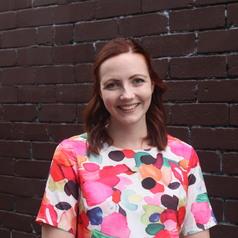
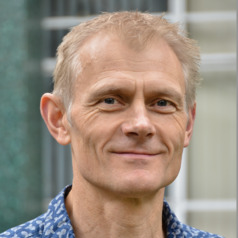
Project manager and psychologist, School of Psychiatry, UNSW Sydney Dr Katelyn Dyason is a registered psychologist and completed her combined clinical Masters and research PhD at Griffith University in 2019. In only a few years she has accrued a broad and relevant clinical experience across clinical trials, private practice, university clinic, hospitals and headspace. She has research interests in paediatric mental health, including obsessive-compulsive disorder (OCD), and on the impact of feedback and outcome monitoring on improvements in psychotherapy. Katelyn is currently working for the OCD BOUNCE team at Sydney Children's Hospitals Network and University of New South Wales as a Project Manager and Psychologist. Doctor of Philosophy (Clinical Psychology) Bachelor of Psychology (Honours)
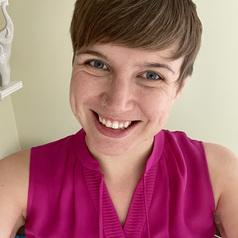
Lecturer in Criminology, Leeds Beckett University I am a Lecturer in Criminology at Leeds Beckett University, with research interests related to antisocial behaviour, social housing, intersectionality, vulnerability and welfare conditionality. My teaching relates to criminal justice, intersectionality and research methods. My PhD research at the University of York is related to antisocial behaviour, using a newly developed theoretical framework of vulnerability to understand alleged perpetrator experiences of antisocial behaviour. This longitudinal research followed 15 social housing tenants over 6-9 months whilst they were alleged to be engaged in antisocial behaviour. I also have an MA in Social Research and BA Hons in Social Policy at the University of York. Prior to starting my PhD, I worked in the social housing sector for 8 years across customer service and housing officer roles. Industry experience of antisocial behaviour and the management of social housing tenants solidified my interest in the perspectives and experiences of social tenants and, specifically, alleged perpetrators of antisocial behaviour who are rarely surveyed by their social housing providers and are often seen as a hard-to-reach population by academic researchers.
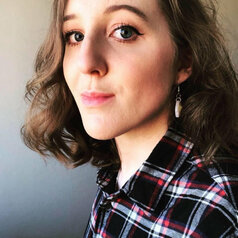
Casual Academic and PhD Candidate, Macquarie University Kate is a PhD Candidate and Casual Academic at Macquarie University. Their PhD research explores lesbian and queer women's place in the Australian HIV/AIDS landscape.
Baker Institute Fellow for Kuwait, Rice University Kristian Coates Ulrichsen, Ph.D., is the Baker Institute fellow for Kuwait. Working across the disciplines of political science, international relations and international political economy, his research examines the changing position of Persian Gulf states in the global order, as well as the emergence of longer-term, nonmilitary challenges to regional security. Previously, he worked as senior Gulf analyst at the Gulf Center for Strategic Studies and as co-director of the Kuwait Programme on Development, Governance and Globalisation in the Gulf States at the London School of Economics (LSE). He is a visiting fellow at the LSE Middle East Centre and an associate fellow at Chatham House in the United Kingdom. Coates Ulrichsen has published extensively on the Gulf. His books include “Insecure Gulf: the End of Certainty and the Transition to the Post-Oil Era” (Columbia University Press, 2011) and “The Political Economy of Arab Gulf States” (Edward Elgar Publishing, 2012). In addition, he is the author of “The Logistics and Politics of the British Campaigns in the Middle East, 1914-22” (Palgrave Macmillan, 2011) and “The First World War in the Middle East” (Oxford University Press, forthcoming). He is currently completing a book on Qatar and the Arab Spring and has been commissioned to write a textbook on the Gulf and international political economy. Coates Ulrichsen’s articles have appeared several academic journals, and he consults regularly on Gulf issues for Oxford Analytica and the Norwegian Peacebuilding Resource Centre. He also writes regularly for Open Democracy and Foreign Policy, and authors a monthly column for Gulf Business News and Analysis. Coates Ulrichsen holds a doctorate in history from the University of Cambridge.
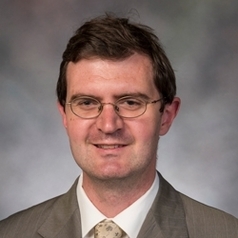
Professor of Energy and Climate Change, University of Manchester Kevin is professor of Energy and Climate Change at the University of Manchester and visiting professor at the Universities of Uppsala (Sweden) and Bergen (Norway). Formerly he held the position of Zennström professor (in Uppsala) and was director of the Tyndall Centre for Climate Change Research (UK). Kevin engages widely with governments, industry and civil society, and remains research active with publications in Climate policy, Nature and Science. He has a decade’s industrial experience in the petrochemical industry, is a chartered engineer and fellow of the Institution of Mechanical Engineers.
Professor of American Culture, University of Michigan Kristin Ann Hass is a Professor in the Department of American Culture and Faculty Coordinator of the Humanities Collaboratory at the University of Michigan. She lectures, teaches, and writes about nationalism, memory, publics, memorialization, militarization, race, visual culture, and material culture studies. She has written three books. Blunt Instruments: Recognizing Racist Infrastructure in Memorials, Museums and Patriotic Practices helps readers to identify, classify and name elements of our everyday landscapes and cultural practices that are designed to seem benign or natural but which, in fact, work to maintain powerful structures of inequity. Sacrificing Soldiers on the National Mall is a study of militarism, race, war memorials and U.S. nationalism and Carried to the Wall: American Memory and the Vietnam Veterans Memorial is an exploration of public memorial practices, material culture studies and the legacies of the Vietnam War. Hass is also the editor of Being Human During COVID. Over the course of the pandemic, the questions that occupy the humanities—about grieving and publics, the social contract and individual rights, racial formation and xenophobia, ideas of home and conceptions of gender, narrative and representations and power—have become shared life-or-death questions about how human societies work and how culture determines our collective fate. The contributors in this collection draw on scholarly expertise and lived experience to try to make sense of the unfamiliar present. Hass is also the faculty coordinator for the University of Michigan Humanities Collaboratory. The Humanities Collaboratory is a bold investment by the university in collaborative, multi-generational, inclusive, and transformational humanities scholarship that engages compelling questions for the academy and the world beyond. The Humanities Collaboratory gives singularly generous grants to support innovative and ambitious forms of humanities scholarship. Our mission is to give humanists access to significant resources to enable new kinds of work on the remarkable diversity of human experience across the globe. She holds a Ph.D. in American studies and has worked in several historical museums, including the National Museum of American History. She was also the co-founder and Associate Director of Imagining America: Artists and Scholars in Public Life, a national consortium of educators and activists dedicated to campus-community collaborations. Affiliations: Faculty Coordinator of the Humanities Collaboratory