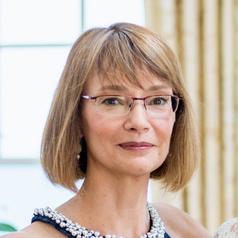
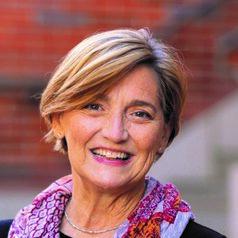
Lecturer, Educational Leadership and Policy, OISE, University of Toronto Dr. Karen Acton is an educator with diverse experience as a science teacher, department head, principal, and an education officer at the Ontario Ministry of Education. Dr. Acton subsequently earned her PhD at the University of Toronto, Ontario Institute for Studies in Education (OISE), studying the supports and barriers of environmental teacher leadership. She mobilized this knowledge as an Environmental Sustainability Lead Principal to enact positive changes in policy and procedures in her school board. Dr. Acton subsequently worked as an assistant professor at the Faculty of Education at Western University teaching courses on curriculum and pedagogy in biology, environmental science and STEM, with a focus on active and inquiry-based learning. Dr. Acton was formerly an assistant professor at OISE in Educational Leadership and Policy, and continues to conduct research and teach graduate courses at OISE on leadership, research methods, program development, and implementing school change. Dr. Acton additionally works as a consultant for the charitable organization Learning for a Sustainable Future (LSF). Her most recent publications focused on principals as change agents, critical issues in environmental education, transformative pedagogies, and perspectives of Canadians on climate change education.
Professor, Geography, Environment and Geomatics, L’Université d’Ottawa/University of Ottawa Researcher in climate change / paleoclimatology for over 40 years. Currently professor in the Department of Geography, Environment and Geomatics (and cross appointed in Biology and Earth Sciences), and director of the Laboratory for Paleoclimatology and Climatology. Researched in the fields of (a) late-Quaternary paleoclimatology / paleoecology / paleolimnology, (b) quantitative paleoclimate reconstruction from fossil data (c) environmental data analysis & synthesis. Emphasis on Arctic and Boreal regions, as well as continental to global syntheses. Extensive field experience across the Canadian North, and elsewhere. Teaching in Climatology & Climate Change, BIogeography, and Environmental Data Analysis.
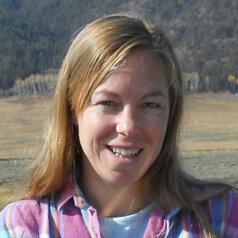
Research Ecologist, United States Forest Service I am a research ecologist with the USDA Forest Service's Rocky Mountain Research Station at the Missoula Fire Sciences Lab. My research focuses primarily on understanding how the combined effects of changes in climate and changes to fire regimes affect forest resilience and the implications for forest management. Current research projects include: Understanding how climate change may impact post-fire conifer forest recovery, assessing the effectiveness of climate-adaptive post-fire reforestation strategies, and projecting potential changes in vegetation due to climate change to help inform management of post-fire vegetation transitions.
Lecturer, Paramedicine, Monash University Kathryn Eastwood is a Mobile Intensive Care Ambulance (MICA) Paramedic, Registered Nurse (division 1) and University Academic. She has worked for Ambulance Victoria since 2000 and has worked for Monash University since 2003. Kathryn has also been a member of the Monash University Human Research Ethics Committee since 2010. Her experience in academia ranges from teaching, curriculum design, course coordination and research. She has been involved in the education and cirriculum design for military personnel, Victoria Police and Ambulance Victoria personnel, medical students, nursing students, and paramedic students.
Executive Director of the Value of Life Sciences Innovation program; Fellow at the USC Schaeffer Center, University of Southern California Karen Van Nuys, PhD, is the executive director of the Value of Life Sciences Innovation program and a fellow at the USC Schaeffer Center. Her recent research focuses on the social value of novel therapies, the flow of funds in the pharmaceutical distribution chain, and the impact of supply chain intermediary practices such as spread pricing and copay clawbacks on the utilization and cost of prescription drugs. Her work has been published in leading journals in economics, medicine, finance and health policy. She has held positions across both industry and academia, including as principal and priority service offering director at Booz Allen Hamilton, senior research economist at Precision Health Economics, national fellow at the Hoover Institution and an assistant professor at the Simon School of Business at the University of Rochester. She has consulted with Fortune 50 companies ranging from insurance providers and life sciences companies to automotive manufacturers and media conglomerates. She received her PhD in economics from Stanford University, and her MA and BA degrees from the University of California, San Diego.
Associate Professor of Economics, Rutgers University - Newark Kusum Mundra is an Associate Professor in the Department of Economics at Rutgers University Newark. Her research interests are in the area of Applied Econometrics, Immigration, Housing, Population Economics, Social Networks. She has published in various economic journals including the International Migration Review, Demography, American Economic Review- Papers and Proceedings, Empirical Economics, Review of International Economics, Journal of International Trade and Economic Development, International Trade Journal, Terrorism and Political Violence, the Handbook of Applied Econometrics and Statistical Inferences, and the Frontiers of Economics and Globalization – Migration and Culture. She is in the Editorial Board of Journal of Quantitative Economics. Dr. Mundra's research has been cited in various media outlets such as Washington Post, US News, NPR (Marketplace), Economist. She is a Research Fellow at the Institute for the Study of Labor (IZA) and a fellow at the Global Labor Organization (GLO). She received her Ph.D in Economics from the University of California, Riverside and an M.A. from Delhi School of Economics, India.