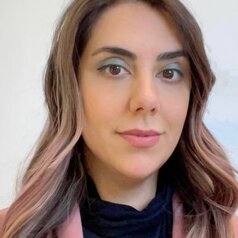
Research assistant, PAWSitive Connections Lab, University of Saskatchewan Laleh Dadgardoust is a research assistant at the PAWSitive Connections Lab, an interdisciplinary team with joint direction by Dr. Darlene Chalmers with the Faculty of Social Work at the University of Regina, and Dr. Linzi Williamson with the Department of Psychology and Health Studies at the University of Saskatchewan.
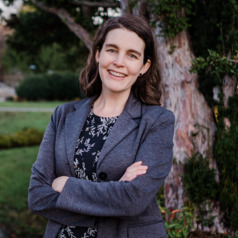
Postdoctoral Research Fellow, Centre for Migration Studies, University of British Columbia I am a Postdoctoral Research Fellow in the Centre for Migration Studies at the University of British Columbia, located on xʷməθkʷəy̓əm (Musqueam) territory. I conduct interdisciplinary research on international migration, (im)migrant and refugee integration, and education. I currently study citizenship education and immigrant naturalization. My PhD dissertation focused on the multi-step recruitment and retention of international students as economic immigrants, i.e., 'edugration.' It examined the shifting roles Canadian higher education institutions play in migration governance from an ethical perspective, particularly related to settler colonialism, surveillance, and border imperialism. My MA thesis probed the meaning of refugee integration by researching the experiences of refugees resettled from Aceh, Indonesia to Metro Vancouver five years after arrival. I have been a Regulated Canadian Immigration Consultant in good standing since 2014. I also have over a decade of professional experience as a university international student advisor and completed multiple refugee resettlement research and curriculum design projects with the settlement sector in Canada and the United States. In 2007-2008 I held a Fulbright grant at Bilkent University in Turkey.
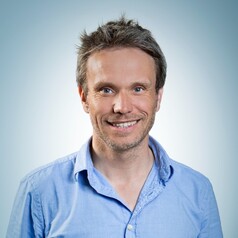
Professor in occupational medicine , KU Leuven I am a professor in Occupational Health at the Centre for Environment and Health of the University of Leuven. I care for healthy people in healthy companies. I am driven by prevention and I aim to improve wellbeing and health through and at work. In this context, I see return to work as an essential and integrated part of the recovery and treatment of sick and disabled individuals.
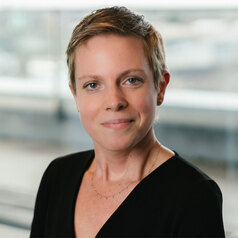
Senior Lecturer in Medieval History, Edge Hill University I received my BA and MA from Brown University and my PhD from the University of Connecticut. Before joining Edge Hill, I taught in the Department of English at the University of Mississippi and the School of History at University College Dublin. I am a Fellow of the Royal Historical Society and a Fellow of the Society of Antiquaries. My work focuses on transcultural and multilingual connectivity in early medieval Britain and Ireland. My first book, Writing the Welsh borderlands in Anglo-Saxon England (Manchester University Press, 2017) was winner of the Best Book on an Anglo-Saxon Topic Publication Prize from the International Society for the Study of Early Medieval England in 2019 and the Southeastern Medieval Association award for best first book in 2020. My second book, The Origin Legends of Early Medieval Britain and Ireland (Cambridge University Press, 2022) was published last year, and I have just completed a Cambridge Element entitled Multilingualism in Early Medieval Britain. I have held fellowships as a Text Technologies Fellow at Stanford University, A.W. Mellon Postdoctoral Fellow in Medieval Studies at the Medieval Institute at the University of Notre Dame, British Academy Visiting Fellow at the University of Birmingham, Marie Skłodowska Curie COFUND Fellow in the Trinity Long Room Hub at Trinity College Dublin, and Resident Fellow in the Centre for Advanced Studies at the University of Tübingen. Current projects include a volume on multilingualism for the Cambridge Elements series and a larger project on intellectual connectivity in the Viking Age. Research Interests My work focuses on historical and textual connections across the early medieval Irish Sea zone, encompassing material in Old English, Old Irish, Middle Welsh, Old Norse, and Latin.
Capuchin Fellow in the History of Catholicism, Durham University I am the Capuchin Fellow in the History of Catholicism at the Centre for Catholic Studies. Before this role I had taught at Durham, Northumbria and Sunderland as an Associate Lecturer and had also developed my skills in community engagement and digital design in roles outside of academia. I am a Fellow of the Royal Historical Society and an Associate Fellow of the Higher Education Academy. I also currently serve on the executive committee of the Catholic Record Society. Between 2019 and 2023 I served on the committee for The History of Women Religious of Britain and Ireland (H-WRBI). I am interested broadly in the history of religion, and in my current role I research the largely unexplored history of the Capuchin Franciscans, focusing especially on their presence in Britain from the start of the seventeenth century to the present day. This includes their presence as missionaries in the seventeenth and eighteenth centuries, as well as their history as a fully-fledged province from the 1870s onwards. This has evolved into wider interests in the history of Franciscanism, the history of the Catholic religious orders, and the history of the Catholic Reformation. I am currently working on two book length projects on the early modern Capuchins and the history of the modern Capuchin province in Britain respectively. Much of my current work has been undertaken in partnership with the Capuchin Franciscans of Great Britain. As a result, I am also interested in the ways in which religious groups and secular historians can work together on projects, and the community engagement and impact potential that can result from such partnerships. My PhD research explored mysticism and mystical experience in both Catholic and Protestant groups in early modern England. It has focused on examples of how mysticism encouraged conversation and spiritual collaboration across confessional boundaries in the period. This research culminated in my first monograph which was published with Boydell and Brewer in 2019. Reviewers have described the work as ‘a ground-breaking study’ (Journal of Ecclesiastical History), as ‘impressive for … its mastery of historical scholarship’ (Seventeenth-Century News), and as ‘well-written and lucidly argued’ (British Catholic History). I have recently co-edited volume 2 of The Oxford History of British and Irish Catholicism with Professor John Morrill. I have also published articles in Church History, Reformation and Renaissance Review, British Catholic History, and Women’s Writing I have forthcoming entries on mysticism in Portuguese for the Dicionário Global de Espiritualidade e Mística, and a forthcoming chapter on Capuchins for a collection entitled Storia dell’Ordine dei Frati Minori Cappuccini (1528-2028) to be published in Italian and English. I have also recently worked with Cardinal Raniero Cantalamessa, Preacher to the Papal Household, on the English edition of his papal sermons, to be published in 2024 as Faith, Hope, and Charity.
PhD candidate in the Department of Music, University of Bristol L. Holland is a PhD candidate working on queerness in popular music. Their PhD looks at the performance of queer alter egos in pop music, looking at characters used by David Bowie, Prince, and Janelle Monáe. They have taught on hip-hop, gender studies, and music history, and have worked as a researcher on books about a wide range of musicians, from The Streets to Leonard Bernstein. Their work on Prince’s alter ego Camille as a trans* caricature can be found in the Journal of Popular Music Studies (36:1).