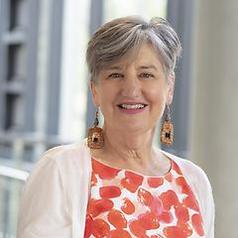
Professor of Accounting, University of Wollongong Lee joined the School in 2001 after completing her undergraduate and Masters degree in Accounting. She has a PhD in accounting focussing on the debtor and creditor relationship in the third world debt crisis. Prior to the position in the School, Lee worked as a medical diagnostic radiographer. Her current research interests include accountability for the environmental and social aspects of corporate activities, accounting for asbestos liabilities and death care.
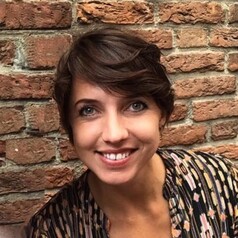
Post-doctoral Fellow, University of Copenhagen My great passion has always been nature conservation. I started my career off by studying wildlife management, followed by an MSc in ecology. During my BSc I was involved with a project on jaguar predation in Brazil, the impact of deforestation on mammal diversity in Paraguay, and the effect of habitat fragmentation on lynx distribution in Poland. During my MSc I changed my focus to Africa, a territory yet unknown to me. I initiated a study on the population structure of leopards in South Africa, and became involved with a project on the genetic uniqueness of West-Central African lions. This inspired me to move to South Africa, where I started a PhD on the conservation and genetics of African wild dogs. For my doctorate I mainly studied the impact of habitat fragmentation on the genetic viability of wild dogs in Zimbabwe and South Africa, using mtDNA and microsatellite markers. During this time, I met many biologists in South Africa with the same interests as me, which led to new ideas and fresh projects. These formed the foundation of a postdoctoral position at the Centre for Ecological Genomics and Wildlife Conservation, University of Johannesburg. After these fruitful years I moved to Germany, for a postdoc position at the University of Koblenz, followed by a position at the University of Copenhagen. My research mainly focuses on the interface between carnivore ecology and landscape genomics, with a particular interest in identifying the effects of anthropogenic stresses such as hunting and habitat loss. I have recently also gained an interest in using colour polymorphism to test evolutionary genetic theories, including the influence of heterozygosity deficiency, as well as in hybrid swamping and speciation. The impact of hybridization in the wild is still poorly understood, even though it is an important evolutionary force with significant implications for species conservation. Together with collaborators, we have developed genetic guidelines for conservation translocations, to provide managers with a simple decision-tree on how to adopt the best strategy when the aim is to maintain intraspecific genetic variation.
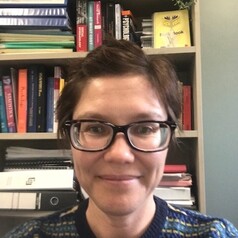
Associate Professor of Systems and Computational Biology, Microbiology and Immunology, Albert Einstein College of Medicine Our lab is interested in microbial communities as sensors of ecosystem properties over space and time. We work to define the fundamental rules of how microbiomes detect, process, and respond to internal and external signals from their environments, and how they evolve at the community level and as individuals to changing environments. We work across ecosystems to characterize microbial community resilience, to identify higher-order microbiome markers of environmental health and sickness, and to reveal networks of information flow in microbial communities that respond to and drive environmental changes using cutting-edge computational approaches that are grounded in experimental biology. The broad goal of our work is to understand how to harness the information stored in microbial communities to improve ecosystem health.
Associate Professor in Work-Family-Health Research, Australian National University A/Prof Liana Leach’s research identifies the critical role social contexts play in determining mental health in Australia - with a focus on the mental health challenges in workplaces and parenting contexts. Liana's research has a focus on analysing large, population-level datasets to explore patterns of mental health (and illness) across different socio-economic contexts. She has strong expertise in the field of social epidemiology – teaching courses on the Social and Cultural Determinants of Health and Menta Health Epidemiology.
Senior Research Assistant, Canadian Centre for Evidence-Based Conservation, Carleton University I hold a PhD in Biology from Carleton University, where I also currently work as a senior research assistant with the Canadian Centre for Evidence-Based Conservation
Lecturer in Biomedical Sciences, School of Health, University of the Sunshine Coast Linda Gallo's research interest is cardiometabolic disease and lifestyle factors that affect this, particularly in relation to nutrition and pregnancy. Linda’s PhD investigated how low birth weight affects kidney development and the increased risk of high blood pressure and kidney disease in adulthood. Her postdoctoral research focused on a new drug class for diabetes mellitus, SGLT2 inhibitors, and its effects on kidney and heart function. In 2016, Linda established a research program which combines her speciality areas. This includes the assessment of diet, physical activity, and cardiometabolic health in young adults; maternal dietary intake, supplement use, nutrient status, and obstetric outcomes; and the impact of lockdowns on preterm birth rates. She collaborates with numerous researchers and clinicians, including those interested in the impacts of adverse prenatal exposures such as alcohol, links between maternal microbiome and pregnancy outcomes, and how diabetes is a risk factor for severe influenza and COVID-19.