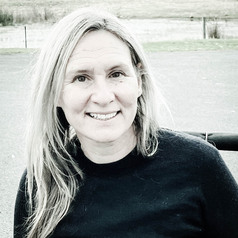
Adjunct Senior Research Fellow, Inclusive Futures Centre, Griffith University Dr Lisa Stafford is an applied researcher, educator and planner in inclusive communities and cities and transport equity, with over 20 years’ experience across academia and professional practice. Her work focuses on promoting and applying equity in neighbourhood planning, inclusive active and public transport policy and design, and universal design streets, open space, and public infrastructure. Lisa brings her own experience as a chronically-ill disabled person and wheelchair user. Lisa is an experienced facilitator who designs and uses inclusive creative methods to enable all voices to be heard in research and public planning. Her recent work includes leading the large multi-stage Planning Inclusive Communities project with a recent published report of stage 1 the Makings of Inclusive Communities; being on the working group for the Future of Transport discussion paper by Engineers Australia, and reviewing the Universal Design of Transport discussion paper by Transport Australia. Lisa co-authored (lead by Dr Bridget Doran) a milestone research report 690 Transport experiences of disabled people in Aotearoa New Zealand for the Waka Kotahi NZ Transport Agency, and undertook the Trips Not Made Project on Tasmanian’s Transport Disadvantage for Anglicare Tasmania. https://www.sciencedirect.com/science/article/pii/S0966692323001400
Professor, Department of Theatre and Film, University of British Columbia Professor of Cinema and Media Studies Social Sciences and Humanities Research Council of Canada Insight Development Grant 2021-2023 Principal Investigator: Lisa Coulthard Collaborator: Lindsay Steenberg, Oxford Brookes University Title: Digital Dark Tourism: a case study of true crime tourism in the digital age Social Sciences and Research Council of Canada Insight Grant 2018-2022 Principal Investigator: Lisa Coulthard Collaborator: Lindsay Steenberg, Oxford Brookes University Title: “Between Blood and Data: Anatomy of the Post-Millennial Hollywood Fight Sequence” Social Science and Research Council of Canada Insight Grant 2014-2019 Principal Investigator: Lisa Coulthard Title: “The Sounds of Violence
Clinical Researcher, Psychiatric Epidemiology, Karolinska Institutet I completed my PhD in psychiatry and clinical psychology and defended my thesis with honors in 2013 at the Universitat Autònoma de Barcelona. In my dissertation, I explored the clinical heterogeneity of obsessive-compulsive disorder (OCD) in children and adolescents. For four years, I worked at the Institute of Psychiatry (IoP), King's College London. During my last year at the IoP, I completed a one-year postdoc in the Mood & Development Laboratory at the Department of Child and Adolescent Psychiatry. I moved to Stockholm in 2014 for a second postdoc at the Obsessive-Compulsive and Related Disorders Across the Lifespan research group at the Department of Clinical Neuroscience (CNS), led by Professor David Mataix-Cols, where I started working with psychiatric epidemiology designs. From 2016 to 2019 I was an Assistant Professor (Forskarassistent) in this group and, since 2020, I am a Senior Researcher. I qualified as Docent in Psychology in 2021. Since September 2018, I am the Equal Treatment Representative (Ombud för Lika Villkor) at CNS. I am also the Dissemination and Outreach Coordinator for BUP Forsknings och Utvecklingscentrum (BUP FoUU) at the Stockholm Mental Health Services (SLSO), Region Stockholm.
Lecturer, University of New England Lisa is a Lecturer in the School of Humanities, Arts and Social Sciences at the University of New England. Her key research areas are Aviation History, Uniforms, Clothing and Fashion, Popular Culture, Romance Novels and the British Royal Family. She is the co-founder, along side Associate Professor Jo Coghlan and Mr Huw Nolan, of PopCRN, the Popular Culture Research Network.
Clinical Assistant Professor of Rehabilitation and Human Services, University of North Dakota Lee Ann Rawlins Williams, PhD, CRC, CFLE is a Clinical Assistant Professor in the Education, Health and Behavior Studies Department at the University of North Dakota. She serves as Program Director of Undergraduate Rehabilitation and Human Services Program. Dr. Williams has extensive academic experience working with programs focusing on disability and rehabilitation at various universities. In addition, her professional experiences include over 20 years of work in the field of rehabilitation in the areas of blindness and low vision, general rehabilitation counseling, human resource training/development, and in corporate. Further, Lee Ann has worked with K-12 educational environments focusing on student services and wellness. Dr. Williams has held a variety of leadership positions at the local, state, regional, national, and international levels for professional rehabilitation associations. She has published research in peer-reviewed journals and co-authored two books focusing on case and caseload management in rehabilitation.
Doctoral Researcher in Cinema, Sheffield Hallam University My doctoral research focuses on the representation and construction of youth in 21st-century British social realist cinema. Many realist films in the last twenty years have youth as a significant theme in their narrative. Through textual analysis and selected case studies, such as Sweet Sixteen (2002), This is England (2006), Fish Tank (2009), My Selfish Giant (2013) and more recently Rocks (2020), I analyse concepts of identity, class, gender and race. I consider my study of youth in British social realist cinema an important opening to wider issues about societal understanding of young people and the ‘specific moment’ in their life trajectory. The films bring up through the characters’ voice these ‘specific moments’ and challenge preconceived ideas about youth. I have a long-standing personal interest in this topic that combines my previous studies, my passion for British cinema, and my experience of working with young people across different sectors of education. Social Realism is a genre that is known for its ability to frame and position its characters in the cultural and political context from which they stem. This research will add to the literature on how youth is constructed and represented in 21st century British social realism and provide an insight into how films in the British realism mode of filmmaking produce alternative articulations of youth.