Teaching Associate in Politics and International Relations, University of Sheffield My research focuses on the intersection of history and security, with a particular interest in East Asia and Sino-Japanese relations. I have published several articles on this topic, as well as broader discussions on International Relations and International Security Studies. I was awarded my PhD in Politics by Sheffield Hallam University in 2023. My thesis explored how competing historical narratives of the Second Sino-Japanese War impact the contemporary bilateral relationship between China and Japan, particularly as pertains to their territorial dispute in the East China Sea. Previously, I studied my BA in International Relations and History and an MA in International Security Studies at the University of Leicester. I currently hold teaching positions at both Sheffield Hallam University as an Associate Lecturer and the University of Sheffield as a Teaching Associate. I have taught on introductory International Relations, US political history, political violence, global security challenges and academic writing skills.
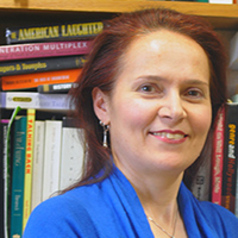
Professor of Trauma, Mental Health and Recovery, Coventry University My research is concerned with intimate partner violence and sexual violence and abuse across the lifespan as major public health problems globally. I am committed to maximising the role of health providers and the NHS in supporting those who have experienced violence and abuse to access equitable and appropriate health care. My work looks at different community and health care-based interventions for survivors of abuse and I have co-led four Cochrane Reviews and randomised controlled trials. I was chief investigator on a national evaluation Sexual Assault Referral Centres, undertaking a cohort study of health, wellbeing and costs for adult and children survivors of sexual assault, abuse and rape (NIHR-funded MESARCH project). I co-designed a research enriched online training course at Coventry University to enhance health care workers' responses to women experiencing gender-based violence during pregnancy. My work has also taken me into the arena of justice for survivors (ESRC-funded JiCSAV project) and currently I am leading the evaluation of UpFront Survivors, a collaboration of frontline services and survivor-activists and artists to promote leadership and training for survivors as part of increasing the voice and visibility of child sexual abuse survivors in cultural, political and social spaces.
Assistant Professor, Psychology & Health Studies, University of Saskatchewan I am an Assistant Professor in Psychology & Health Studies at the University of Saskatchewan and Credentialed Evaluator through the Canadian Evaluation Society. My research centres the voices of Canadian veterans with disabilities working with service dogs.
Professor in the School of Journalism and Mass Communication, University of Wisconsin-Madison Lucas Graves is a Professor in the School of Journalism and Mass Communication. His research focuses on new organizations and practices in the emerging news ecosystem, and more broadly on the challenges digital networks pose to established media and political institutions. His book Deciding What’s True: The Rise of Political Fact-Checking in American Journalism came out in 2016 from Columbia University Press. Graves writes and speaks widely on topics relating to the news, politics, and new media, including political fact-checking, annotative journalism, net neutrality, and the open-source movement. His work has appeared in the New York Times, the Columbia Journalism Review and the Nieman Journalism Lab at Harvard University, as well as numerous scholarly journals including Journal of Communication, International Journal of Communication, and Journalism: Theory, Practice, Criticism. He is a co-author of The Story So Far: What We Know About the Business of Digital Journalism, from Columbia University Press and the Tow Center for Digital Journalism. At SJMC Graves teaches both practical and conceptual courses including J618, Mass Media and Political Behavior; J561, Mass Communication and Society; and J335, Intermediate Reporting. He also regularly offers “Data, Fact, Truth,” an advanced graduate seminar on journalism as a form of knowledge production. In 2016 he and colleague Michael Wagner received a Baldwin Idea Grant to develop an innovative explanatory journalism curriculum built around a live fact-checking site. Graves is affiliated with UW’s Holtz Center for Science & Technology Studies and with the Center for Communication and Democracy. He has been a research fellow at the New America Foundation in Washington, DC, and the Institute for Social and Economic Research and Policy at Columbia University in New York. His research has been supported by the American Press Institute, the Poynter Institute, the Duke Reporters’ Lab and the Reuters Institute for the Study of Journalism. Before joining the faculty of SJMC, Graves worked as a magazine journalist and as a media and technology analyst. He has written dozens of articles for Wired magazine on topics as varied as citizen journalism, doomsday cults, and the future of advertising; his work has also appeared in Interview, Time Out New York, Food & Wine, The Brooklyn Rail, and many other publications. From 1999 to 2002 Graves was an analyst at Jupiter Research, from New York City and then São Paulo. Graves received his doctorate and an M.S. in journalism from Columbia University. He holds a B.A. in political science from the University of Chicago. His Twitter handle is @gravesmatter.
Senior Lecturer in media and screen studies, Federation University Australia Lesley is a Senior Lecturer and researcher in media and screen studies. She has taught units in digital literacy, media studies, screen studies, adaptation studies, communication and cultural studies, and interdisciplinary Honours courses, as well as supervising research students from Honours to PhD level. Before teaching at Federation University and the University of Ballarat, she taught at La Trobe University, the University of Melbourne and three campuses of Monash University. This wide range of experience is reflected in Lesley’s research, which is published in Australia and internationally and cited in many countries and various languages. Her research is required reading in tertiary courses internationally. Her publications include the books Clueless: American Youth in the 1990s and Australian Comedy Films of the 1930s: Modernity, the Urban and the International. Lesley has been a Scholar in Residence at the National Film and Sound Archive of Australia, a peer reviewer for many journals and publishers in and outside Australia, and a judge in the ATOM (Australian Teachers of Media) Awards. Lesley’s work includes an emphasis on popular screen texts, extending to digital media, independent screen media, comedy, popular genres and genre-mixing. Her research often centres on social aspects of screen texts, including their relationships to socio-historical contexts, public discourse and shifting ideas about youth, adulthood and everyday life. Her major research projects have focused on comedy and youth culture. However, the ideas underpinning her research are often as much about relationships between screen texts and society as they are about specific platforms, formats or genres. Lesley has pursued research interests in screen comedy; cultural value in relation to popular culture; and social and spatial aspects of screen texts. These interests can be found, individually or in intersecting ways, in her research publications about topics from teen films to early cinema, screen comedy to video games.
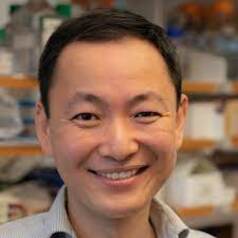
Assistant Professor of Biomedical Sciences, UMass Chan Medical School Li Li grew up in Shanghai, China and received his B. Sc. degree in 2007 from Fudan University, conducting work in molecular dynamics simulations with Dr. Qiang Huang. He received his Ph.D. in 2012, working with Professor Susan Martinis and Zaida Luthey-Schulten at University of Illinois at Urbana-Champaign. His doctoral work focused on aminoacyl-tRNA synthetases (aaRSs), a group of enzymes that establish the genetic code in all living organisms. He then moved to Professor Jack Szostak’s lab at Massachusetts General Hospital for postdoctoral studies, where he developed an efficient chemical method to copy RNA sequences and explored the possibility of using in vitro selection to discover RNA sequences that can control translation in eukaryotic cells. In 2020 Li started his independent group at the RNA Therapeutics Institute at UMass Chan Medical School. His goal is to make new discoveries of RNA biology by combining the power of evolution and chemistry with classical biochemical methods.