Postdoctoral Fellow, Biological Sciences, University of Toronto I am a Postdoctoral Fellow in the Department of Biological Sciences, University of Toronto Scarborough, where I research the responses of polar bears to sea-ice loss from climate change. My work generally explores the role that physiology and energetics play in mediating how individuals, populations, and communities respond to changing environments, ultimately aiming to improve our ability to conserve and manage at-risk species.
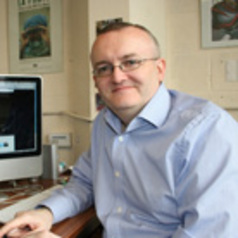
Senior Lecturer & Researcher in Media Technology, University of Salford Laurence Murphy is Senior Lecturer in Media Technology and programme leader for the BSc Media Technology Pathway programme at Media city He is an active researcher in Mobile and Internet broadcast systems, High Definition , 4K & 3D Television and Digital cinema. He is currently engaged in PHD research into changing media technologies and their impact on both the Broadcast industries and the viewer. Laurence began his operational career as a location sound recordist in 1985 whilst studying for his 1st degree. After a move into Camera work he progressed into studio and outside broadcast technical management. He is an active camera and engineering consultant for a number of broadcast companies and manufacturers. He began his association with Salford University in 1992. He designed the four camera studios within the school. His academic career began with a BA in Communication Media in 1986, his second degree MA in Television and Documentary he completed in 1999. In September 2000 Laurence became programme leader of the BSc Media Technology programme. In 2007 Laurence designed the first undergraduate technology degree in the UK to focus on the newest areas of Broadcast Media, Mobile and Internet Television. The Programme took its first students in Sep 2008 and is a joint programme between the Schools of Media, Music and Performance and Computing, Science and Engineering at Salford.
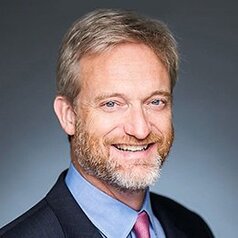
Non-resident fellow, United States Studies Centre, University of Sydney Lester Munson is a non-resident fellow at the United States Studies Centre at the University of Sydney and a principal in the international practice at BGR Group, a leading government relations firm in Washington, D.C., where he consults with foreign governments, corporations, and advocacy groups. Lester leads BGR’s foreign assistance practice, which provides advisory and government relations services to companies, advocacy groups, and nongovernmental organizations in the international aid policy area. Before joining the private sector, he was most recently staff director of the Senate Foreign Relations Committee. Lester also served as chief of staff to U.S. senator and representative Mark Kirk (R-IL). During the George W. Bush administration, Lester served as deputy assistant administrator at the U.S. Agency for International Development, where he focused on legislative affairs as well as global health issues. He also serves as adjunct faculty at Johns Hopkins University and speaks regularly on the foreign policy role of Congress and on U.S. foreign assistance issues. He is a cochair of the executive committee of the Modernizing Foreign Assistance Network, a senior fellow at George Mason University's National Security Institute, and a commentator on several news channels. In addition, Lester is the host of the weekly podcast Fault Lines, a bipartisan discussion of foreign policy issues associated with the National Security Institute. Lester is a graduate of the College of the University of Chicago and holds a master’s degree from St. John’s College in Annapolis.
Lecturer, Department of Education and Research Associate, Oxford Internet Institute, University of Oxford Lulu is a lecturer at the department of education at the University of Oxford and a research associate at the Oxford Internet Institute and the sociology department. She is a sociologist and her research spans technology, education, work and employment and organisations. Lulu leads a project funded by the British Academy, which investigates how educational technology (EdTech) transforms education. Specifically, the project studies the role of EdTech firms – who can be seen as the architects behind the technology – in shaping education by considering the socio-political contexts they are embedded in. She also works on the project DomesticAI at the Oxford Internet Institute. In this project she focuses on the transformation of paid and unpaid work in the age of AI and robotics. With her team she designed a cross-national harmonised factorial survey experiment. During her doctoral studies, she researched on the labour market, skills formation systems and organisation studies with a country comparative focus. Lulu teaches the MSc programme Digital and Social Change and supervises MSc students, focusing on technology and society.
Associate Director of the Soil Carbon Solutions Center, Colorado State University Lauren Gifford, Ph.D., is a critical geographer exploring intersections of global climate change policy, conservation, markets and justice. Her work asks how, and by whom, carbon is quantified, standardized and commodified for carbon removal solutions. She has particular expertise in carbon markets and offsets, climate finance, climate tech, and UNFCCC processes. Gifford is Associate Director of the Soil Carbon Solutions Center at Colorado State University, with a faculty affiliation in the Department of Ecosystem Science and Sustainability. Through 2023 she is also a Research Scientist with the University of Arizona’s School of Geography, Development and Environment, researching Earth system governance, transformations, tipping points, and safe and just Earth system boundaries with the Earth Commission.
Professor of law, University College Cork Professor Louise Crowley of the School of Law, UCC, is a national voice on intimate partner violence having published widely on the adequacy of legal responses to the challenges of gender-based violence and works with service providers and state agencies to highlight the need for greater targeted investment in service provision. Louise was a member of the Government appointed expert group that developed the National Framework to End Sexual Harassment and Violence at Third Level in 2019 and she continues to advise on law and policy reform. In 2016, at University College Cork, Louise developed the campus-wide Bystander Intervention programme which educates and empower staff and students to challenge the normalisation of sexual abuse and to recognise their role as pro-social bystanders to effect change and bring about a new normal of safety and respect. This training is now being delivered in other third level institutions as well as workplaces and sporting organisations. In 2022, funded by the Irish Research Council, Louise developed a bespoke second level programme, now being piloted in 50 secondary schools nationwide. Louise has recently commenced a 14 month partnership with the Irish Defence Forces to deliver Sexual Respect and Ethics training to members of the Army, the Air Corp and the Navy.