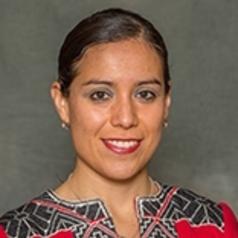
Associate Professor of Neuroethics, Penn State Laura Cabrera's interests focus on the ethical and societal implications of neurotechnology and neuroscientific advances. She has been working on projects that explore the media coverage and the attitudes of the general public toward pharmacological and novel neurosurgical interventions for the treatment of psychiatric disorders. She has also worked on the public perceptions towards the use of different modalities of neuromodifiers for enhancement purposes, as well as their normative implications. Her current work also focuses on the responsible governance of neurotechnology.
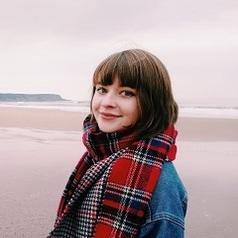
Food Historian and Knowledge Exchange Associate, University of Glasgow Dr Lindsay Middleton is a literary historian of nineteenth-century food writing, and Knowledge Exchange Associate for the College of Arts and Humanities at the University of Glasgow. Dr Middleton's research focuses on the literary qualities of recipes and cookbooks, analysing the representation of culinary technologies in order to understand how nineteenth-century authors situated themselves in the past, present, and future. Her work ranges from the history of tinned foods to the publications of Victorian chefs Agnes Marshall, Alexis Soyer, and Georgiana Hill. She also researches Scottish food history, and invalid cookery in the Scottish context. As Knowledge Exchange Associate, Dr Middleton works with a range of researchers and industry stakeholders to create impact and partnership opportunities. In particular, she is interested in the ways that Arts and Humanities research can help transform the Scottish food industry, and food's potential within heritage properties.
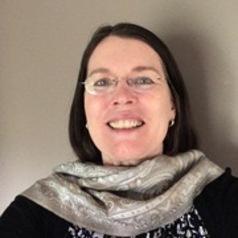
Emeritus professor, University of Sydney I am a musicologist, specialising in the study of Australian First Nations musics, immigrant musics and the digital humanities (particularly archiving and repatriation of ethnographic field recordings as a site of interaction between researchers and cultural heritage communities). I have studied community music practices through fieldwork in Australia, Italy and the Philippines. Themes of my research include analysis of musical action in place, the language of song, and the aesthetics of cross-cultural musical practice. I also publish on theoretical issues, including analysis of non-Western music, archiving of music and dance, and research implications of digital technologies.
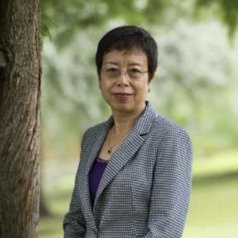
Reader, School of Chemistry and Chemical Engineering, University of Surrey Dr. Lian Liu joined the University of Surrey in May 2016 at the Department of Chemical and Process Engineering. Dr. Liu obtained her PhD from the University of Queensland in Australia in 1991 and worked in Carrier Transicold in Singapore for three years after her PhD. She then moved back to the University of Queensland and spent most of her academic career in the same University before moving to the University of Surrey. Dr. Liu's research expertise is in particle technology and formulations for health applications. Her expertise in particle technology ranging from comminution (particle breakage process) to granulation process (particle size enlargement process) as well as bulk powder flow and compaction and crystallisation. Her expertise on formulations includes novel topical formulations for anti-ageing and wounds healing. Dr. Liu also has a keen interest in advanced materials including fire retardant composite materials. She has worked with a wide range of industries such as minerals, agricultural and pharmaceutical and biotech companies.
PhD candidate, The University of Queensland Laurel Fox is a PhD candidate in the University of Queensland Law School. She researches the legal, political and institutional history of national Indigenous representative bodies in Australia.
Senior Lecturer and Programme Leader BA in Interior Design, Manchester Metropolitan University Lucy Gannon is a Senior Lecturer and Programme Leader BA (Hons) Interior Design at Manchester School of Art, where she predominately teaches final year students in realizing their ambitions. The course is concerned with the occupation of space, how it is used and importantly, how it is experienced. The course promotes the understanding and subsequent remodelling of existing spaces, in order to create meaningful interventions. Lucy shares her time between academia and the creative practice Broadbent Studio, where she forms part of a small design team. Broadbent Studio has a strong design philosophy with a varied and rewarding portfolio. Lucy has significantly contributed to a number of projects surrounding placemaking and storytelling such as Seeds of Hope, Daresbury Linear Park: Light Gardens, Bradford Pit Memorial, Propellors of the City, and most recently Pilgrim Porch in Chester Cathedral. Lucy’s practice by nature is cross-disciplinary, and she takes on a range a roles from facilitator, listener, mentor and researcher to designer, visualiser, communicator and maker. She is a member of the Manchester School of Art, Design Research Hub, and sits under the theme of Community, Culture and Heritage. Re-occuring themes through her research and outcomes surround memory in the everyday and the physical act of remembrance. Lucy is interested in the notion of memory, the materiality of memory and the link to environments and identity. She is concerned with how our living identity is informed and how it defines or affects future living. Through analysing the act of movement and dwelling, she intends to create environments that encourage an investment of time and a sense of enquiry or promote activity. She recently spoke at a AMPS conference with Stephen Broadbent on the paper 'Encapsualting memorry to forge future identities.'