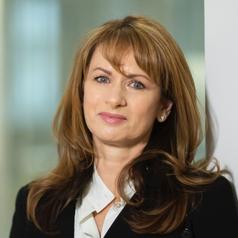
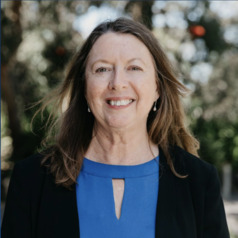
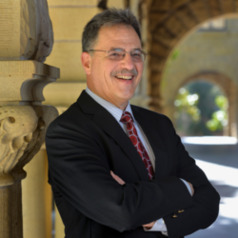
Lecturer, The University of Edinburgh Laura Stewart is originally from the Isle of Lewis. She graduated with an Honours degree in Mathematics and Statistics from the University of Glasgow, and then obtained her PhD in Statistics within the same department. After completing her PhD, she has worked as a lecturer in Statistics and is currently working for the University of Edinburgh. During her studies she had several internships working on statistical projects in the Economic Development department of Comhairle nan Eilean Siar. These projects used data on the local population, businesses and economy to inform business support planning. Her other research interests range from theoretical probability to more applied topics within Sports Science, Clinical Trials and working with educational data in the context of widening participation in Higher Education.
PIK Professor of Anthropology; Professor of Historic Preservation, Weitzman School of Design, Penn Museum, University of Pennsylvania Lynn Meskell is Penn Integrates Knowledge (PIK) Professor at the University of Pennsylvania. She is Richard D. Green Professor of Anthropology in the School of Arts and Sciences, Professor in the Graduate Program in Historic Preservation at the Weitzman School of Design, and curator in the Middle East and Asia sections at the Penn Museum. Currently she serves as AD White Professor-at-Large at Cornell University (2019-2025). She holds Honorary Professorships at Oxford University and Liverpool University in the UK, Shiv Nadar in India and the University of the Witwatersrand, South Africa. Over the last decade Lynn has conducted an institutional ethnography of UNESCO World Heritage, tracing the politics of governance and sovereignty and the subsequent implications for multilateral diplomacy, international conservation, and heritage rights. Employing archival and ethnographic analysis, her award-winning book A Future in Ruins: UNESCO, World Heritage, and the Dream of Peace (OUP, 2018) reveals UNESCO’s early forays into a one-world archaeology and its later commitments to global heritage. Building on this research, she is currently examining the entwined histories of colonialism, internationalism, espionage and archaeology in the Middle East coupled with a new project on the heritage security nexus at NATO. Her other fieldwork explores monumental regimes of research and preservation around World Heritage sites in India and how diverse actors and agencies address the needs of living communities.
Professor, Queensland University of Technology Distinguished Professor Griffiths is an active and respected molecular geneticist with more than 30 years’ experience. DProf Griffiths has brought a translational focus to medical research to increase QUT’s influence and its impact on human health as Director of the Centre for Genomics and Personalised Health which is focused on translating knowledge from genomics research. The Centre aims to discover better methods of diagnosing disease, develop targeted treatments based on genetic information, and train the next generation of translational genomics scientists. In addition, DProf Griffiths is a passionate advocate of the translation of medical research through commercialisation and is currently the Director of the MTP Connect and industry led Bridge and BridgeTech programs, undertaking commercialisation training for the pharmaceutical and medical devices-technology fields across Australia, respectively. DProf Griffiths’ own genetics research at the Genomics Research Centre has led to diagnostic breakthroughs for several neurogenetic disorders, including familial migraine, ataxia, epilepsy and hereditary stroke. Her research has appeared in more than 400 peer-reviewed international journals and she has obtained significant competitive and industry research funds to support her research team.
Assistant Professor, IÉSEG School of Management I have a PhD in Management from King's Business School (King's College London). I'm broadly interested in social issues in management. My current research topics are: stigma management, hypocrisy and institutional decoupling in sustainability implementation.
Lecturer, University of Strathclyde I am currently a Lecturer in Education Policy in the School of Education at the University of Strathclyde. Before this, I was an ESRC Postdoctoral Fellow in the Department of Education at the University of Bath. I completed my PhD in 2020 at the UCL Institute for Education, with my thesis looking at students' negotiations of their language environment in two secondary schools in Tanzania. I have 10 years experience as a secondary History teacher in the UK, and held a school Research Lead role, supporting teachers and students to engage in and with research. I have also worked with the NGO READ International / READ Tanzania.
Mosbacher Senior Fellow of Global Democracy at the Freeman Spogli Institute for International Studies, Senior Fellow at the Hoover Institution, Stanford University Larry Diamond is the William L. Clayton Senior Fellow at the Hoover Institution, the Mosbacher Senior Fellow in Global Democracy at the Freeman Spogli Institute for International Studies (FSI), and a Bass University Fellow in Undergraduate Education at Stanford University. He is also professor by courtesy of Political Science and Sociology at Stanford. He leads the Hoover Institution’s programs on China’s Global Sharp Power and on Taiwan in the Indo-Pacific Region. At FSI, he leads the Program on Arab Reform and Democracy, based at the Center on Democracy, Development and the Rule of Law, which he directed for more than six years. He also co-leads the Global Digital Policy Incubator, based at FSI’s Cyber Policy Center. He was for 32 years the founding coeditor of the Journal of Democracy and he continues to serve as senior consultant at the International Forum for Democratic Studies of the National Endowment for Democracy. His research focuses on democratic trends and conditions around the world and on policies and reforms to defend and advance democracy. HIs book, Ill Winds: Saving Democracy from Russian Rage, Chinese Ambition, and American Complacency, analyzes the challenges confronting liberal democracy in the United States and around the world at this potential “hinge in history,” and offers an agenda for strengthening and defending democracy at home and abroad. He has authored seven books and edited or co-edited more than 50 others on democracy around the world.