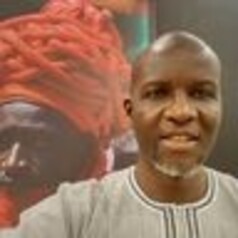
enseignant chercheur, Université Cheikh Anta Diop de Dakar Mouhamed Abdallah Ly est Docteur ès Lettres et Sciences Humaines, mention Sciences du langage, de l’Université Montpellier III (France). Il est chercheur !l’Institut Fondamental d'Afrique noire Ceikh Anta Diop (IFAN) où il est actuellement le chef du laboratoire de linguistique. Ses travaux varient entre la sociolinguistique,l’analyse du discours et l’anthropologie du langage. Il a notamment publié des travau, d’après ces différentes perspectives, sur les intrications entre langue et religion, la violence verbale, l’étude des référents sociaux dans les débats publis, les mots de la migration. Ses recherches portent portent également sur le langage politique des jeunes. Il a dispensé des enseignements dans diverses universités du Nord et du Sud (Université Anta Diop de Dakar, Université Assane Seck de Ziguinchor, Université Gaston Berger de Saint-Louis,Université du Québec à Chicoutimi, Université de Calgari-
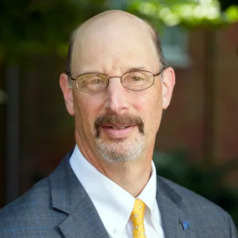
Professor of Civil and Environmental Engineering, University of Delaware Michael J Chajes, PhD., P.E., is currently Dean of the Honors College at the University of Delaware (UD) and Professor of Civil and Environmental Engineering. Chajes joined the UD faculty in 1990, and during his nearly 30 years at the university has served as chair of Civil and Environmental Engineering and dean of the College of Engineering. Dr. Chajes teaches classes and conducts research in the areas of structural engineering, structural health monitoring of bridges, and applications of sustainability.
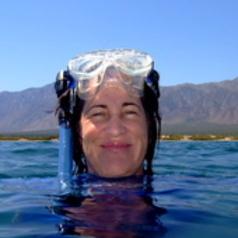
Research Scientist, Smithsonian Institution Dr. Mary Hagedorn received her Ph.D. in Marine Biology from Scripps Institution of Oceanography and has been a Research Scientist at the Smithsonian Institution for the past 17 years. She has worked in aquatic ecosystems around the world from the Amazon to Africa, has taught many university-level classes, lectures frequently to lay audiences. In the past years, she has received several research grants from the National Institutes of Health to support her research and has collaborators in over 30 institutions throughout the world. In 2000, she received the prestigious George E. Burch Fellowship in Theoretic Medicine and Affiliated Theoretic Sciences and was nominated for the Pew Fellowship in Marine Conservation. Dr. Hagedorn is a marine physiologist whose work has broad conservation implications. She studies the conservation coral species using cryobiology- the study of cells under cold conditions. In this approach, cells are frozen and placed into liquid nitrogen where they can remain frozen, but alive for decades in a genetic bank. Dr. Hagedorn has created the first genome repository for endangered coral species and has distributed this germplasm to three banks around the world. If necessary, these banks could one day help reseed our oceans.
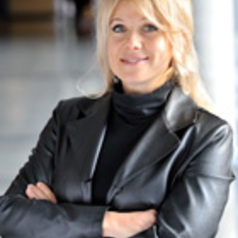
Ecological Modeller at RIFCON GmbH, Germany and Affiliate at the Environment and Sustainability Institute, University of Exeter, University of Exeter I am interested in behavioural ecology, focusing on colony organisation and division of labour in social bees. I combine experimental work with computer simulations to better understand the complex processes within a colony and its interactions with the environment.
Full Professor of Compared Politics, L’Université d’Ottawa/University of Ottawa (French follows) Marie-Christine Doran is a Full Professor of comparative politics at the School of Political Studies, University of Ottawa, specializing in democratization, human rights, and violence in Latin America. She is also a consultant on Latin American issues for the Ministry of Foreign Affairs of Canada (Global Affairs Canada) since 2015. She holds a Social Sciences and Humanities Research Council of Canada-SSHRCC grant on “Violence and Democracy: the Criminalization of Struggles for rights in Latin America (2018-2025), for which she is main researcher of a team of 7 specialists and Director of the Observatory on Violence, Criminalization and Democracy. Since the beginning of her career, Marie-Christine Doran has obtained research grants totalizing over 1 700 000 $ CAN for projects focused on the persistence of violence in democratic context in Latin America, the nature of political regimes, the weight of authoritarian political and legal legacies, the impact of social movements for rights, justice and memory, and the impact of violence by state and non-state actors on women, LGBTQ+ communities, indigenous and Afro-descendant defenders, in order to find solutions that reinforce democracy. She is a researcher at the International Panel on Exiting Violence (IPEV), and other international research platforms in Europe and Latin America, including the Brazilian CAPES International Research Network on Conflict Management in Plural Public Spaces Her published work include numerous peer-reviewed articles in four languages, some of which can be found at Academia and Researchgate, as well as two books, Le réveil démocratique du Chili. Une histoire politique de l’exigence de justice, (foreword by Alain Touraine,: Karthala 2016); as well as Human Rights as Battlefields. Changing Practices and Contestations (Palgrave Macmillan, 2019) and a third forthcoming book, Criminalizing Democracy:the Hidden Face of Violence in Latin America, to be published at Routledge in 2024. She is regularly invited to comment on Latin American politics and violence in Canadian and international media. French Marie-Christine Doran, PhD Marie-Christine Doran est professeure titulaire de politique comparée à l’École d’études politiques de l’université d’Ottawa, spécialiste de la démocratisation, des droits humains et de la violence en Amérique latine. Elle est aussi consultante pour le Ministère des Affaires Mondiales Canada depuis 2015.Elle est chercheure principale d’une subvention du Conseil de recherches en Sciences humaines du Canada-CRSH pour le projet « Violence et démocratie : la criminalisation de la lutte pour les droits en Amérique latine » pour lequel elle dirige une équipe de 7 chercheur.e.s, ainsi que l’Observatoire violence, criminalisation et démocratie-OVCD. Depuis les débuts de sa carrière, elle a obtenu près de 1 700 000 $ (CAN).en subventions de recherche, au Canada et à l’international, pour des recherches portant notamment sur la persistance de la violence en contexte démocratique latino-américain, la nature des régimes politiques, le poids des héritages politiques et juridiques autoritaires, l'impact des mouvements sociaux pour les droits, la justice et la mémoire, ainsi que l'impact de la violence exercée par les acteurs étatiques et non étatiques sur les femmes, communautés LGBTQ+, les défenseurs autochtones et afro-descendants, afin de trouver des solutions qui renforcent la démocratie. Elle est chercheure dans plusieurs équipes internationales en Europe et Amérique latine dont l’International Panel on Exiting Violence (IPEV) et l’équipe brésilienne CAPES International Research Network on Conflict Management in Plural Public Spaces. Elle a été Fellow à l’université Harvard University, et professeure invitée, notamment à École des Hautes études en Sciences Sociales (Paris). Ses publications en 4 langues incluent de nombreux articles dont plusieurs sont disponibles sur Academia et Researchgate. mais aussi 2 ouvrages : Le réveil démocratique du Chili. Une histoire politique de l’exigence de justice, (foreword by Alain Touraine,: Karthala 2016); as well as Human Rights as Battlefields. Changing Practices and Contestations (Palgrave Macmillan, 2019), un 3ème ouvrage, Criminalizing Democracy:the Hidden Face of Violence in Latin America, paraîtra chez Routledge en 2024.Elle est régulièrement invitee à commenter l’actualité latino-américaine dans les médias canadiens et internationaux.