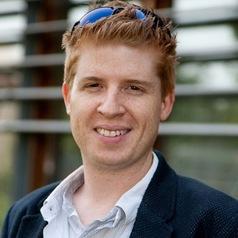
Associate Professor, Political Studies, University of Saskatchewan I am an Associate Professor in the Department of Political Studies at the University of Saskatchewan. Prior to this appointment, I was an Assistant Professor in the School of Conflict Studies at Saint Paul University and a Social Sciences and Humanities Research Council (SSHRC) Postdoctoral Fellow in the Department of Political Science at the University of Wisconsin-Madison. My research focuses on African politics, global indigenous politics, land tenure reform, migration and conflict, natural resources and governance, peacebuilding and political violence. My work has appeared in journals such as African Studies Review; Commonwealth & Comparative Politics; Conflict, Security & Development; Democratization; Ethnopolitics; Journal of Agrarian Change; Journal of Peace Research; Politics, Groups, and Identities; and The International Journal of Human Rights. I have also published in numerous edited volumes and am a co-editor of New Approaches to the Governance of Natural Resources: Insights from Africa (Palgrave Macmillan, 2014) and People Changing Places: New Perspectives on Demography, Migration, Conflict, and the State (Routledge, 2019). I have conducted fieldwork in Canada, Côte d’Ivoire, Ghana and Uganda, and is currently principal investigator on a SSHRC Insight Grant (2017-2023) titled “The Far North Act in Ontario and the Plan Nord in Québec: Sons of the Soil Conflicts in the Making?
PhD candidate, Queensland University of Technology Maree is a PhD candidate at the School of Justice at QUT. Her thesis focuses on young people's experiences of pornography and school-based pornography education. She is co-founder and Director of the Australian violence prevention initiative It's time we talked and co-producer and co-director of the broadcast documentary films, Love and Sex in an Age of Pornography and The Porn Factor. She is also author of In The Picture, a resource to support secondary schools to develop a tailored, whole school approach address pornography's influence and Talking Respect, a resource to support conversations about healthy relationships and media influence with young people in the Northern Territory. Maree delivers conference presentations and professional learning to a wide range of sectors in Australia and internationally.
Associate Professor of Human-Computer Interaction, University of Nottingham Max L. Wilson is an Associate Professor of Human-Computer Interaction, in the Mixed Reality Lab, and Director of Student Experience in the School of Computer Science. His EPSRC, European, and Google funded research is focused on the use of fNIRS brain data, about mental workload and other cognitive activity, as a form of personal data, that can be used to evaluate technology and work tasks. This work has emerged from his earlier research on the evaluation of user interfaces for interacting with information. Max is on the steering committees of both ACM CHI and ACM CHIIR conferences, as well as a member of the SIGCHI Conferences Working Group, and a Deputy Editor at the International Journal of Human-Computer Studies.
SEACAMS R&D Project Manager, Centre for Applied Marine Sciences, Bangor University Born and raised on the Isle of Anglesey and after working as a general labourer in the civil engineering and building sector for fifteen years I graduated from Bangor University as a mature student in 2000 with a B.Sc. in Ocean Sciences. I completed my Ph.D. in 2006 and have been working in Bangor University's School of Ocean Sciences (SOS) since 2004. I am currently R&D Project Manager at the Centre for Applied Marine Sciences (CAMS) and have a background in palaeoenvironmental development (sea-level change) and marine geology. I currently specialise in seabed mapping and geoscience related research using multibeam sonar primarily associated with supporting the marine renewable energy sector in Wales.
Associate Professor of Biological Sciences, Florida International University Chemosensation underlies many insect behaviors including host detection and oviposition site selection. I developed genome editing tools in Aedes aegypti for the comprehensive genetic analysis of mosquito behavior. Using this approach, I have provided key insights into DEET repellency, oviposition behavior, hygrosensation, hormonal physiology, reproduction, and how mosquitoes find their human and plant hosts. My work has highlighted the role of acid volatiles associated with human odor in mosquito host detection. Microbiome-based vector control is my current focus. Understanding the composition and odor profiles of the microbial communities associated with human skin and mosquito oviposition sites offers the promise to disrupt vector behavior to reduce disease risk.
Academic Teaching Staff Assistant Lecturer, Faculty of Education, University of Alberta Myra Kandemiri is a Lecturer of Elementary Science at the Faculty of Education, University of Alberta. A registered Alberta Education K-12 teacher, she has served as Research Coordinator for the Black Youth Mentorship and Leadership Program from 2021.